

A map for the 3D printing experience
RECODE.AM #42

Recently, one of Bambu Lab’s resellers asked me a question that at first seems trivial:
What is MakerWorld actually for?
Well, the simplest answer is: it’s a library of free models. You know, so people have something to print after they buy a printer.
But in reality, the answer is far more complex. Without MakerWorld, Bambu Lab is just one of many 3D printers on the market. Maybe the best, maybe not - it depends who’s judging.
But when you combine it with MakerWorld and all its functionalities, with Bambu Studio, with Bambu Handy - in short, with the entire ecosystem - you’re talking about something completely different. Something far beyond just a printer.
Today, users don’t buy a 3D printer. They buy the entire experience. And its foundation is software.
I recently wrote that desktop 3D printing is undergoing a quiet revolution. That the user has changed. That it’s no longer a maker building a machine for the sake of the machine, but a person with an idea looking for a tool.
I’m coming back to that thought today - and I apologize for that. But this topic is like a splinter: if you don’t remove it, it hurts more and more. And I feel the industry still hasn’t fully pulled it out.
So once again, more clearly.
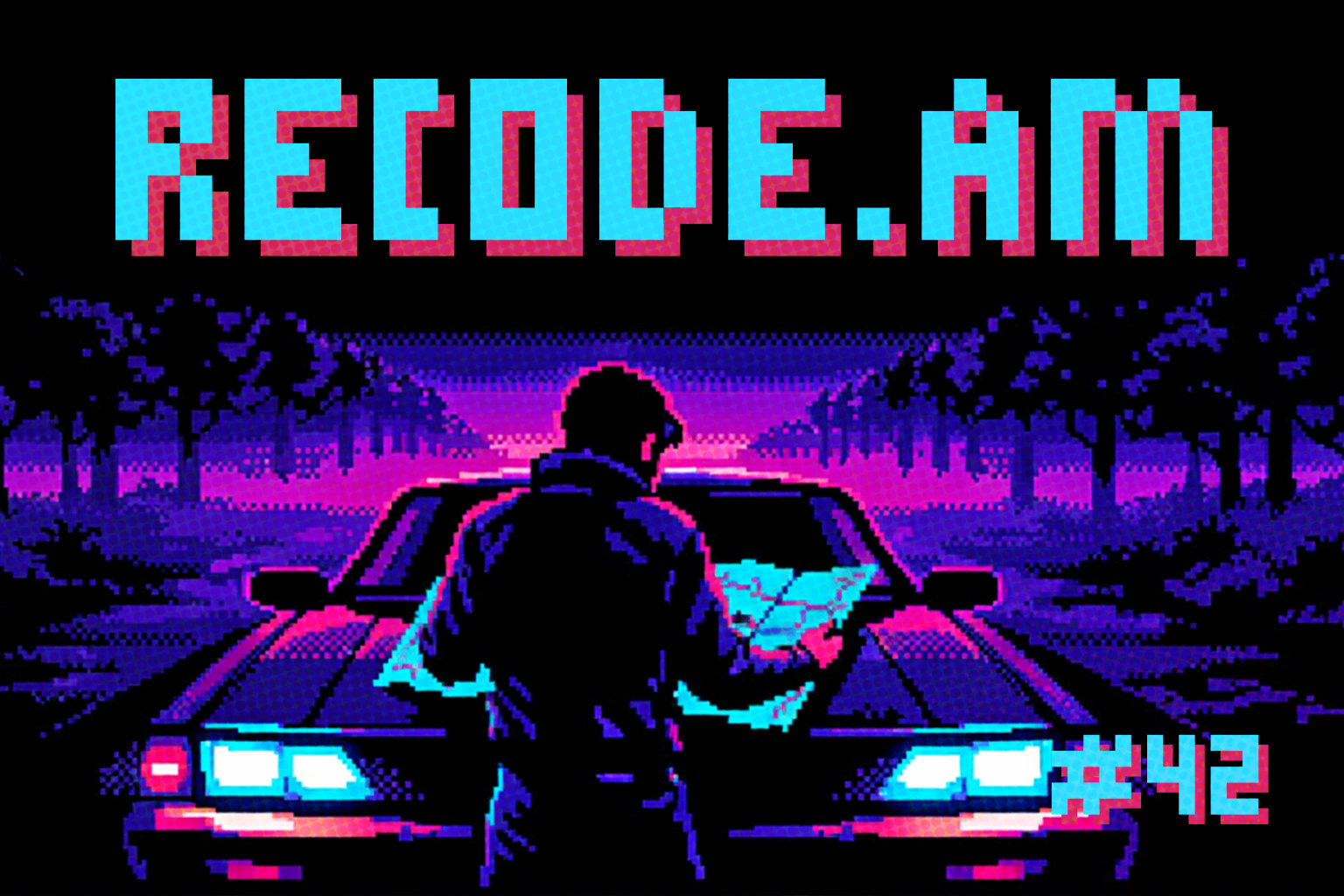
A 3D printer without an ecosystem is like a car without a map. It has an engine, wheels, a gearbox - you can go. You can drive across a country or an entire continent. But you don’t know where you’re going.
You don’t know how long it will take, how much fuel you’ll use, or what’s worth seeing along the way.
You have a car. You don’t have infrastructure. You don’t have context.
You don’t have - simply put - an ecosystem for driving.
The same applies to a printer without everything that surrounds it.
A 3D printer is a starting point, not the destination. To truly work - for the user, not for the technical specification - it needs an environment.
Materials selected and tested for a specific machine, not a random list of filaments from Alibaba.
Software integrated with the machine, not a separate application from another era that you operate like a 1990s scientific calculator.
A mobile app that lets you manage prints as naturally as you manage a playlist.
A repository of models - ready, verified, organized - so people know what to print and why.
And design tools integrated with the printer - for someone who has never opened CAD software in their life but wants to create something of their own.
This is not a wishlist. This is the minimum.
When someone buys their printer, they are not buying a machine. They are buying a cohesive, multi-layered ecosystem in which hardware is just one node.
So MakerWorld is not an add-on. It’s part of the value. Bambu Studio, Bambu Handy, Maker’s Lab, project crowdfunding - all of it together builds an experience that the printer alone could never deliver.
Hardware is the easiest thing to copy. All the fundamental 3D printing technologies have already been invented. The real advantage does not lie in a new nozzle or another axis system. It lies in the total user experience - cohesive, integrated, and capable of building loyalty that no standalone machine can achieve.
And this is where the industrial sector is still stuck.
So the conclusion is both simple and uncompromising: today, you don’t buy a 3D printer. You buy an experience. And this must be translated into the industrial level - not as a copy of the consumer model, but as its thoughtful, dedicated version. Because a company that buys a machine without a map, without software, without support, without a ready-use context - is buying a problem, not a solution.
A car without infrastructure. An engine without a gearbox. Hardware without an ecosystem.
It technically works. But it won’t take you anywhere.