

Aibuild FETS - what “10,000x faster simulation” actually means
Why Aibuild’s new FETS platform could fundamentally change thermomechanical simulation workflows in industrial additive manufacturing

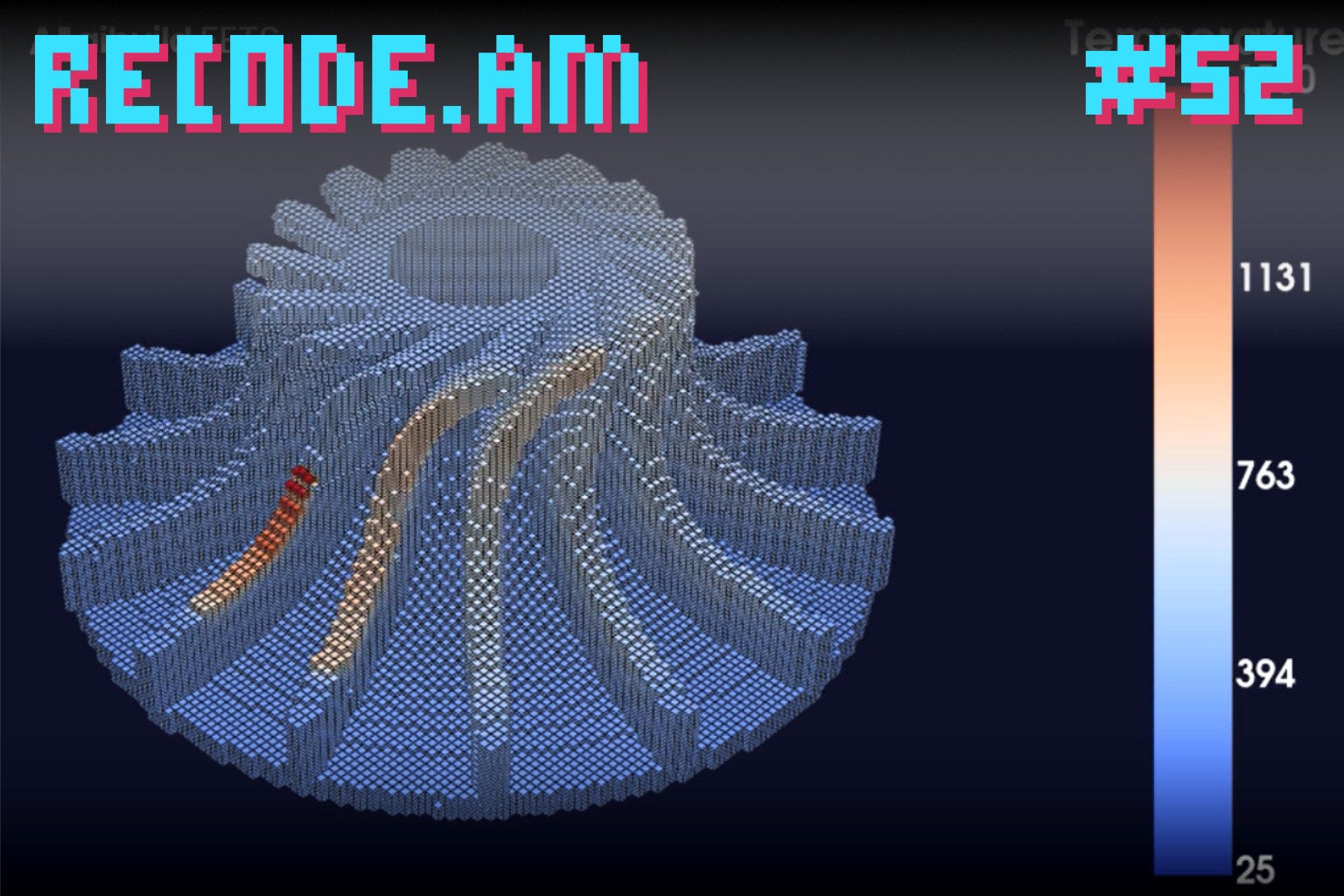
An engineer launches a thermal simulation. Monday morning, laptop open, “run” clicked, and then… waiting begins. Three days later, the result arrives. If the outcome says “your print will fail,” only then does the engineer start changing parameters and running the simulation again. Another three days.
That has been the reality of industrial AM for two decades. And it is precisely why most DED, WAAM, and large-format polymer integrators barely use thermomechanical simulation at all. Too expensive and too slow to fit into a daily workflow.
Aibuild has just introduced FETS - Finite Element Thermomechanical Simulation. The tool simulates stresses, distortion, thermal, and thermomechanical effects across five AM processes: DED, WAAM, AFSD (friction stir), FGF, and FFF. It works for both metals and polymers. Cloud-based, accelerated with NVIDIA CUDA-X GPUs, and validated by NIAR (National Institute for Aviation Research) at Wichita State University.
Aibuild claims the solution is up to 10,000 times faster than conventional FEA. That it achieves an average prediction accuracy of 96.8% on real-world 17-4PH stainless steel WAAM prints. That results which previously took days are now available in seconds or minutes on standard hardware, without multi-million-dollar HPC investments.
Aibuild’s CSO Guy Brown summarizes the issue directly:
engineers always knew simulation was a good idea, but nobody could afford to wait three days for a result. Add to that the cost of a failed print - thousands of dollars in material, machine time, and energy.
The numbers sound impressive. “10,000x faster” feels like a classic sales presentation slogan. But once you separate the marketing from the engineering, it becomes clear that FETS is solving a very specific problem in a segment that, until now, largely had no simulation capabilities at all.
Aibuild, FETS, NIAR
Aibuild is a UK-based software company that has spent years delivering CAM solutions for robotic DED and large-format polymer systems. Their customers are mainly integrators: companies building custom AM systems for highly specialized applications, such as turbine components transported once a year on dedicated heavy-duty trucks.
This is an environment where every printer is different, and every part is often unique. Desktop DfAM rules do not translate here at all.
A few months ago, Aibuild expanded its offering with Aibuild OS - an AI layer sitting across the entire workflow. FETS is the next step in that same direction.
So what exactly does FETS do?
Four things simultaneously. It simulates thermal flow throughout the geometry during deposition. It models the material’s thermomechanical response to that heat flow. It predicts distortion - where and by how much geometry will deviate from design intent - and residual stresses, meaning where the material will attempt to deform after cooling.
All based on the exact toolpath that the machine actually executes on the shop floor.
FETS is CAM-agnostic. In practical terms, that means if you generate a toolpath in third-party software - for example, an integrator’s proprietary platform that you do not want to replace - Aibuild can still import the path and run the simulation. No migration to their CAM ecosystem required.
The NIAR validation is important and deserves separate commentary. NIAR is a research institute deeply involved with the aerospace industry. Validation from them is not a symbolic gesture. They measure real prints on real machines.
In the case of FETS, on 17-4PH WAAM samples, the tool achieved 96.8% average prediction accuracy.
That number is strong. But underneath it sits one narrow application, one laboratory, and one material.
Generalizing the same accuracy to titanium, Inconel, or high-performance polymers will require additional validation rounds.
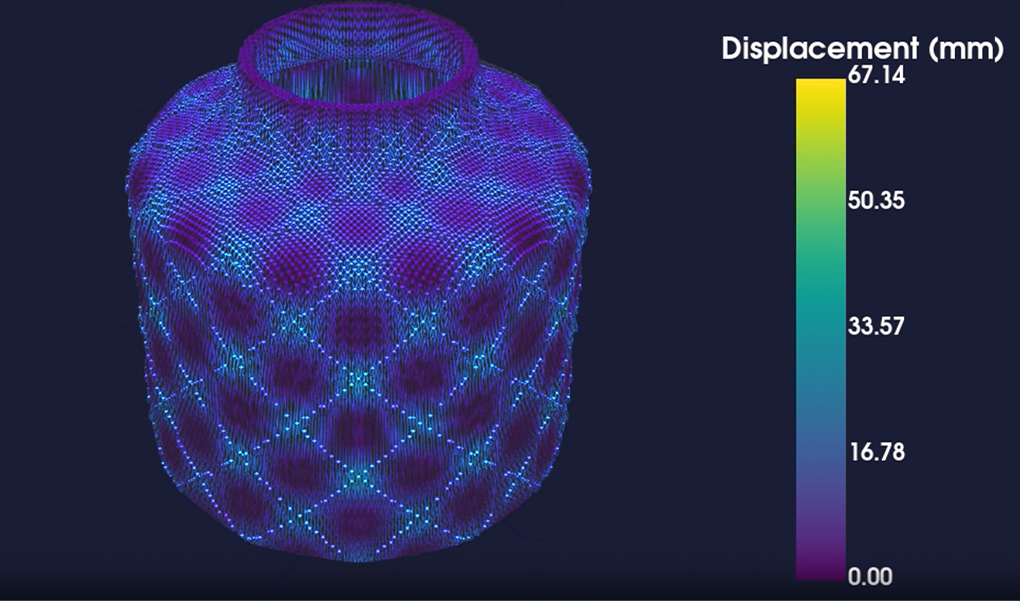
Aibuild already had its own thermal analysis tool integrated into the CAM environment. That tool is fast and can generate thermal envelopes within minutes, but it relies on simplifications that work primarily for low-conductivity materials, such as carbon-fiber-reinforced polymers. For steel, titanium, and geometries requiring full physics fidelity, those simplifications are insufficient.
FETS is the full-rigour version: complete FEM simulation without approximation shortcuts, based on the actual thermal history of every deposited layer.
For clarity, FEA simulation in AM is nothing new. Ansys, Altair, and Abaqus have offered FEA tools for years, some with GPU acceleration.
What do they all have in common? Simulation operates separately from CAM. It is a different workflow, different software, often even a separate engineering department. Every change in toolpath requires manual remeshing and another simulation iteration.
What FETS does differently is integration.
Simulation exists directly inside the CAM workflow. Change the toolpath, and the simulation updates automatically. No exporting data into separate software. No waiting for a dedicated FEA team.
That matters because most Aibuild customers do not have FEA departments.
These are DED integrators building custom robotic systems, large-format polymer robot integrators, aerospace suppliers producing one-off components. They are not going to purchase million-dollar Abaqus licenses just to simulate a single turbine once a year.
For them, FEA simulation was inaccessible not because of software pricing, but because the workflow itself required specialized expertise.
What is really happening here
Back to the original question: is FETS truly a breakthrough tool, as Aibuild claims?
The short answer is yes.
The long answer depends on how we define “breakthrough.”
“10,000x faster” is marketing-important, but from an engineering perspective, the real question is: faster compared to what?
Conventional FEA on a 15-year-old laptop? Fully nonlinear Abaqus simulations with manual remeshing after every layer? GPU-accelerated Ansys workflows?
Aibuild most likely benchmarked itself against the slowest of these scenarios, which is standard practice in the software vendor space. It creates an impressive number. It creates a clickable headline.
The 96.8% accuracy figure is legitimate, but still based on one material and one process. Aerospace companies will appreciate that Aibuild performed validation at all. Aerospace companies will also ask whether the same accuracy holds for Ti-6Al-4V and Inconel 718.
The answer is simple: we will see in a year.
The real value of FETS lies elsewhere.
Until now, Aibuild was fundamentally a CAM company - software sitting between the designer and the machine, translating geometry into toolpaths. A narrow but well-defined role.
Adding FEA simulation into the same workflow changes the category entirely. Now Aibuild also controls process validation, failure prediction, and eventually, qualification workflows.
For a DED integrator that only recently evolved from building welding robots into building AM systems, this means they can offer customers simulation capabilities without hiring an FEA department.
Their aerospace customer can print parts without building in-house simulation expertise.
The customer’s customer receives a validated process, not just a machine.
There is, however, one caveat.
The more workflow layers controlled by a single vendor, the harder it becomes to leave that ecosystem. Aibuild OS plus Aibuild CAM plus FETS creates an increasingly deep dependency for customers.
That is not unique to Aibuild. It is the logic of the entire AM software segment. Integrators should approach it with open eyes.
At the end of this launch, one thing remains clear:
Aibuild took a capability that previously required a dedicated FEA department and million-dollar HPC infrastructure, and moved it directly into the daily workflow of a DED robot integrator.
Everything else - the performance multipliers and benchmark numbers - remains marketing detail until independently validated on additional materials.
But in my view, this is one of the most significant software moves in large-format AM in quite some time.