

Backflip turns any scan into editable CAD, for $10 a part
Fewer than 1% of factory parts exist in CAD - Greg Mark wants to fix that

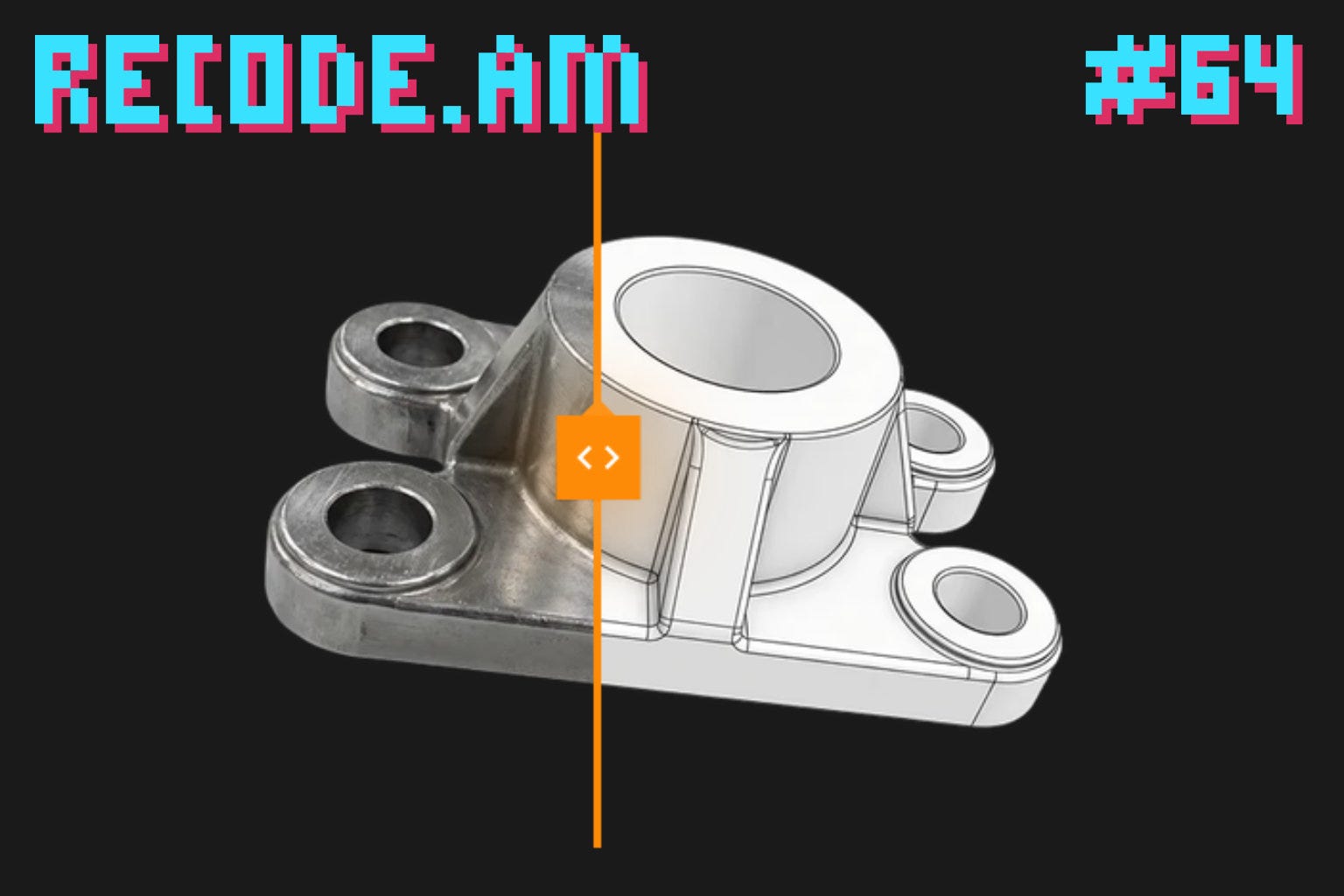
In the age of AI, Industry 4.0 and robotics, there is one thing that looks just as archaic as a mechanic hitting a jammed machine with a hammer.
Most parts in a factory exist only physically.
They sit on shelves in warehouses. They do not exist in digital form.
Because where would they even come from? Scanned? Who is going to do that? Who will then process them in CAD? Ten or twenty parts, no problem. But a thousand?
As a result, less than 1% of parts in manufacturing facilities exist in digital form. Everything else is an absurd relic from the age of steam engines. It works as long as it works. And when something breaks, the panic starts, because the part has to be recreated as quickly as possible. Of course, there is no drawing, no file, and no one who has any idea how it was originally designed.
Recreating a single part costs more than $1000. That matters when you are digitizing a few or a dozen parts. But when you want to digitize thousands of them, it simply stops making sense. Not even financially, but in terms of time. The numbers just do not work.
Backflip, meanwhile, claims it can bring that cost down to $10 while dramatically reducing the time required.
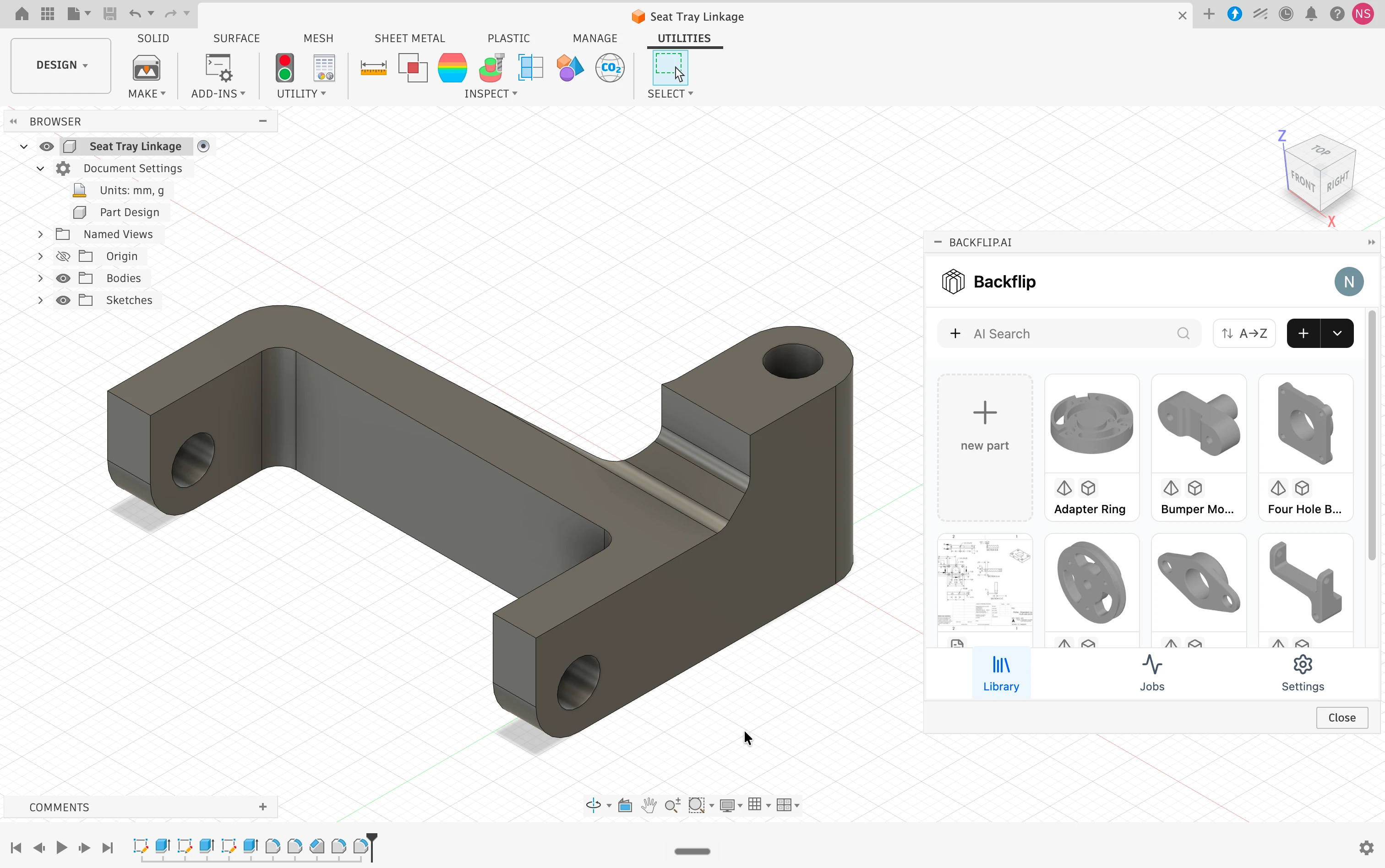
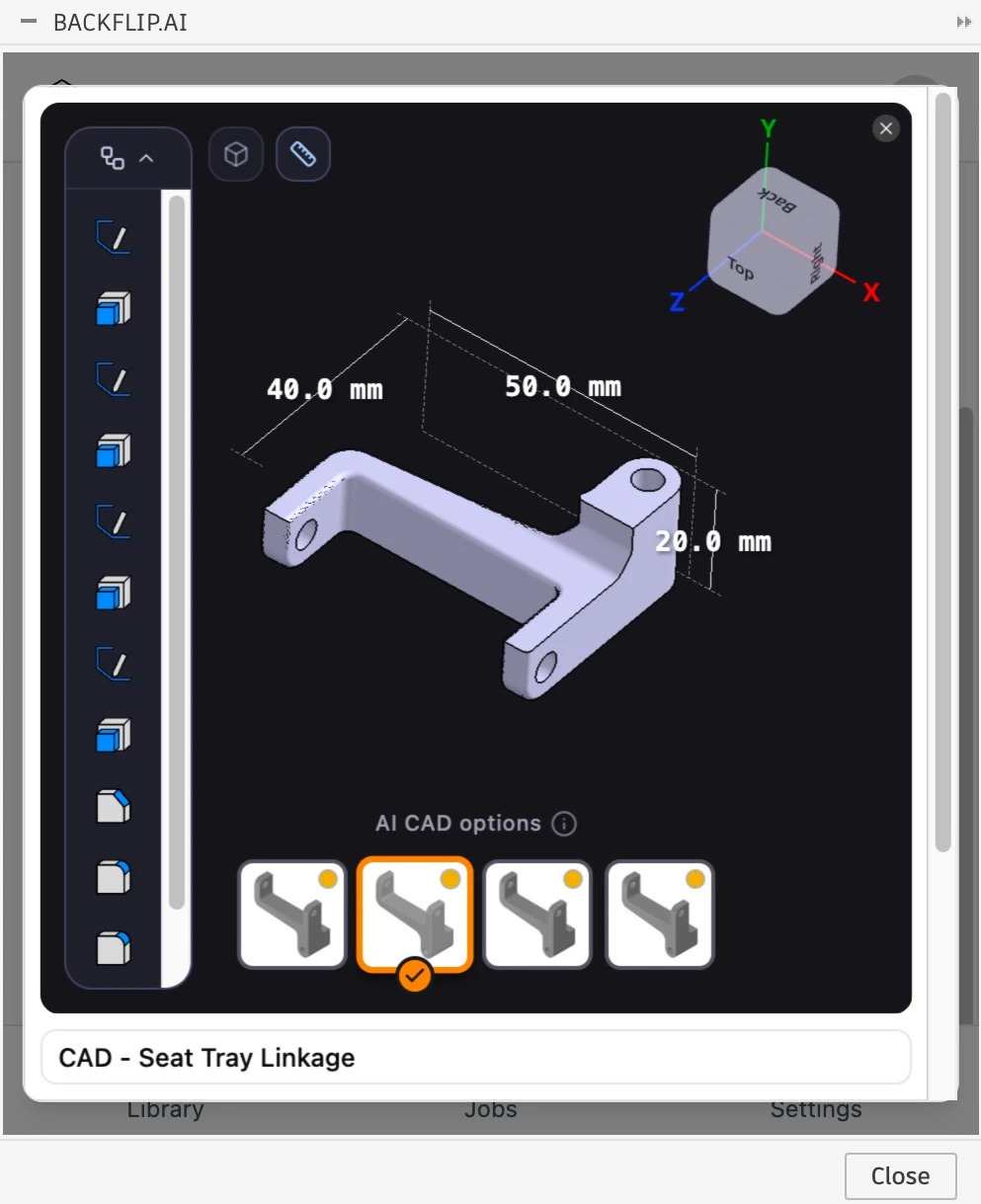
All you have to do is upload a scan, mesh or a regular STL file to the software, click a symbolic “single button”, and get a fully editable CAD model with a feature tree that can be edited directly in Fusion.
At the same time, if you change one hole from 4.8 mm to 5.5 mm, the other three change with it because the constraints are there.
Pretty neat, right?
Behind the tool is Greg Mark, co founder and former CEO of Markforged.
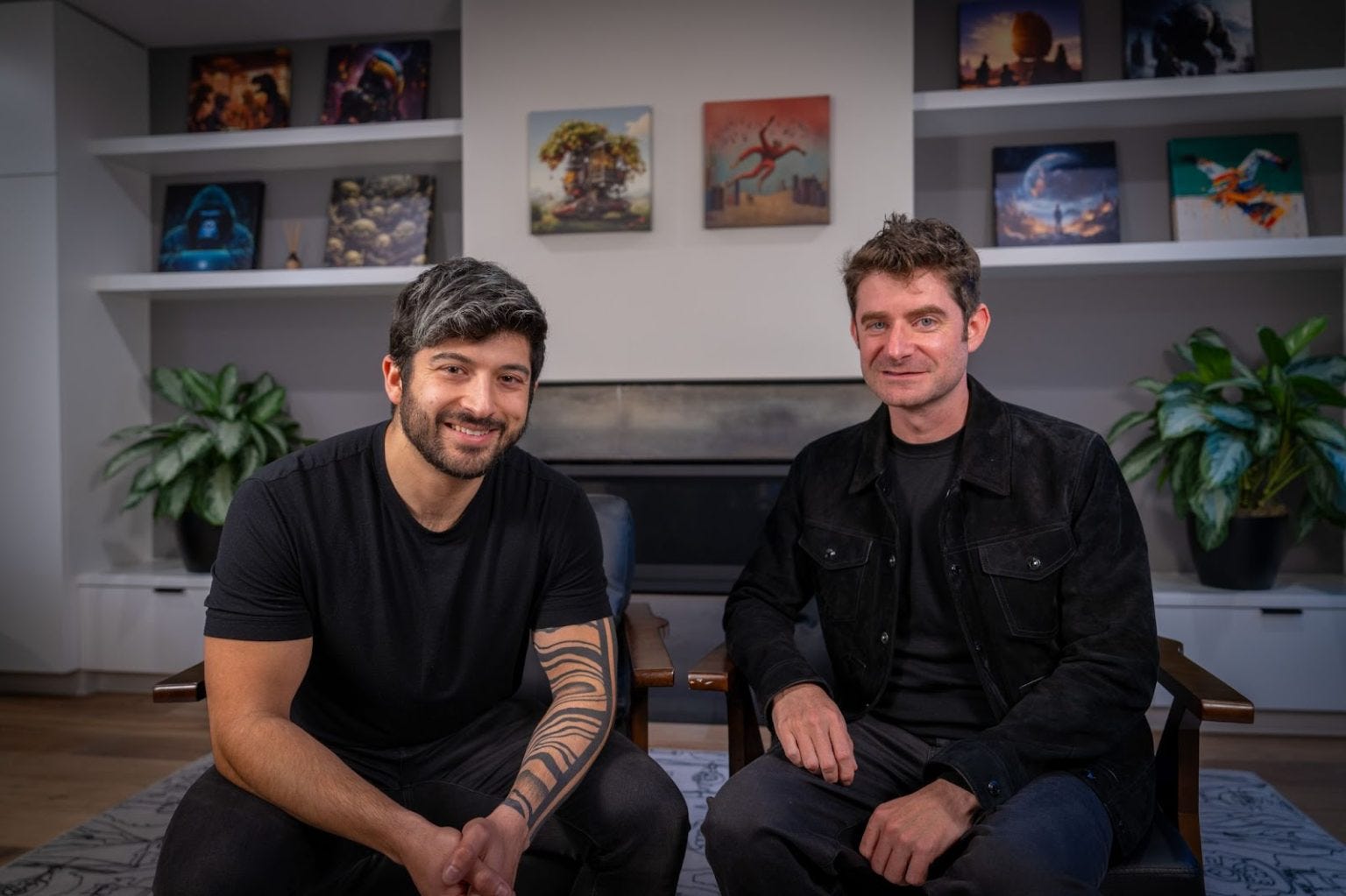
Greg sees the future of manufacturing as huge virtual warehouses of parts that are produced on demand. But for that to work, someone first has to digitize what is sitting on the shelves.
“We’re just going to digitize the world,” Mark says.
This is the story of the software. Where it came from, what it can actually do today, and where Mark wants to take it.
“It’s my vibe”
Greg Mark is not interested in printed figurines. You might think that the creator of a tool based on a foundation model that generates shapes on demand would jump straight into what is currently the easiest thing to sell in AI: text to mesh, a cute creature in ten seconds, an action figure from a single sentence. But not Mark.
“You can do text to mesh for cool toy action figures. That’s a cool technology. It’s just not my vibe. I want to support factories, build cars, build jets, build submarines, build airplanes. I’m more industrial.”
Greg spent more than a decade at Markforged, the industrial 3D printing company he co founded with David Benhaim. Backflip is another chapter, and once again it is aimed at the workshop, not the toy shelf.
Although, in fact, it started differently. When Backflip first appeared in 2024, it was actually a text to model system, and yes, figurines dominated the original version.

Greg eventually shelved that idea. The company moved in a direction that turned out to be much stronger and far more promising: turning physical parts and existing files into editable models.
In 2025, the first version of this model appeared. Although it was good at reproducing geometry, it did not look like the work of a human and, worse, it could not be edited. It looked like CAD, but it was not CAD.

If the conversion did not get it right immediately, the user was left with nothing. So the team rebuilt the model from scratch, this time with constraints, and spent a year refining it until the result began to resemble the work of an engineer.
Greg says the software is being tested by a very large automotive manufacturer, where it is already operating in its factories.
What happens after you click
The interface looks like a printing app from Markforged. Similar colors, a CAD cube in the corner, smooth operation. You upload a mesh or scan, click “convert to CAD” and the conversion starts. Parts are placed in a job queue, just like prints in Markforged.
The result is not a dead solid. It is a complete feature tree with sketches that can be edited. Change one hole to 5.5 mm and all four change together because the model understands that they are related.
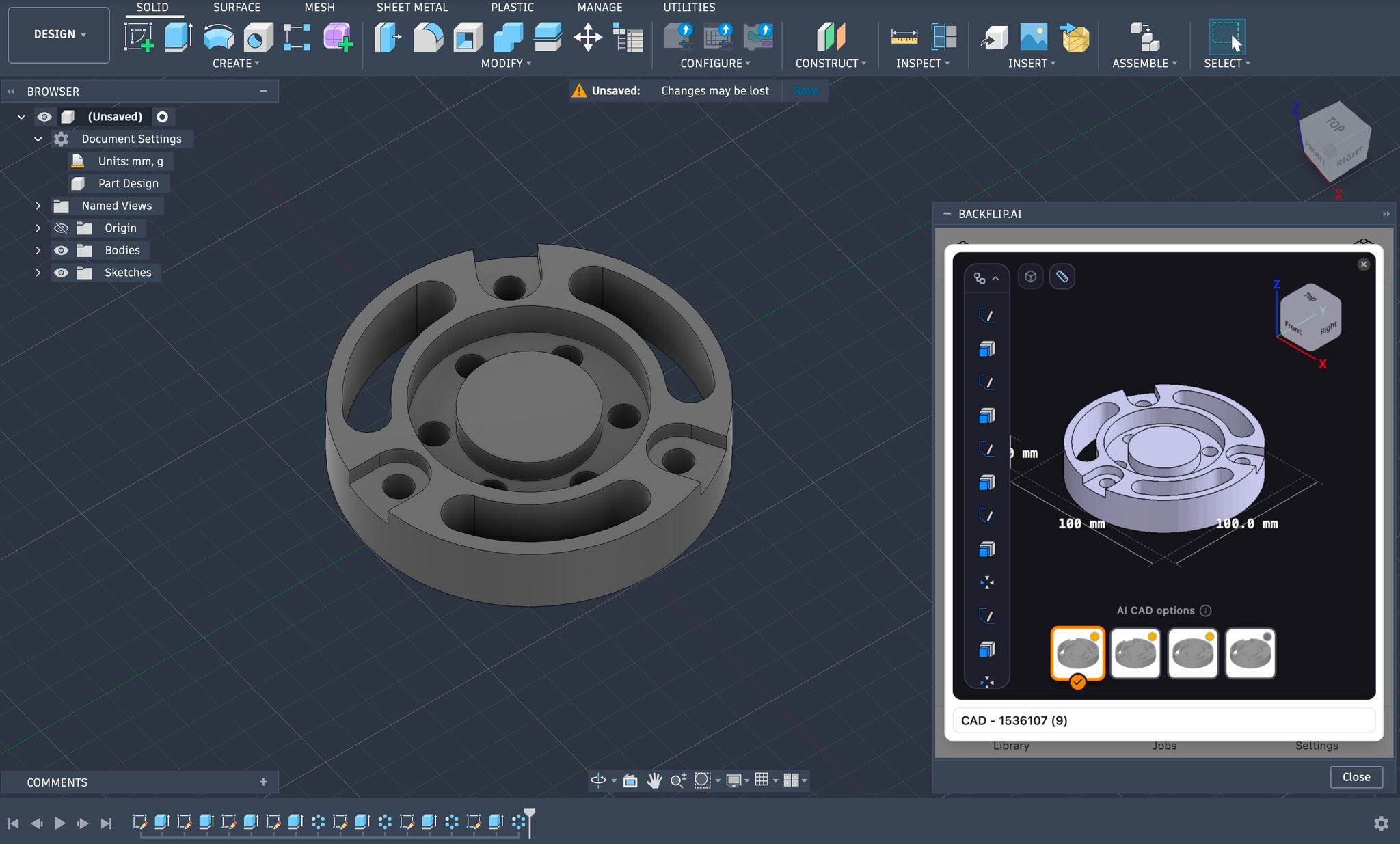
Backflip also provides four different reconstruction variants, each with its own feature tree, so you can review them and choose the one that fits. The finished part can then be sent to Fusion.
There are two modes. Fast is quick and cheap, producing a feature tree at a fraction of the cost. Thinking activates an agent loop that iterates and moves elements around until all the dimensions match. The difference is the same as everywhere else in AI today: faster and cheaper versus more accurate and more expensive.
“The way to think about it is what Claude Code did for coding, we’re doing for mechanical design. You can let it go, and about 40% of the time you’re just done, nothing to do. Another 40% of the time it gets you most of the way there, and it saves you maybe 80% of the modeling time. The last 20% is frontier work.”
Some conversions are ready immediately, some require corrections, and some are still beyond its reach. Greg is not pretending otherwise.
$10 per part
This is where things get interesting. According to Greg Mark, traditional part recreation in CAD, proper reverse engineering, costs around $1,500 in the US. In Thinking mode, Backflip does it for $10. In Fast mode, it comes down to $2.
That difference changes not so much the process as its scale. At $1,500 per part, nobody is going to digitize an entire factory. At $10, it suddenly makes sense. And only then do you really see the point of all this.
Because in a typical manufacturing facility, almost nothing exists in CAD. Fixtures and tooling were made by someone else, sometimes by a company that no longer exists. When a part breaks, the frantic process of recreating the model begins because without the file, you cannot move forward. Backflip changes that: take a scan or an old STL, put it into Thinking, and get a finished part.
And it does not work only with scans. Mark emphasizes that the best input is actually a clean file.
“Go get a clean STL, no scanner needed, and we’ll convert it to CAD. We take step files. Any dumb solid you have, we’ll make it smart.”
That is an important point, because editing STL files and meshes in modern CAD is a nightmare. Backflip takes that “dumb solid” and turns it into an intelligent, parametric model. 3D printing farms that have thousands of parts with no CAD suddenly get a way to actually modify them.
Which brings up the obvious question of ownership and IP. If a factory is building its own repository of digital twins, who owns them? Greg answers without hesitation: the customer.
“You own your data. We don’t own it.”
As for the legal side, he believes the issue is mostly theoretical, because most parts are not patented. They are just an L bracket or a machined component. The company that bought the tool already has the right to reproduce it. It is simply missing the file.
Industrial scale reverse engineering has existed for a hundred years, and Backflip is not creating a new problem. Where you are making one or two copies of a part that you have the right to reproduce, there is simply no economic return from doing it at scale.
100 million new CAD users
Backflip could have remained a tool for engineers. Greg Mark is aiming much wider. CAD is powerful, but difficult. The learning curve is so steep that in an entire factory, there is often one person, maybe two, who actually model parts, while three thousand technicians stand around them who have never touched CAD.
His bet is that editing an existing feature tree is easier than building one from scratch. Two orders of magnitude easier. That lowers the barrier to entry.
“It’s just like vibe coding. A lot of people can vibe code, but they can’t code. We’re bringing in the next 100 million CAD users.”
You download a bracket from any model repository, convert it back to CAD, drop it into Fusion and edit it directly.
Greg does not think a ten year old is going to pay $20 a month for such a tool. But their parent might. Prices will come down anyway because, as he puts it, this is only the first version, and these technologies tend to get cheaper and more powerful over time.
This brings us back to why Backflip is not a 3D printing company, even though it grew out of the experience of building one.
“We address everybody. 3D printing, CNC machining, injection molding, casting. Those are all just going to be outputs.”
In his mind, the process looks like this: you design a part on the computer you already have, then send it wherever you want. To a printer, a milling machine, a laser.
3D printing is one of the outputs, not the point. Instead of competing with cheap hardware, Backflip sits one layer above it and feeds all of them.
Where is this going
Greg Mark paints a future that sounds like a movie: you talk to a computer, design a part with it using voice and gestures, CAM happens automatically, and the finished component comes out the other side.
“It’s Iron Man,” he says.
Regional hubs with full manufacturing capabilities, parts produced on demand, costs approaching the price of electricity and material.
“In five years you’re going to look at manufacturing and think, holy fucking shit.”
At the same time, Greg is not a naive optimist. Asked directly about the AI bubble, he does not hide behind clichés. He refers to Ray Dalio and his indicators, points out that the most dangerous words in investing are “this time is different”, and openly says that yes, it looks like a bubble.
And yet something does not quite fit that simple verdict for him. He has never seen a technology mature this quickly. His own models are improving exponentially, and so are coding agents. That leads him to a cautious assessment of the current AI market leaders:
“I think there’s a 50% chance they become the most valuable companies ever created, and a 50% chance the open source models eat them for lunch. I believe in both outcomes.”
Greg argues that technology is accelerating, but agrees that the economics are still a mystery, and that the two may either converge or completely miss each other.
The best picture of where Backflip really is came at the end of the conversation. Mark showed a set of parts colored according to how well the model handles them.
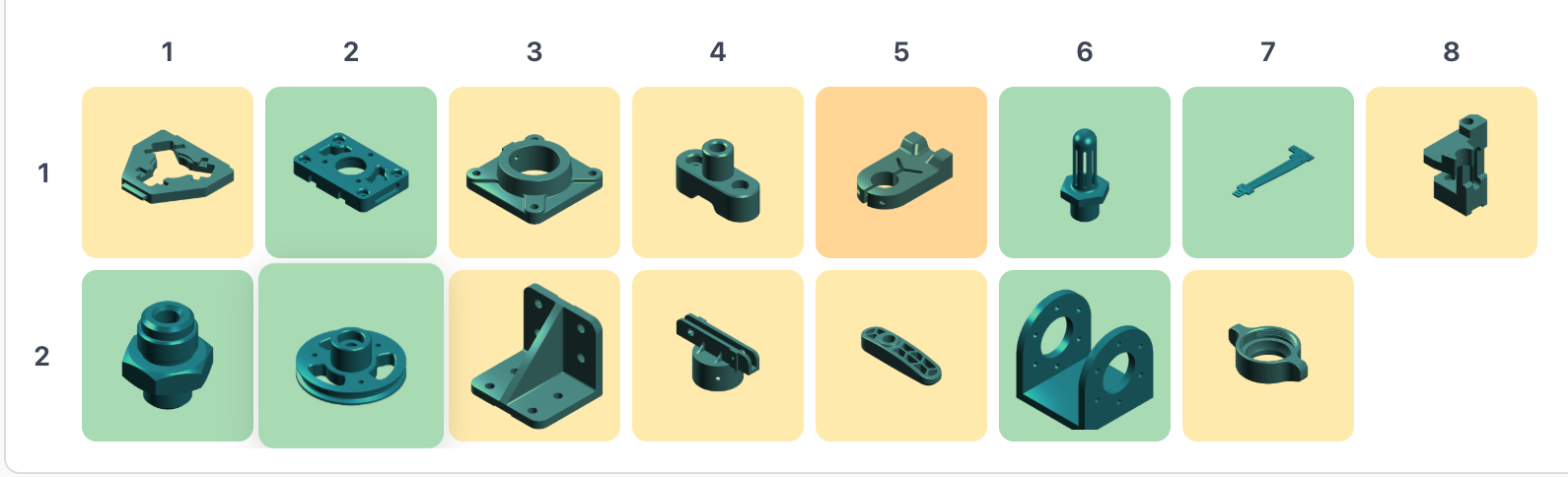
Green means pure time savings. Yellow means good. Gray means failure, starting from scratch.
“Three months ago we were half gray, no green. A few weeks later, more yellow. A month later, half green. The gray is gone. It took us a lot to get here, but now the model’s going crazy.”
It was not one giant leap, but a series of small steps, each moving a few more fields from gray to green.
Greg Mark keeps repeating that this is only the first version, and that is actually easy to believe because you can see the pace in his own chart. Everything else, those huge on demand parts warehouses and conversations with computers like they were engineers, may or may not happen.
But one thing has already happened.
The value has moved from the machine to the model.