


Being a CEO sounds great until you actually are one. Then you find out it’s mostly about making the least-bad decision available, managing other people’s expectations, and occasionally firing yourself when things don’t work out.
John Kawola has been CEO of three different 3D printing companies. He also served as CEO of a robotics startup, which run into the ground and John had to fire everybody including himself.
But here’s the thing that caught my attention: regarding just AM - every time he left a company at its absolute peak, two-three years later that company was done. Not bankrupt, but... done. The magic gone. The trajectory flattened or reversed.
Was it coincidence? Sixth sense? Self-preservation instinct?
I had to ask.
This interview was conducted exactly a year ago, on February 27, 2025.
At that time, I had the ambition to create a podcast series in which I would conduct interviews with leading personalities in the additive manufacturing industry. The first was an interview with Jonathan Jaglom - former MakerBot CEO, Objet and Stratasys manager, and now co-founder and CEO of flo Optics.
It turned out to be a great success, so I decided to invite another outstanding guest in the form of the legendary John Kawola.
The interview went great but... I lacked the time to edit it. The video file sat there - one week, two weeks, a month... Eventually it became really awkward. Finally, I moved it from the desktop to another folder so I wouldn’t accidentally delete it.
Eventually, in November 2025, I met John in person at the Formnext trade show. I don’t know - either he was so kind that he didn’t say it, or he was actually telling the truth. He didn’t hate me for not releasing it (for which I apologized to him several times).
As a result, I decided that:
the interview is so great that I simply can’t not publish it
I won’t try to be someone I’m not; I won’t be a podcaster anymore - I’ll publish this interview in my own flagship style.
And so here it is! John Kawola and his life story in the additive manufacturing industry!

Z Corporation - if you’re old enough to remember them - made machines that 3D printed in full color using gypsum powder.
The technology was called “3D printing”, and it served exclusively to name this process. This was the case until the mid-2000s when Abe (Avi) Reichental from competing 3D Systems decided that this name would be used for all additive technologies.
Anyway, John joined Z Corporation in 1998 as their very first salesperson. He was 30 years old. The company had less than 10 people. He sold the first 30-40 machines himself.
He became it’s CEO in 2008.

Four years later, 3D Systems bought the company. Three years after that, the technology was basically dead.
But we’re getting ahead of ourselves…
“I don’t get it. I don’t understand why you would ever do this?”
That was John’s first reaction when he saw a Z Corp machine in 1997 at MIT. He was a mechanical engineer working for an industrial materials company, scouting for advanced technologies. A friend invited him to see „binder jet thing” a lady named Marina Hatsopoulos was working on.
This is how he recalls it:
I can tell you how I joined the company in the first place. I spent my early career as an engineer. I went to university for engineering, was a mechanical engineer, worked for some big companies, worked for General Electric in the 90s, and then I worked for an industrial materials company that did sort of high-tech textiles and advanced materials.
One of my jobs was to be somewhat of a technology scout. I was spending time at different places around the country, around the world, looking for things that were relevant to the company I worked for.
There was a guy, his name is Andy Jeffrey. Andy had started a company called Specific Surface, and Specific Surface was one of the original MIT binder jet licensees.
Ely Sachs and his team invented binder jetting. Then in the mid-90s they licensed it out to a whole bunch of companies. Specific Surface being one of them, future ExOne was one of them, and Z Corp was one of them (and there was a few others).
I was at MIT in 1997 with Andy, and I met Marina, who was the founder of Z Corp. I saw a demo of the machine at a meeting. I still remember this to this day. I’m a mechanical engineer, but I was never a designer, never used CAD, had never heard of 3D printing even though it had been around.
I saw the Z Corp machine and I saw this model coming off it, which was okay, but definetelly didn’t look that great. And I didn’t understand it...
But Marina charmed him into joining anyway. Initially they were less than 10 people. Building something new. Learning as they went.
The company was run by young people - John was 30, his colleague Tom Clay even younger - but guided by older, wiser shareholders: like Walter Bornhorst.
Walter had principles. Two of them shaped everything:
One: Gross margin is everything. If you don’t have 50-60-70% gross margin, what’s the point?
Two: Scale the business to match the actual market opportunity in front of you. Not the fantasy market. The real one.
Early on, John and Tom made elaborate business plans. Charts. Graphs. Projections showing how they’d hire 100 people and build a factory. They went to Walter’s house one weekend to present it all.
Walter looked at them and said: “We’re not doing any of that. You two go sell to the first 10 customers. Make them happy. Prove we have a business.”
So they did.
First year revenue: 2 million.
Second year: 5 million.
Third year: maybe 7 million.
They were profitable. They never really raised venture money. They grew slowly, carefully, selling $50,000-60,000 machines in a world where most 3D printers cost way more than that.

This is how John describes it:
We were creating a little bit of a new category. Certainly we were always a little bit of the small guy. There was 3D Systems and Stratasys and we were always maybe the second or third guy down on the list. But we built an interesting business.
And when they eventually sold the company - first to a private equity group in 2006, then to 3D Systems in 2012 - everybody made money. Original shareholders. Investors. Employees who stuck around.
Nice story, right?
Except here’s what nobody tells you about nice stories…
John became CEO right before the 2008 financial crisis hit. Perfect timing…
We had a lot of debt on our balance sheet and we were breaching bank covenants and struggling a little bit to figure it out. But fundamentally it was still a very good business, that was profitable. Our yearly planning was usually like, are we going to grow 25% or 40%?
That’s what the years had been like. And then those few years there, 2009-2010, it was not like that. So it became a little bit more challenging.
Then 3D Systems came by with an offer…
It was 3D Systems who approached us. But the discussions among all of us had already been happening in the previous one to two years. Stratasys, 3D Systems, Objet and ourselves and other people - we all started to talk to each other.
Part of the reason was that growth starting to temper a bit. But also each one of us at our core was a one-technology company. We had our thing. 3D Systems had SLA, Stratasys had FDM, Objet had their PolyJet. We were all one-technology companies.
It became increasingly evident that that was in some way inefficient in terms of going to market. We all had our own resellers. They were all exclusive. It just became clear to us that it made more sense that some of these companies combined in terms of sharing, especially go-to-market, marketing and all the back-end manufacturing synergies.
So 3D Systems approached us and our private equity owners were like - yeah, this sounds like a pretty good deal - and so we proceeded with that.
Shortly after that, Stratasys and Objet merger happened within 12 months. So that was really the driver behind these things that happened in the industry in terms of consolidation.
It was a good exit. The original shareholders made money when we sold it the first time, and then the investors made money when we sold it the second time. And some of the employees who were involved, like John himself, participated in that as well.

When 3D Systems bought Z Corp in 2012, it made sense on paper. But here’s the thing nobody saw coming: desktop 3D printers.
In 2012-2013, the world changed. MakerBot. Formlabs. Ultimaker. Suddenly you could get a capable 3D printer for $5,000 or less.
Z Corp’s whole value proposition - speed, cost, color - got demolished. Not by better industrial machines. By cheap desktop machines that were “good enough.”
Why buy a $50,000 Z Corp machine when you can buy a $3,000 Ultimaker?
Sure, Z Corp was faster and cheaper per part. But desktop printers were way cheaper to own. And for prototyping? Good enough is... good enough.
The only reason to buy a Z Corp machine anymore was color. That’s it. Just color.
If John had been CEO of 3D Systems in 2013-2014, he probably would have made the same decision they made: stop investing in the technology. It wasn’t going to win.
The technology was fast and cheap, but the parts weren’t strong. It excelled in architecture and footwear - industries that needed big, colorful parts. But if you needed actual engineering plastic you weren’t buying a Z Corp machine.
If they’d stayed independent instead of being acquired, they would have needed to find something else to supplement the business. Because the existing technology was going to get run over by competition.
And it did.
However the nostalgia remains strong… When in 2014 I started my 3D printing history cycle, every time I published something about old Z Corp machines, people lost their minds in the comments. Not typical “thanks for the article” comments. Nah - full life stories. Deep emotional connections to machines that printed parts out of gypsum powder.

Why?
John thinks it’s because for many companies, it was their first machine. Their entry into 3D printing. But also because Z Corp, as a company, treated people well. They worked with resellers they liked and respected. In a small industry where everyone knows everyone - footwear people know footwear people, jewelry people know jewelry people - that reputation mattered.
If there was a problem we tried to fix it as fast as we could. I think that sort of goodwill, contributes to the feeling that people have toward it looking back.
Translation: they weren’t assholes.
Which apparently is rare enough to be memorable.
After selling Z Corp to 3D Systems in early 2012, John left the industry for four years.
He was in his 40s. He’d already worked for what he considered the best 3D printing company he could ever work for. What else was there?
At that exact moment - January 2012 - Formlabs was still deep underground, Carbon and Markforged didn’t exist, GE and HP waren’t in.
I took board seats. I joined the EnvisionTEC board and things like that. But for my day job, I joined a robotics company and did that for about three years. Part of my thinking actually at the time: it’s January 2012, and we’ve just sold the company. I’m in my 40s, I still have 15 years left. What am I going to do?
At that time I wasn’t that bullish about 3D printing. I needed to go do something else, be in a different industry.
So he step away and ran a robotics company for three years. It didn’t go well. They raised money. Then they spent all the money. They sold the IP. And finally he fired himself.
Meanwhile, back in 3D printing land, the desktop revolution was happening. MakerBot. The hype. Bre Pettis predicting 3D printers in every home like coffee makers.
Did John feel like he was missing out?
Not really.
The consumer thing I never really bought into. I don’t have a 3D printer in my house and I have no interest in having one. Making things is not one of my hobbies. I do other stuff. I’m not a woodworker, I don’t like to fix stuff. So I have no interest in having one.
Sure, desktop printing was a huge disruption. It changed everything. But at that time, it didn’t change everything to the extent that everybody would have one in their house.
People who like to make things - who normally have a lathe in their basement or power tools – tey got their 3D printer. Schools, libraries, labs also. And the printers got better and better. But mass consumer adoption? No. Not at that time.
But in 2016, the hype surrounding consumer 3D printing collapsed. Startups that had been building this sector began to fall like flies, one after another. Avi Reichental - one of the main architects of that movement - was forced to leave 3D Systems. Bre Pettis - the face of consummer 3D printing - was bought out and exited the industry for good.
At the same time, the few companies that survived the collapse, gradually began to pivot toward industrial or other professional applications.
John was ready to come back to 3D printing. His opinion had changed about how good desktop printers could be. He’d seen Formlabs. He’d seen what was happening.
Jos Burger invited him to join Ultimaker to run their North American business. Perfect timing. Again.
MakerBot - the company that created the desktop 3D printing - had stumbled. Quality issues. Community backlash. Ultimaker walked right through the door.
Ultimaker started in 2011 - same time as everyone else, but spent their early years in garage mode. Then Jos Burger showed up in 2014 and changed everything.
When they released the Ultimaker 3 in October 2016, it was a game changer. Great machine. Solid supply chain. Good marketing. And something a little bit magical about that white color. Was it brilliant or just an accident? Doesn’t matter. It worked.

For a few years, Ultimaker became the standard. Not because their machine was way faster or way better than everything else - there were plenty of good choices - but because they were number one.
And being number one is its own sales pitch.
John learned this from Jon Hirschtick, founder of SolidWorks, who was on their board. In 1995, there were other $5,000 CAD packages, but SolidWorks emerged as the leader. Their sales pitch changed from technical features to: “Hey, we’re number one. You might as well buy us.”
It worked.
Same strategy worked for Ultimaker in 2017-2020. Why would you buy something else? That strategy worked for a long time.
Until it didn’t.
Until something significantly better and significantly less expensive came on the market.
Bambu Lab.
In the end, a great product wins.
Companies have a time when things are really good. But they have to be thinking: this isn’t going to last forever. We’re going to get disrupted by something else.
We need to either make our existing product better or we got to think about another business to be in.
Could Ultimaker have held off Bambu Lab? John doesn’t know.
At the end of the day, companies that survive long-term probably aren’t going to ride the same horse for 10 years in a row.
That was true for Z Corp. Same technology for a very long time. Then they probably needed something else. Same thing for Ultimaker.
By 2019, John was restless again.
The additive industry kept growing, and technology getting better. But for a hardware company it got very crowded.
New players joined the game - Carbon, Desktop Metal, GE, HP, Nexa3D, Velo3D and a large number of others. There’s not enough business in the world for all that.
When John started thinking about the next thing, he tried to be selective. Minimum requirement: it needs to be different.
He met Nick Fang, MIT professor, and one of the founders of BMF - Boston Micro Fabrication. Very small parts. At first John wasn’t sure. Then he became convinced.
Lots of things in the world are getting smaller. Medical devices. Electronics. Optics. As things get smaller, they get harder to make.
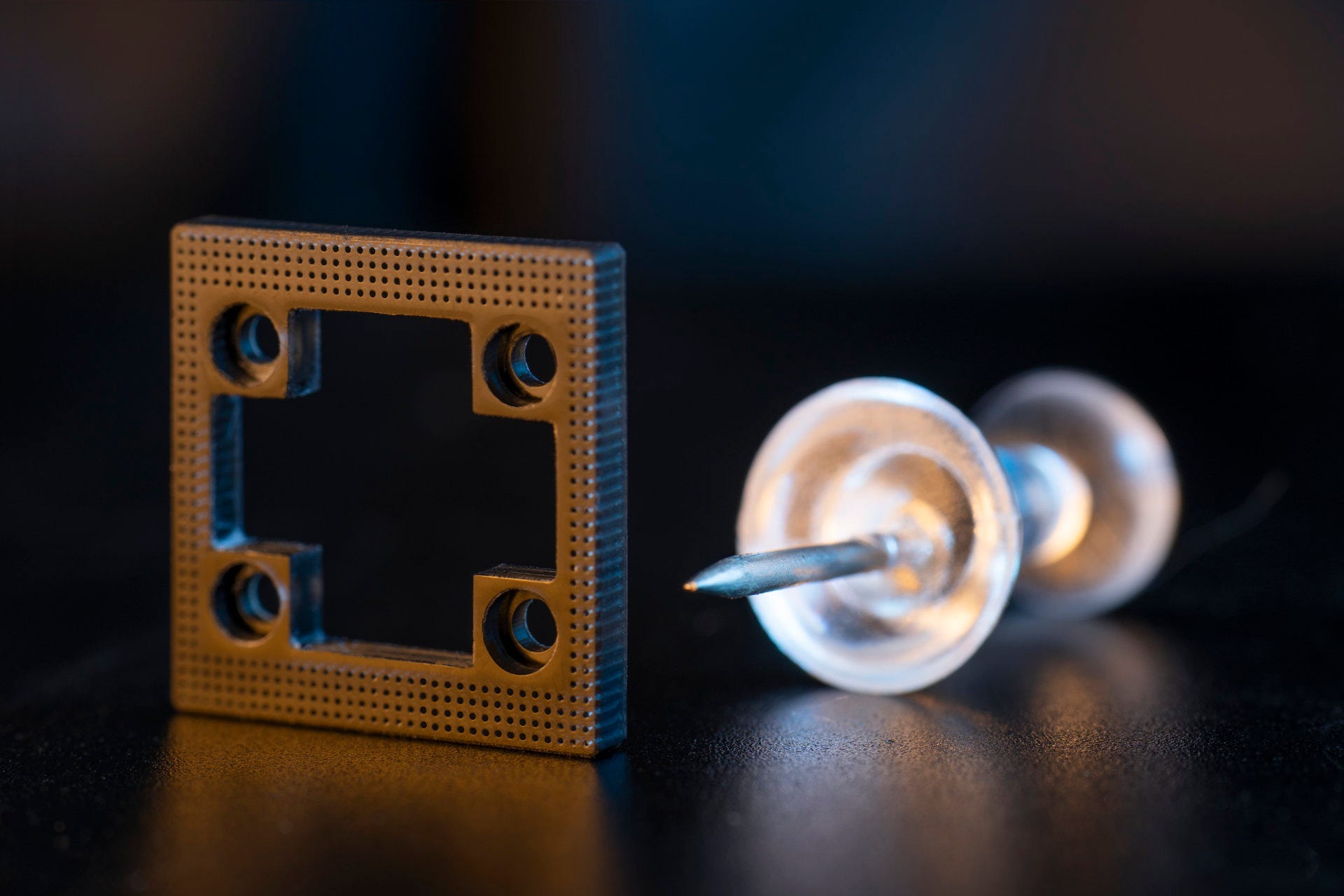
The existing additive solutions - even SLA on a really good day - couldn’t quite do what BMF was doing.
He joined in fall 2019. They launched commercially in February 2020. COVID was already in the air. But it’s gone pretty well since.
This is how John describes it:
We’re certainly in a niche, but it’s a high-value niche with a lot of really interesting customers. We’ve been able to grow the business at an interesting rate. We’re involved in a lot of different projects with people doing really interesting things in life sciences and medical device and electronics. It’s differentiated.
We come to work every day thinking about new customers. And it’s not really about we need a lower price - it’s more about can we meet the technical demand that the customer is asking for and trying to solve those problems? And then hopefully sell machines and materials or parts.
That’s how that happened. It went very fast. It continues to be fun every day.
Being someone completely different from the rest, you need to perfect your sales strategy. You need to leverage every advantage. You need to be aware of the strengths and weaknesses of your technology and not try to do something you’re naturally weak at.
In running a company, you’re always going to get a pull from the sales team. Like our sales team at Z Corp was like, “Oh, we need plastic.” I was like, “Guys, it’s not plastic. So why don’t we double down on where we can win? Let’s sell more into architecture and sell more to the footwear guys because we’re going to win those.
The same thing when we think about BMF. Our sales team said, “Oh man, it’d be great if we could be a lot faster and make bigger parts.” Okay, well, you can do that with a Formlabs machine. So let’s pick where we can win.
Simple message. Focused execution. At Z Corp it was: speed, cost, color. At BMF it’s: small, precise parts. That’s it.
Now here’s something weird: in the early days - 1990s, early 2000s – every major 3D printing company was profitable.
Small market. Small number of companies. But each company could live off their sales. Not investors’ money. Their actual sales.
Now? If you’re a profitable additive company, you earn a badge. It’s something extra special.
For many years, being “in the red” has been normal.
The narrative is always: “We’re investing in growth.”
Translation: we’re losing money.
So what happened?
Two things, according to John:
I think it goes back to what I mentioned in the early days of Z Corp and Walter Bornhorst’s advice. About trying to scale the business at the pace where you can do it profitably, and at the pace of what the market will accept.
One: because it’s competitive, you have price pressure. So if it’s competitive, you probably have to lower your prices. And when you lower your prices, it becomes less easy to make money.
Second: the nature of the venture capital world. Venture capital is investing. You can’t raise the money unless you tell the big story. And once you get the money, you need to try to execute on the big story. You hope it’ll come true. There’s lots of companies outside of additive who tell the big story and raise the money. And it turns into a big story, and that’s fantastic.
But manufacturing is hard, and getting these technologies into manufacturing is a challenge.
In the early days, 3D printers were 100% about prototyping and design verification, and the bar was low. As long as the part looks pretty good then it’s valuable, and the fact that you got it in four hours for $5 in your office is magic. So the early days of 3D printers were these are communication tools, and as long as it spits out parts that are pretty good, people love it.
But once you get into manufacturing, then it’s about quality and six sigma and regulation and fitting it into a current supply chain. That’s pretty hard. That world is pretty risk-averse.
Alright, so let’s get back to intial question:
How come John Kawola always knew when to leave the company? What’s the pattern here?
John joins companies at interesting moments. Stays long enough to build something real. Leaves before the decline. Not because he’s running away - but because he knows when a story is complete.
Z Corp sold at the right time. If they’d stayed independent, the desktop revolution would have crushed them anyway. Ultimaker peaked during his tenure, then faced Bambu Lab.
BMF? Still differentiated. Still solving problems others can’t.
Maybe that’s the real skill. Not building forever - but knowing when you’ve built enough. The 3D printing industry loves to talk about disruption. About changing manufacturing. About the future.
But John’s story is quieter than that. It’s about gross margins and realistic growth. About focusing on what you’re actually good at instead of what sales wants you to be. About making money from customers, not just investors.
Walter Bornhorst’s advice from the 1990s still applies: scale at the pace the market will accept. Build profitably. Don’t chase the fantasy.
In an industry obsessed with the next big thing, John Kawola keeps doing something radical:
I met John when he first started at Z-Corp. The small design company I worked for in Indianapolis purchased the very first Z-402 printer, and John wanted to borrow it for a demo at an aerospace company across town. He rented and drove a moving truck, and I rode along to help set it up for his demo. Great guy, a "go getter". Appreciate you posting the interview, Pawel!