

How one LinkedIn DM helped launch Bambu Lab Europe
3DP War Journal #82

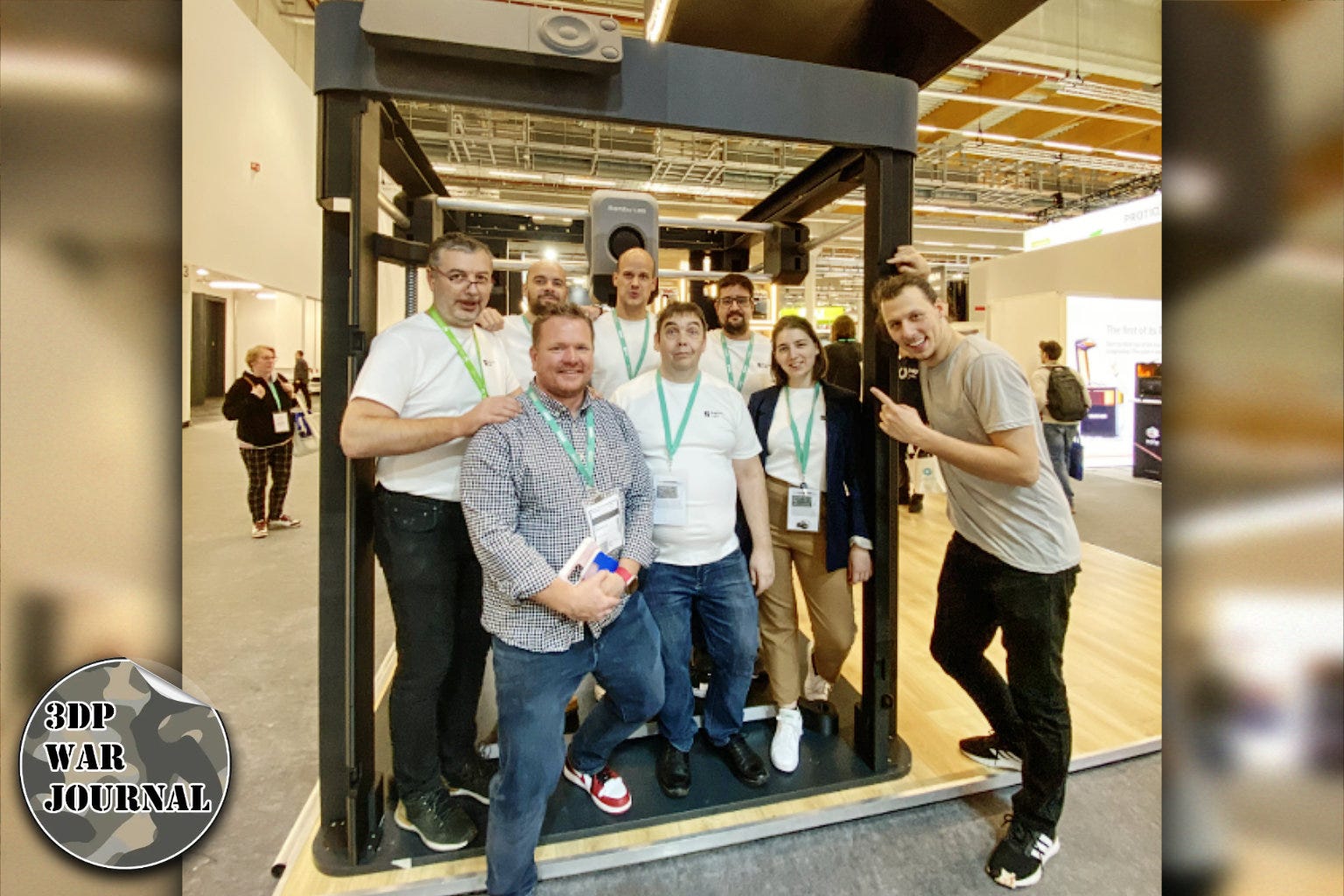
For the record, I still believe it was all one big coincidence, although Cedric Mallet insists it was quite the opposite - that it was part of a carefully crafted plan.
I don’t know… For now, I’ve decided to stick to my version.
In March last year, out of the blue, Bambu Lab announced that the premiere of its long-awaited new 3D printer - the H2D - would take place at the very end of March. Accidentally, on that exact same day the largest AM trade fair in Poland, 3D Printing Days, was starting in Kielce.
And Cedric Mallet - CEO of Bambu Lab Europe - announced on LinkedIn that he would be coming to Poland and bringing a launch unit of the H2D with him. He also casually mentioned that if anyone wanted to meet, he was open to it.
To be honest, I didn’t really feel like going to Kielce. Between 2013 and 2019 I had been there twice a year, attending every single edition of 3D Printing Days fair. After the pandemic, I just didn’t feel the urge anymore. I went once more in 2023 for the 10th anniversary of the event and had the feeling that it was enough.
But then - the H2D premiere…
And a visit from the CEO of Bambu Lab Europe…
Who, on top of that, was openly inviting people to meet…
Well, I decided that as the most important 3D printing influencer in Poland, and a self-appointed ambassador of the polish AM industry worldwide, I had to do it 😜
I reached out to Cedric on LinkedIn, we scheduled a meeting, and a few days later I set off (once again) on the road to Kielce.
We met at the Edutech Expert booth - the leading distributor of Bambu Lab in Poland and Europe. We talked, and at some point Cedric asked whether I would be interested in helping them with a certain project. It was about supporting the development of the market in Central Europe.
I immediately said yes. It was exactly what I had been doing in Poland for the past ten years!
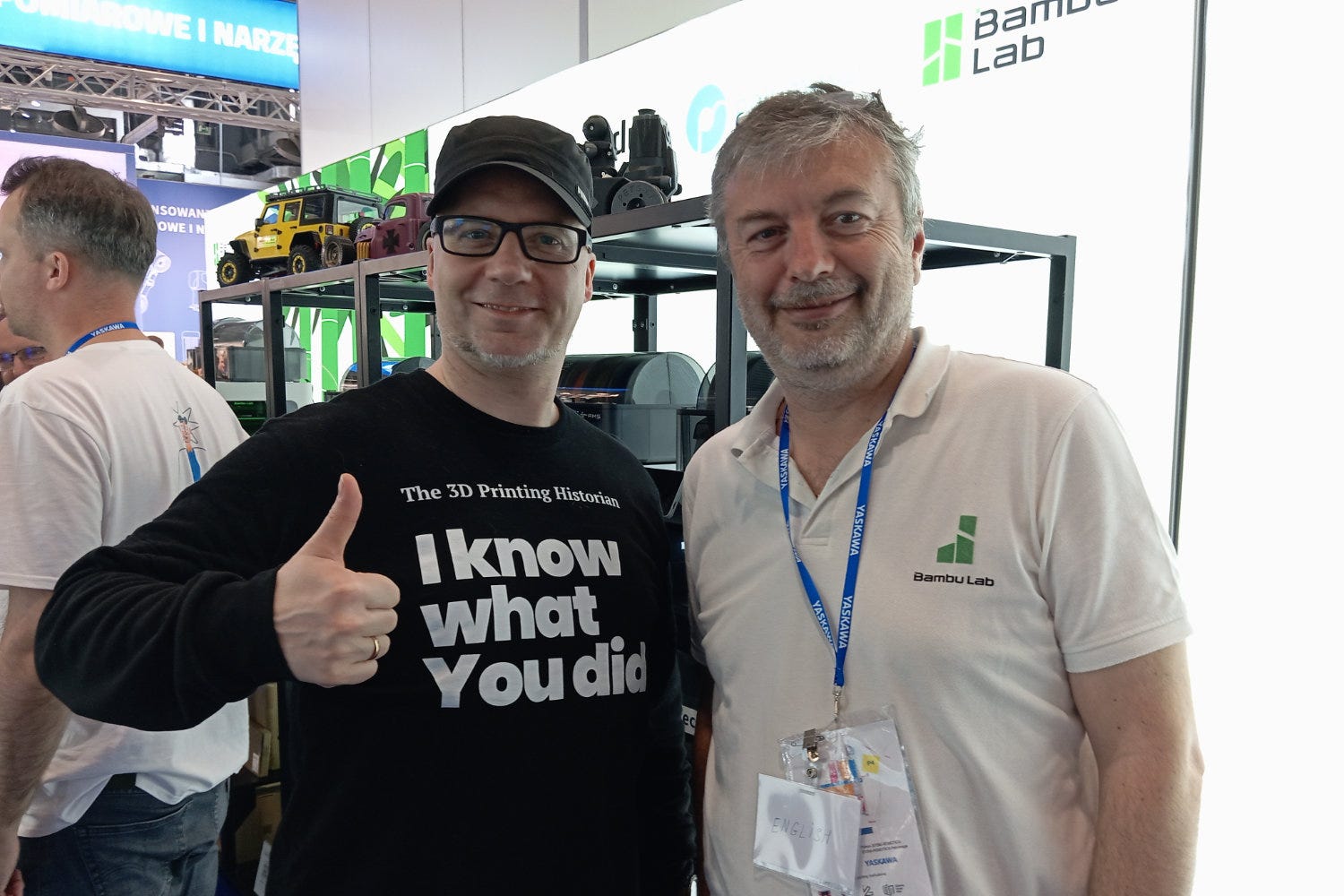
At the moment, I didn’t yet know that this project would turn into a full-scale job that would only continue to expand. But that’s a story for another time.
In any case, in April we agreed on the general terms of cooperation, in May on the details, and in June 2025 I officially began my career under the white-and-green colors of Bambu Lab.
I have to admit, it was a very unusual recruitment process. But now, knowing what I know, it not only doesn’t surprise me - it actually fits perfectly with Cedric Mallet’s style.
After all, he essentially recruited himself into Bambu Lab and went on to create its European division.
And, as a consequence, he drove the company’s massive growth in Europe and helped expand it globally.
This is the extraordinary story of the beginnings of Bambu Lab in Europe…
At first glance, nothing pointed in that direction
Cedric had behind him a long, coherent - and importantly - completely “non-hardware” career. Internet, digital media, gaming, new technologies, business development. Projects carried out in startups and large organizations. Always close to the product, the user, and data. Always where technology meets the real world.
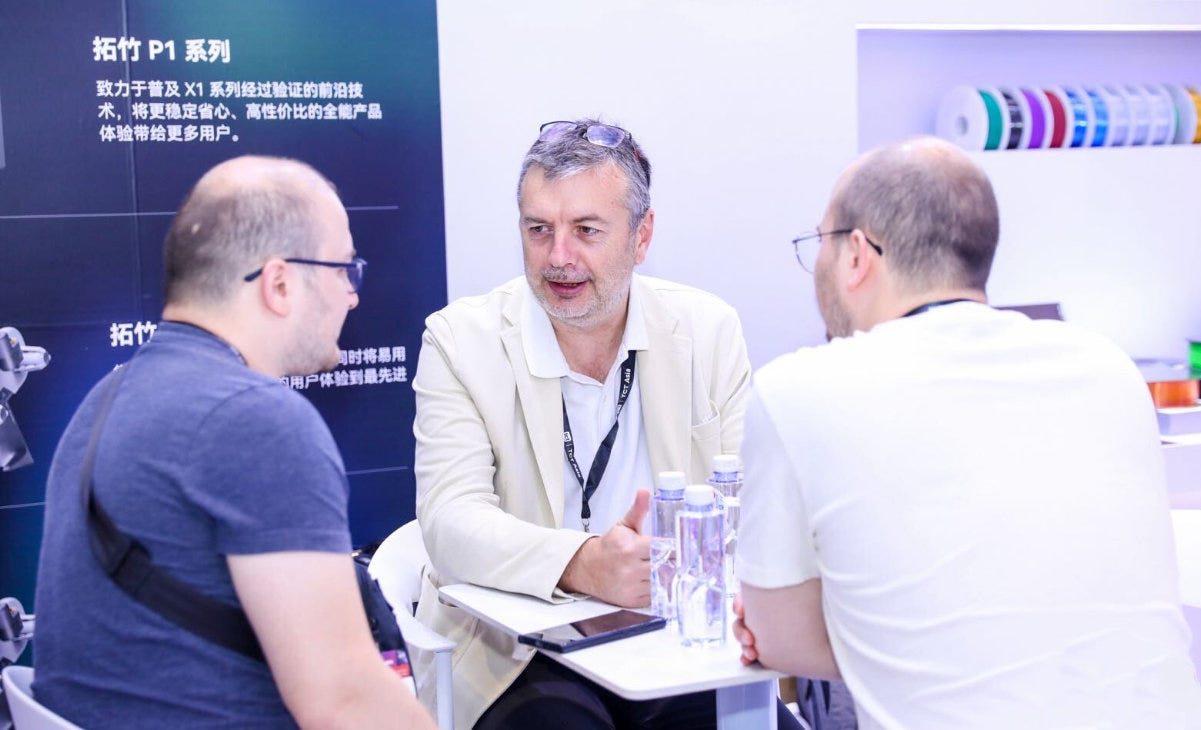
And yet, at a certain point, that path began to lead somewhere that didn’t yet exist on the map. Quite literally.
Because in 2022, Bambu Lab Europe did not exist. There was no office, no team, no structure. That was about to change.
If you look at Cedric’s LinkedIn profile, you won’t see a sudden pivot toward 3D printing. His professional background looks like a textbook example of modern business development in the tech world.
This is not the story of an engineer who has been taking engines apart since childhood. It’s the story of a person whose professional focus was understanding why people use technology - or why they stop using it.
As Cedric says:
I was born and raised in a family of engineers. My grandfather, father, brothers, uncles, cousins - everyone around me was an engineer. And while I was passionate about what they talked about during Sunday lunches, I often felt frustrated that they couldn’t explain things simply, starting with the real-life value of their work.
That’s when I decided on my path: I was going to become a sales professional who could understand engineers and translate what they do into real-life value that people actually want - and help those engineers shine the way they deserve. That’s why I’m the only person in my family who went to business school instead of engineering school.
When Cedric later spoke about 3D printing, he didn’t start with technical parameters. He started with user frustration. With barriers. With moments where technology promises too much and delivers too little.
He had been an entrepreneur his entire life, constantly trying to figure out what would come next and how to open new paths for technology. Because of that, his house was full of half-working tech experiments - the kind of setup where, sometimes, his wife would get annoyed because turning on a light required rebooting a server. But he had an urge to try everything.
3D printing had long been on his personal watchlist of promising technologies. The potential felt game-changing. He bought his first 3D printer as a kit back in 2013, and from that point on, there were always 3D printers somewhere in his home.
Still, he never managed to do anything truly interesting with them. There was too much hassle. They weren’t reliable. Everything took too much time.
In March 2022, after selling his previous business, he decided to take a closer look at 3D printing again. Nearly ten years had passed since he first discovered the technology, and he figured it had probably matured enough to finally live up to the promise he had seen in it from the beginning.
While exploring the 3D printing ecosystem to understand what might be about to change, he stumbled upon the X1 Kickstarter campaign.

The campaign looked different from anything the market had seen before. The product was ambitious, the communication coherent, and the promise clear: 3D printing should finally “just work.”
Cedric took a close look at it. From the user’s perspective and from the perspective of the European market. From the perspective of someone who had spent his entire professional life at the intersection of technology and people.
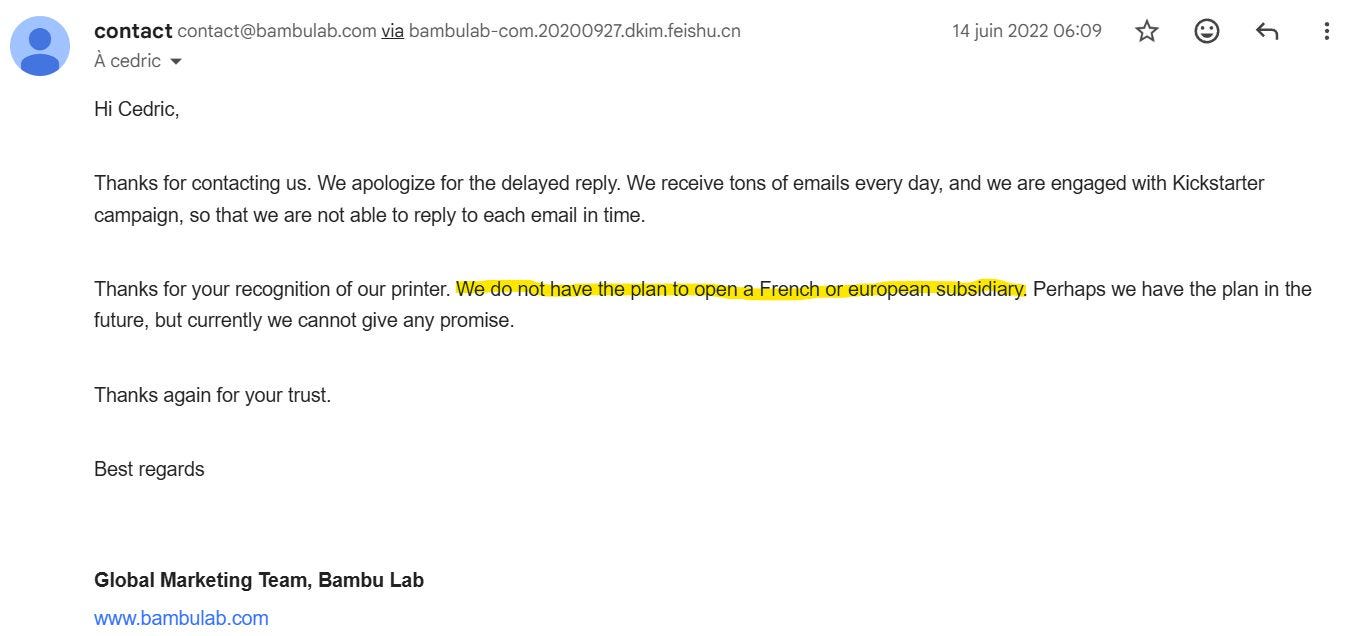
He wrote an email to the company. The reply was polite and concrete: there were no plans to create a European subsidiary. But that didn’t stop him from digging further…
Then Cedric came across a video by Michael Laws on the Teaching Tech channel. In the end credits appeared the name of one of Bambu Lab’s founders - Ye Tao.
Cedric found his LinkedIn profile - very modest, practically empty. A short description: “Working on a secret project now.”
He sent him a message - without any formal application. Just a handful of thoughts about the European market.
A few days later, a reply came.
That’s how a conversation began which, over the following months, led to the creation of Bambu Lab Europe.
Yes, as I mentioned in the title - it all started there. On LinkedIn. Interesting, isn’t it..?
The growth
At the time, the Bambu Lab team in China was still relatively small and - more importantly - composed largely of engineers and programmers. Cedric was the first person with such extensive business experience, and his contribution to the company’s development proved invaluable.
Long discussions with Dr. Tao helped translate an exceptional technological vision into market realities. Language differences. Logistics. Legal frameworks. Expectations around technical support. A completely different approach to brand relationships than in the US or Asia.
Initially, Bambu Lab’s plan assumed direct sales through e-commerce. However, from the very beginning, a long line of potential resellers formed around the company. In addition - something obvious to Europeans - the young company discovered that many firms and institutions would never order products from an online store. They need a local partner, technical and service support.
Oh, and they also need to buy goods on extended payment terms - not prepayment. E-commerce also made participation in public tenders impossible.
Cedric became the first point of contact for literally hundreds of people who wanted to sell Bambu Lab 3D printers and filaments.
A man with still very limited experience in 3D printing industry suddenly became one of the most sought-after and in-demand figures in Europe and beyond. He became the main go-to guy…
Sometimes I wish I were Kali, with eight arms to deal with everything. I know I’ve left some people along the way, not being able to read and reply to every message I received. I wish I could. I did my best.
The creation of the European division was a natural evolution. Except that Bambu Lab Europe was not created as a classic sales branch - someone on the other side recognized that this market needed presence, not just deliveries. From the very beginning, the goal was local presence: closer to users, closer to partners, closer to real problems.
Here, Cedric’s experience proved crucial.
The company was growing at a cosmic pace. Structures in China were expanding to meet enormous demand, and Europe also had to grow. In 2024, Harm Cremer and Jesse Wiggins joined Cedric’s team. A year later, Alex Martinucci, Guillaume Mouhat and myself joined as well.
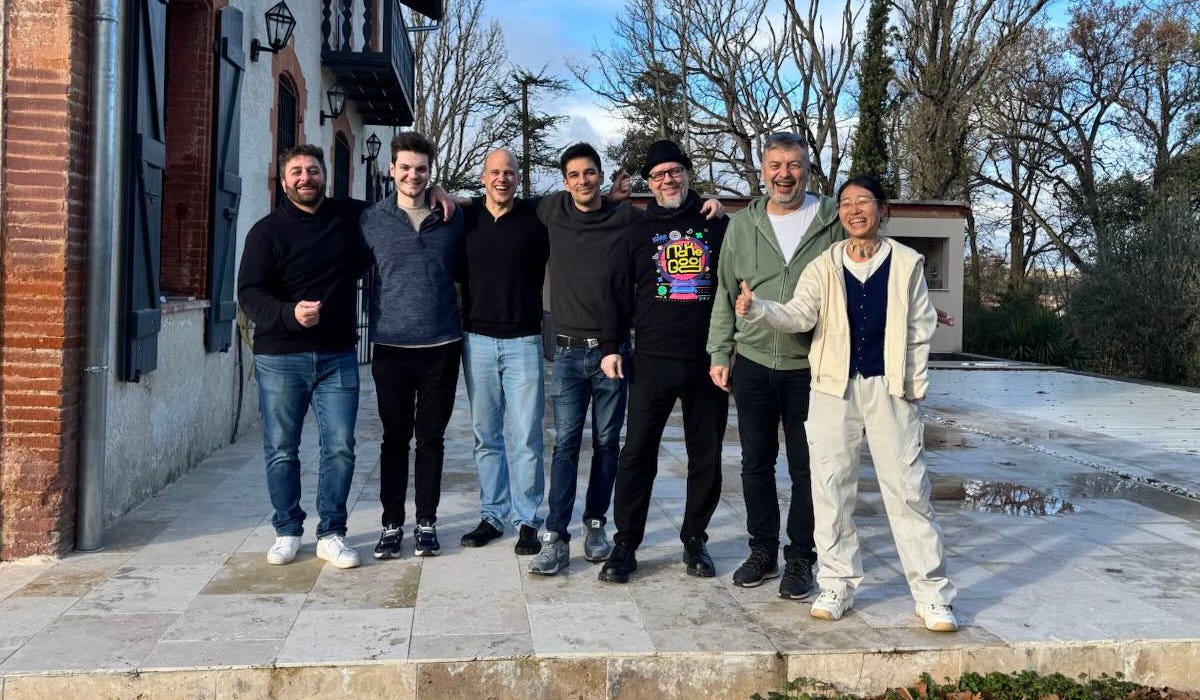
Our team continues to grow, but sales and reach are growing even faster.
Despite its scale, Bambu Lab is far from being a corporate behemoth. Spiritually, it’s still a startup, forming in a fully organic way. There is plenty of chaos, confusion, and uncertainty - but all of this is a byproduct of innovation and creativity, which characterize the vast majority of the team.
And the godfather of all this is Cedric Mallet - someone who was virtually unknown in the world of 3D printing just three years ago, yet is now one of the most important figures in the global AM industry.
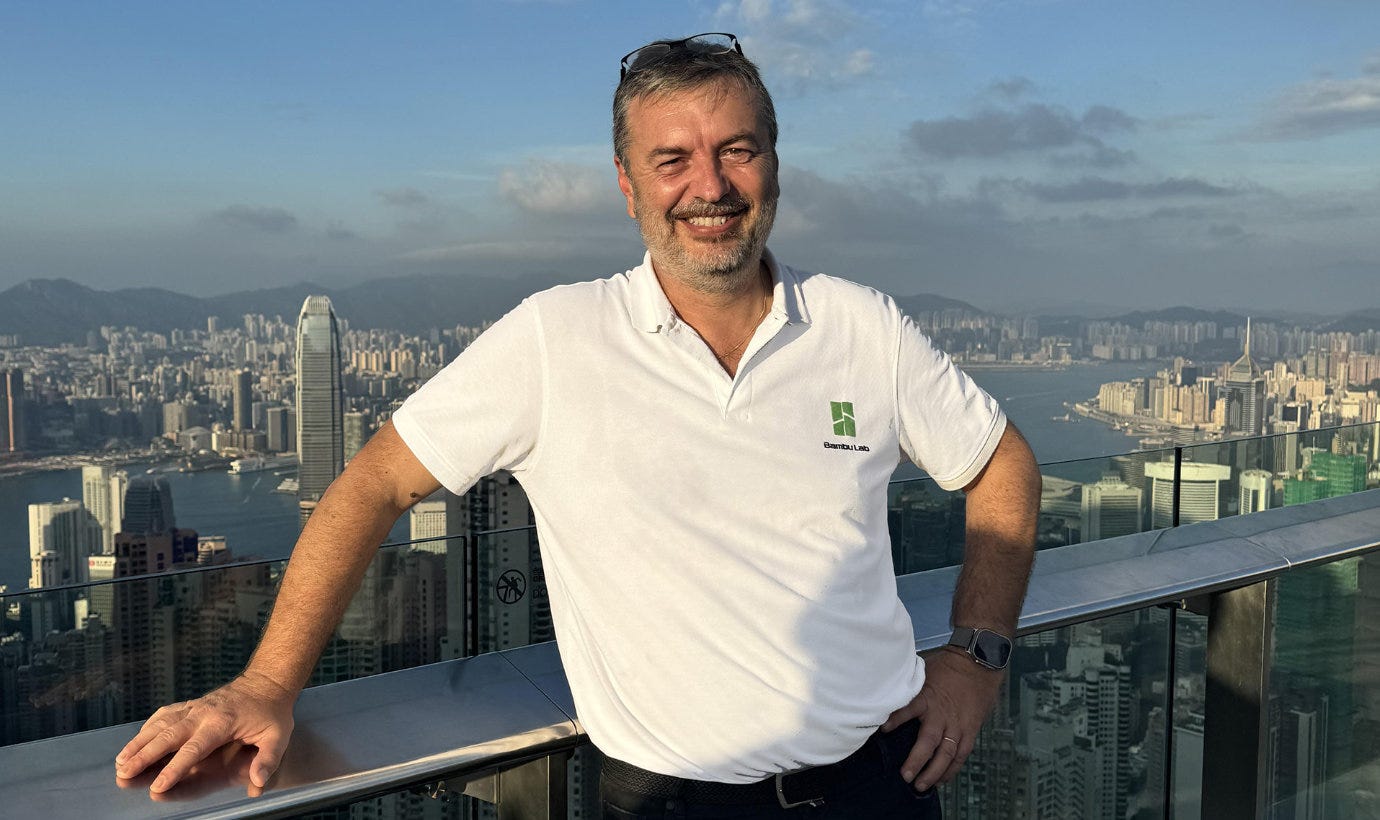
Although he doesn’t see this that way:
I don’t feel like being “one of the most important figures in the global AM industry.” I feel that the people who truly deserve the spotlight are the engineers making this technology possible, as well as the designers and makers using it to create amazing things and improve the world every day.
Being in the middle of all this makes me feel deeply aligned with the dreams I had as a kid: to shine a light on the people who really matter, even when they can’t find the words to express the importance of their own work.
That’s what I’m here for.