

Let’s talk about 3D printed insoles
I never thought I’d wear 3D printed insoles… Made in Hungary!

There are things we never imagine ourselves doing. Things that seem completely abstract. For example, I never thought I would be testing and walking around in custom orthopedic insoles made on a 3D printer.
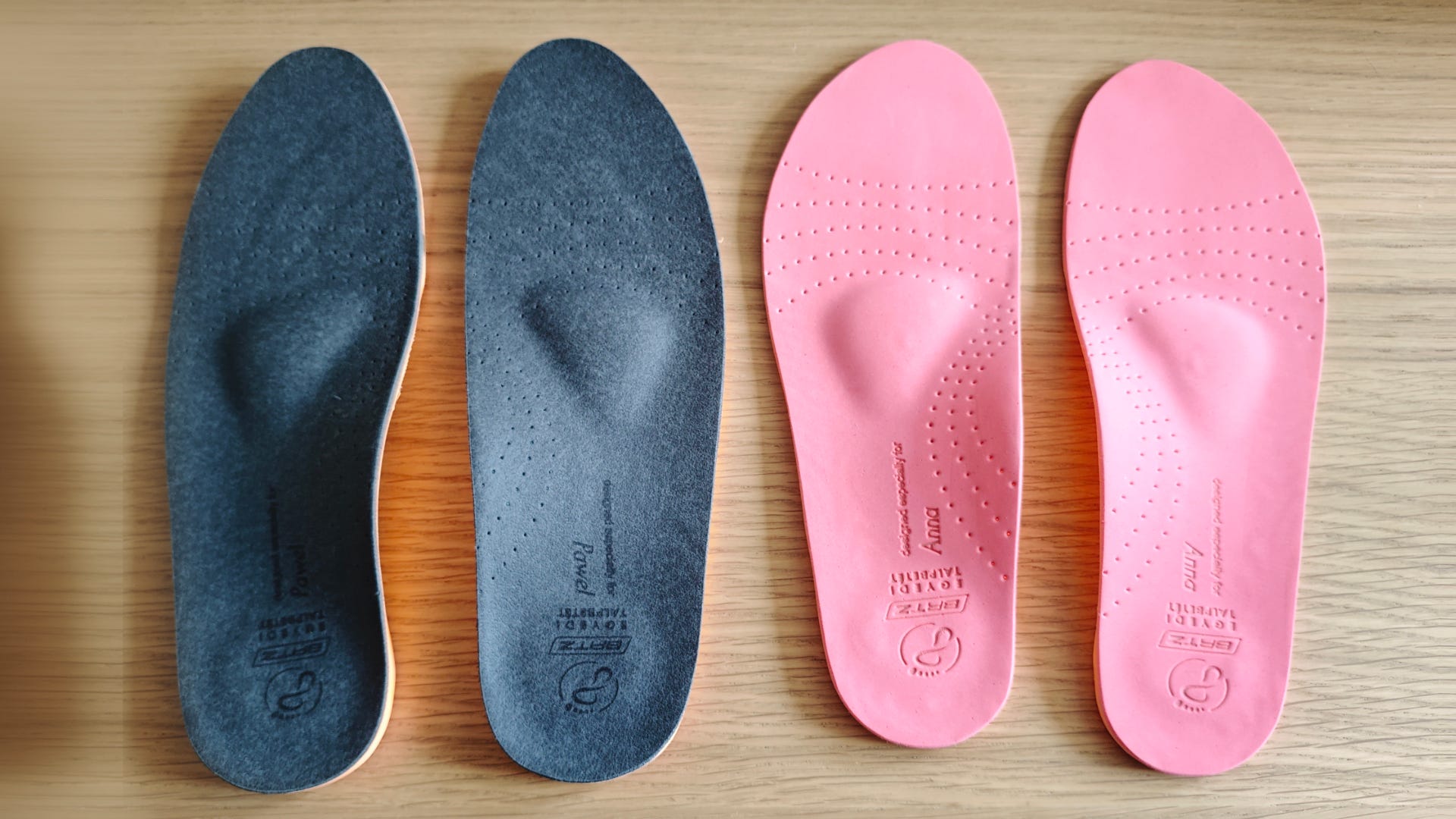
For the past few days, I’ve been breaking in a pair that arrived from Hungary. Printed in TPU, finished with an elegant leather top layer, with my name put on them.
This is one of those things that don’t look 3D printed at all. You’d need someone with several years of experience in the industry to even notice.
An insole like this isn’t a 3D print - it’s a finished, functional product.
I became their owner somehow by accident. I was in Budapest attending an industrial trade show together with 3Dee Hungary. On the last day of my trip, I went to see Batz - one of the Hungarian shoe companies that uses Bambu Lab 3D printers in its daily operations.
I walked out with my feet scanned and a promise that two weeks later I would receive my own custom insoles.
Which is exactly what happened.
And I found that remarkable. Because after 14 years of covering this industry, I’ve learned one thing: real-world applications of 3D printing rarely look the way startup presentations promised they would to potential investors.
The market for 3D printed insoles is changing rapidly right now. Quietly, without press releases. More and more pairs are being produced on standard FFF printers using increasingly specialized TPU materials. And hardly anyone is talking about it.
So let me ask a question that’s been on my mind ever since I returned from Budapest.
What if, in a few years, it turns out that the world’s entire fleet of FFF 3D printers is used primarily to print shoes, or insoles for shoes?
After a decade of promises about the next industrial revolution, after all the battles over who should control the openness of these machines, we might discover that FFF printers are simply on-demand footwear manufacturing systems.
Wouldn’t that be wonderfully ironic?
Visiting Batz
In mid-May, I was in Budapest. I spoke at Industrial Days about the four eras of additive manufacturing. And on the final day, together with 3Dee Hungary, the local authorized Bambu Lab reseller, visited one of their customers: Batz.
Batz is a Hungarian footwear manufacturer. Slippers, sandals, sneakers, ankle boots, direct-to-consumer sales, a retail store network, more than 11,000 reviews with an average rating of 4.78, collaborations with local fashion designers.
A classic comfort footwear brand, the kind you can find throughout the region.
With one important detail: Batz prints insoles on 3D printers.
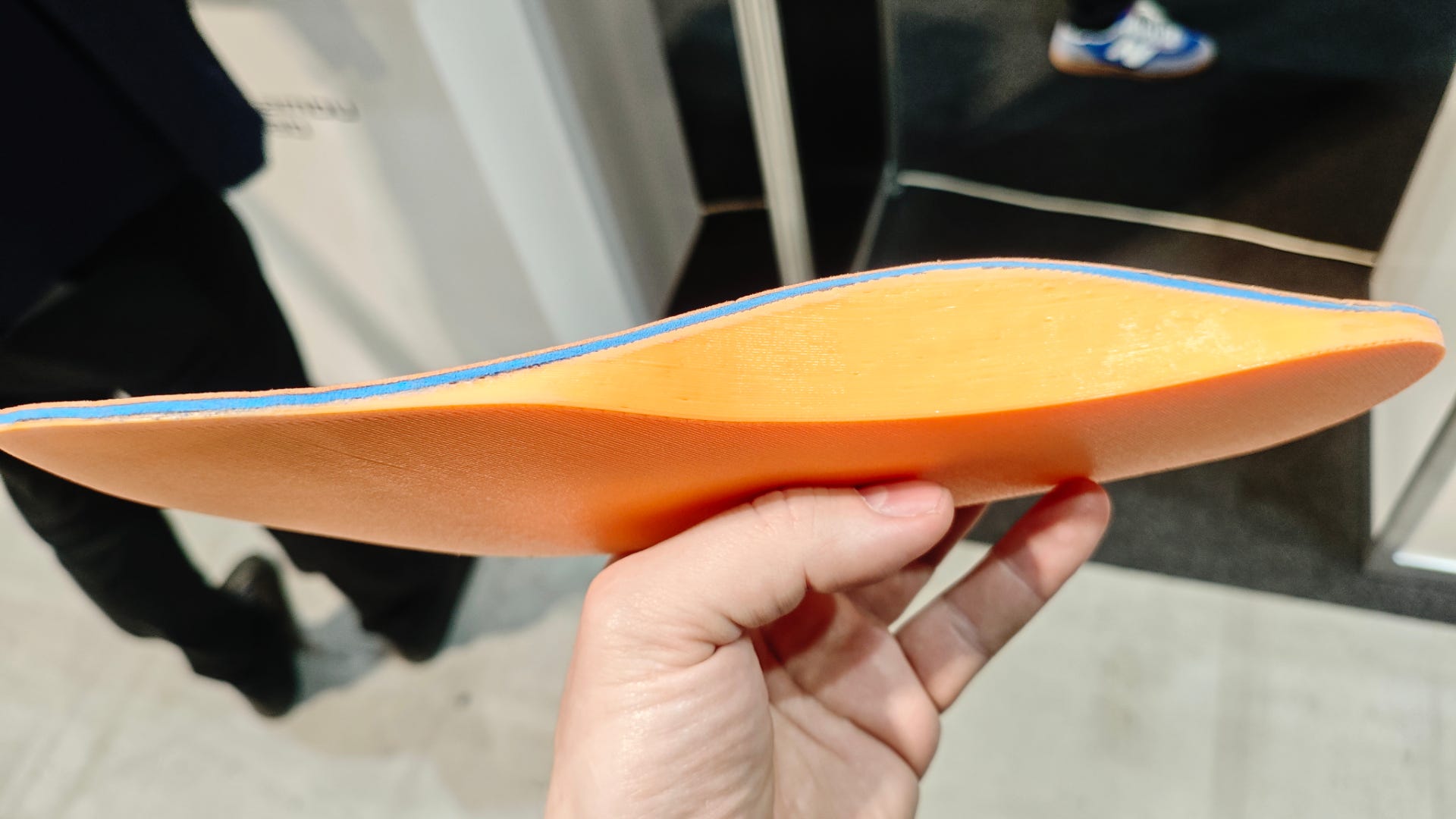
In the production area stands a fleet of H2D Pro machines. They run continuously and perform one task: producing personalized orthopedic insoles.
The service is integrated from start to finish. First comes a foot scan and a pressure map analysis. In reality, that’s the product, not the plastic.
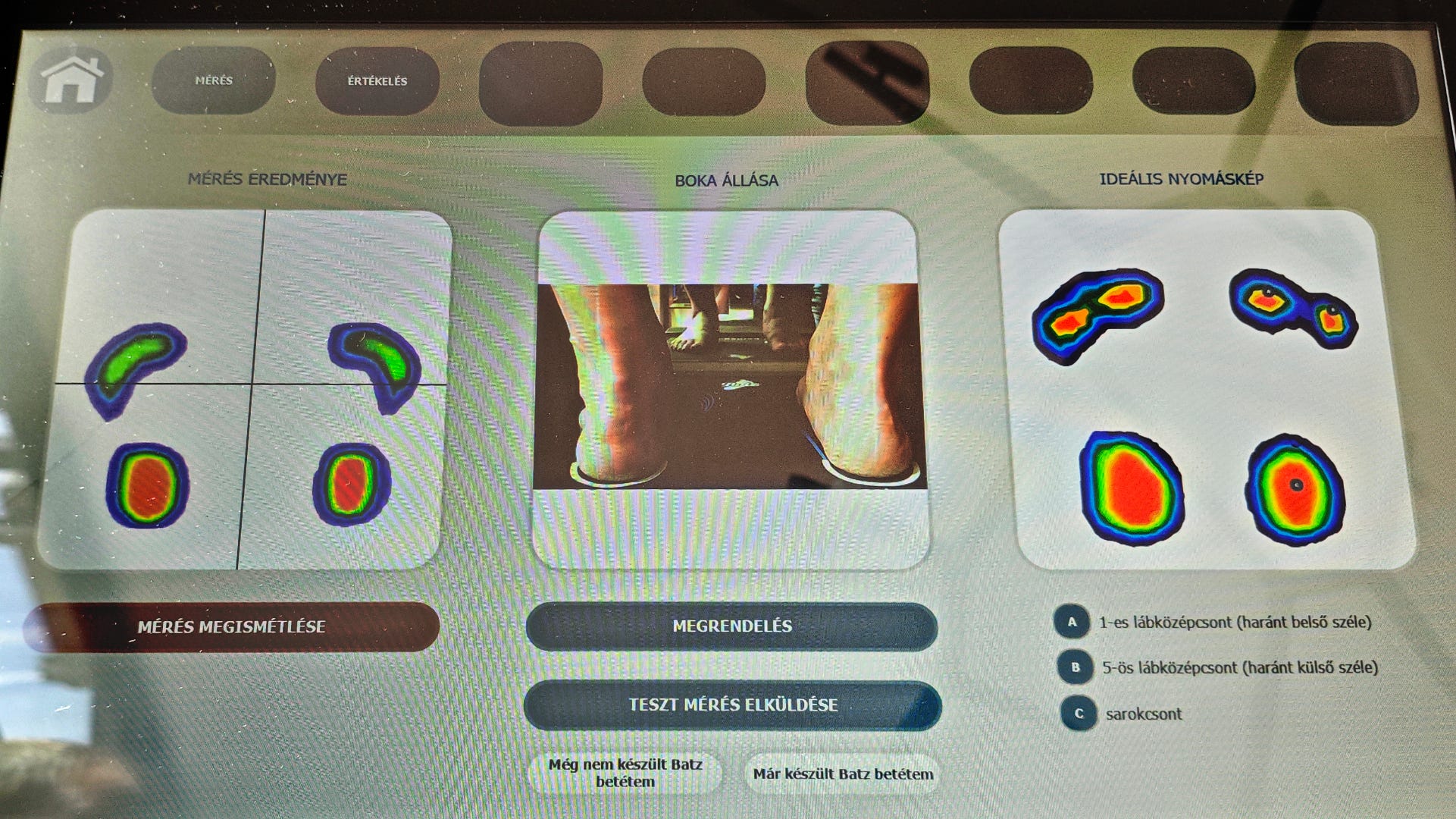
Using this data, a custom insole model is created for the specific foot of a specific person. Then comes TPU printing and leather finishing, followed by personalized markings. In my case, my name and a unique identification code.
Two weeks later, the package arrived in Poland. Well packed, visually appealing. Insoles that look like a finished retail product.


I’m only in the first few days of wearing them, and honestly, the beginning is strange. Dominik Marczell from Batz had warned me about that. Your foot needs time to adapt to the new support structure and gradually correct its position, so for a while it feels like something is wrong before it starts feeling right.
I already know I’ll order additional pairs for my other shoes. And that’s the most interesting part from a business perspective: I don’t need to travel anywhere or have my feet scanned again. Batz already has my model. I click, they print, the package ships.
And now to the reason I’m writing this at all. Batz is not an exception. FFF printing is quietly becoming the default method of insole manufacturing worldwide.
What the world prints when nobody is watching
Let’s start with an uncomfortable truth. Insoles are the perfect product for 3D printing, and for reasons that don’t sound particularly exciting from a conference stage.
Every foot is different. The production run is exactly one pair. The geometry is not excessively complex, the required accuracy is moderate, and the material needs to be flexible rather than structural.
This is exactly the kind of application where additive manufacturing outperforms traditional production methods: low volumes and complete customization. Insoles fit that description perfectly.
For years, there was one problem: FFF technology simply couldn’t do it well.
Affordable printers were slow and inconsistent, while TPU was flexible mostly in marketing materials. In practice, the result was a hard, slippery rubber-like object with very little actual flexibility.
Anyone who tried printing shoes or insoles at home just a few years ago knows exactly what I’m talking about.
But that has changed. And it changed from two directions at once: machines and materials.
The machines have matured. Fast, reliable FFF printers equipped with direct-drive extruders no longer choke on flexible filaments. Continuous printing now makes it possible to produce insoles one after another, day after day, without human intervention.
Plasmisc – an Austrain company using its Feetneeds’ solution, manufactures them in continuous production mode from recyclable foamed TPU, using a honeycomb structure whose hardness can be varied within a single insole. From a soft Shore A 30 to a firm Shore A 90.
A traditional insole simply cannot do that: different stiffness under the heel and under the forefoot, all in a single piece.
The material has caught up with the machines. Today’s TPU is not a single filament but an entire category of materials. Harder 95A grades for support, softer 85A grades for cushioning, and foamed variants that expand after printing into something much closer to foam than plastic.
Filament manufacturers have developed dedicated product lines specifically for footwear and orthotics. And that’s the key point: progress in TPU materials for FFF has done more for adoption than any new printer launch ever could.
Rigid orthotic shells remain the domain of SLS and MJF, most commonly produced from PA11, valued for its strength and biocompatibility. Some labs use resin-based systems. But economics is pushing volume toward FFF, because the difference in machine and material costs is substantial, while the resulting quality is more than sufficient.
The most significant developments, however, are happening in software and automation. This is a textbook IVth Era 3D printing business model: the machine is inexpensive and interchangeable, while the real value lies in software that converts a foot scan into a production-ready file without manual intervention. Clinics print locally. Orthotic labs reduce waiting times from weeks to hours.
And the shoes...
And then there’s the other side of the same coin: the hype surrounding printed shoes.
Here it’s important to be careful, because it’s easy to lump everything together. The most famous example, Adidas 4D and 4DFWD, is neither FFF nor TPU. The midsoles are produced by Carbon using its DLS photopolymer technology, and according to Adidas, the latest generation delivers 23% more cushioning.
That’s an entirely different technological story than my insole from Budapest.
But alongside it, a movement much closer to what I’m describing is growing. Zellerfeld prints entire shoes as a single-piece structure made from a single material, and in 2026 entered a high-profile collaboration with Nike on the Air Max 1000.
Startups such as ARKKY, FORMISM, FUSED, KOOBZ, or PRESQ are pushing printed footwear toward price points comparable to premium running shoes.
The common denominator across this entire wave is the use of single-material construction, most often TPU: recyclable, locally manufactured, and printed on demand. According to industry forecasts, the 3D printed footwear market is expected to reach USD 2.61 billion by 2029, with double-digit annual growth rates.
And now for the most important observation. It sounds obvious, yet it is rarely emphasized.
None of the companies genuinely pushing this market forward are 3D printing companies.
Batz is a footwear company. Adidas is a footwear company. Zellerfeld is a footwear brand that happens to own printers.
The market does not perceive them as additive manufacturing companies, and it never will. For them, the printer is simply a tool, no different from an injection molding machine or a sewing machine.
And that is exactly what technological maturity looks like: the moment FFF starts genuinely transforming an industry, it disappears from view as “3D printing.” What remains is simply the way a footwear company makes its shoes.
Which brings me back to the question I asked at the beginning.
Imagine that five years from now we look at the global fleet of FFF printers and discover that most of them are producing shoes, insoles, and footwear accessories.
After a decade of promises that this was the machine that would print everything and eliminate factories. After years of ideological battles over who should control the openness of these devices (because truly, nothing intensifies a philosophical debate about open-source software quite like the prospect that it is ultimately being fought over machines that print insoles).
That would be very funny.
Because this entire industry spent years selling a science-fiction revolution. What it got instead was something far more modest—and far more real: a product that people actually want to buy, manufactured locally and tailored to an individual foot.
I’m wearing exactly that product as I write this.
The first few days are strange, just as they told me they would be. But it gets better every day, and something tells me the same is true of this technology.
Post Scriptum
Of course, I don’t actually believe that 3D printers will end up printing only shoes and orthopedic insoles.
They will continue printing drones - and more and more of them. They will print toys. Dental printers will produce teeth, prosthetics, and aligners. They will continue creating jewelry patterns for lost-wax casting and countless other applications.
The idea of “3D printers for shoes and insoles” is simply a metaphor for the gradual specialization of the technology.
These machines will stop being devices for everything. Instead, they will develop into sector-specific production platforms, each optimized for a particular application and market segment.
And that is where their greatest strength lies in terms of deployment volume and commercial adoption.