

Materialise’s exit from eyewear proves The I Market Law of Additive Manufacturing
3DP War Journal #97

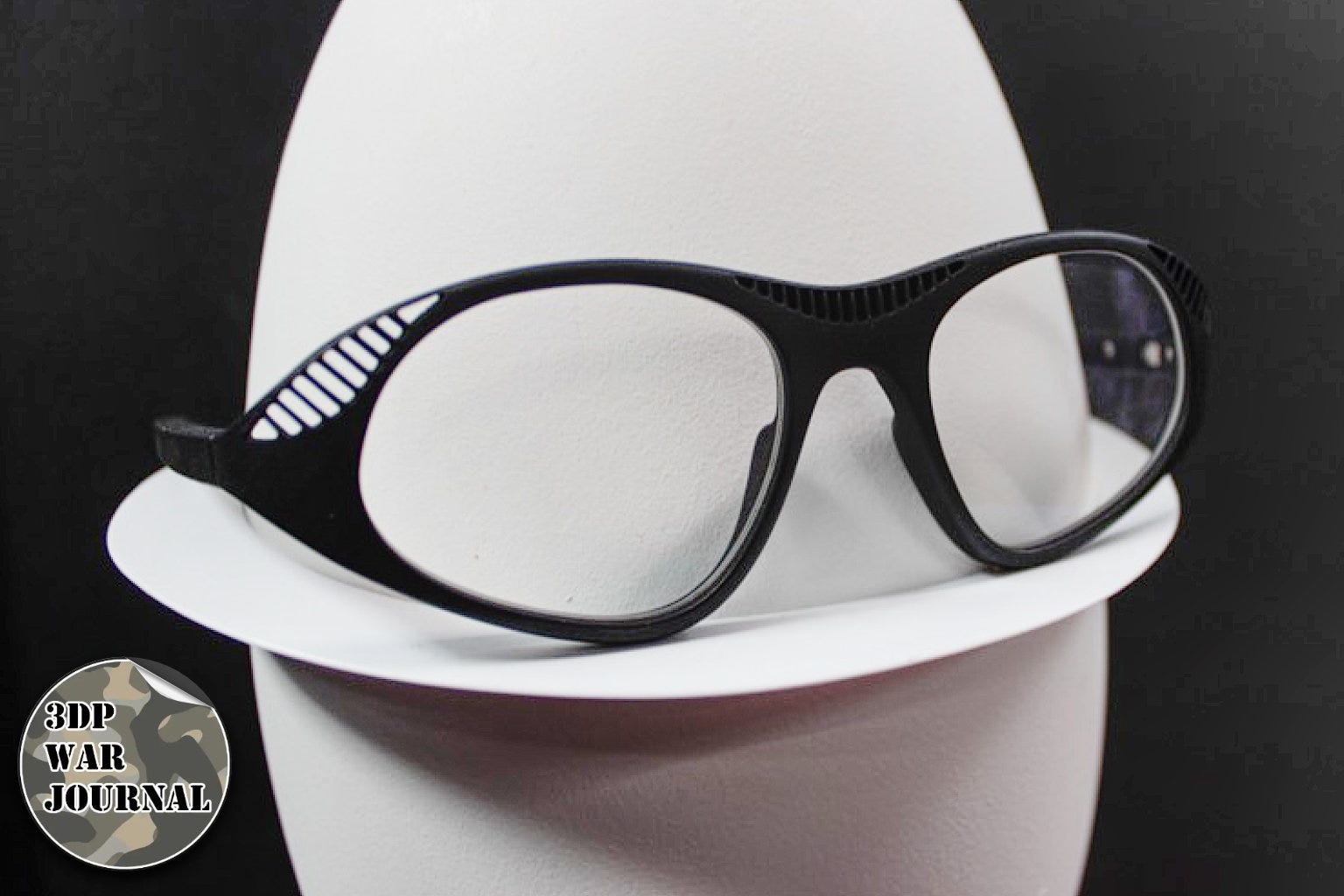
Last week, Materialise announced its financial results for the first quarter of 2026. Along the way - almost casually - the company mentioned a rather surprising yet highly symbolic decision.
The company is transferring its eyewear business to the management team running that operation.
This comes just a few weeks after RapidFit, another branch of the Belgian company’s activities, met exactly the same fate.
Two business sales within a single quarter is a fairly distinct signal. The official statement talks about “focusing capital on key areas,” but I would like to pause for a moment and consider what is really behind it.
Especially in the context of what I have described for years as The I Market Law of Additive Manufacturing.
3D printed glasses
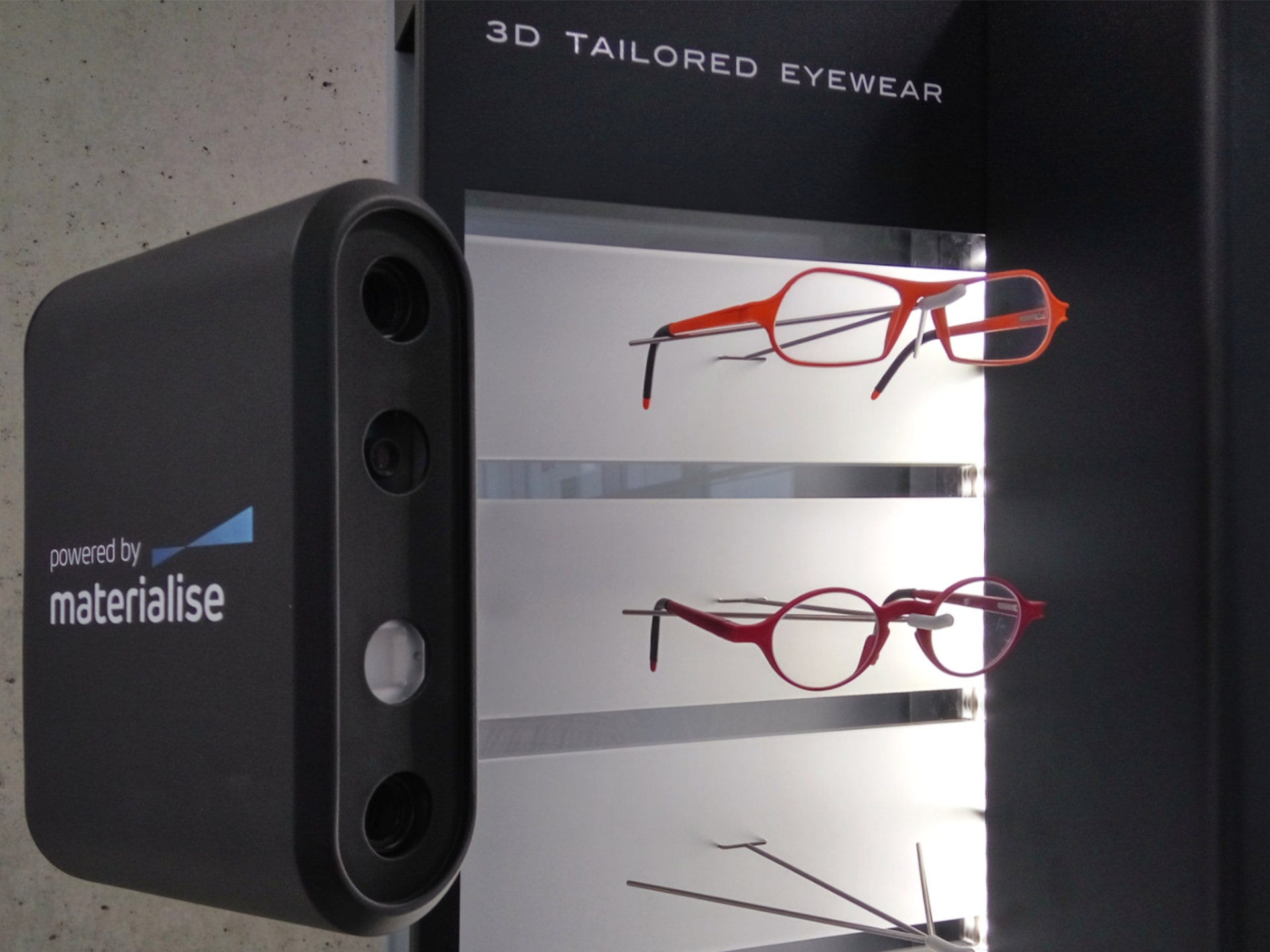
Materialise spent years building its eyewear business - and by AM industry standards, it actually did it very well. The company was a pioneer in applying 3D printing to eyewear frame production, operating the largest dedicated eyewear manufacturing facility in Europe.
It developed proprietary materials - both PA12 and bio-based PA11. It created validated production workflows, the Eyewear Fitting Suite digital fitting system, finishing technologies, dyeing processes, and post-processing capabilities.
For years, it genuinely set the standard for the entire industry.
The technology worked and the products were of very high quality. The project was well thought out, developed consistently, and supported by global partners. And despite all that - Materialise decided to let it go...
So let’s look at the numbers, because numbers are always the most honest commentator.
The latest financial results
In the first quarter of 2026, Materialise reported revenues of EUR 66.3 million - essentially flat year-over-year (EUR 66.4 million in Q1 2025). At first glance, this looks stable, but the structure of those results is far more revealing.
The Medical segment grew by 6.7% to EUR 33.2 million and generated an adjusted EBITDA margin of 27.8%. Software - despite a slight revenue decline of 1.4% to EUR 9.6 million - dramatically improved profitability: adjusted EBITDA jumped 87.4% to EUR 1.1 million.
Meanwhile, the Manufacturing segment, which included both eyewear and RapidFit, recorded an -8.1% revenue decline to EUR 23.5 million, with adjusted EBITDA barely above zero - EUR 281 thousand versus a loss of EUR 377 thousand a year earlier.
This is the real context. Two “healthier” businesses are pulling results upward, while one - tied to custom manufacturing, physical production, consumer markets, and automotive - is dragging them down.
As a whole, the company returned to net profitability: EUR 1.82 million compared to a loss of EUR 535 thousand a year earlier. Margins improved, debt was reduced, and the cash position remained solid.
But it is entirely possible that management finally asked itself a difficult question: why continue carrying businesses that do not generate meaningful returns when you already have a medical segment delivering nearly 28% EBITDA margins?
The answer to why the divestiture happened is therefore complex. In part, it is classic portfolio rationalization - focusing on what generates margins and predictable growth.
Medical remains one of the most resilient and least cyclical segments across the entire AM industry. Software, meanwhile, generates recurring revenues that can scale without proportional increases in cost.
And eyewear? That is physical manufacturing, with a significant manual component (hand-finishing), a customer base consisting of fashion brands and optical retailers, and a market governed by completely different dynamics than medicine or industrial production.
And this is where my first Law of the 3D Printing Market enters the stage in full glory.
The I Market Law of Additive Manufacturing
The first law states:
A company identified or perceived as a “3D printing company” will never achieve significant success in any market other than the 3D printing market.
This law says nothing about product quality, technological competence, or the correctness of a strategic vision. It speaks solely about market perception - how a company is viewed by customers, partners, and investors outside its own ecosystem.

For years, Materialise operated its eyewear business not as an “eyewear brand,” but as a contract manufacturer for other brands. And that is precisely the definition of operating within the boundaries of its own market - the company printed frames just as it prints surgical guides or prosthetics, meaning it was fundamentally providing a 3D printing service.
But the ambitions of that business reached further - proprietary fitting software, its own design studio, its own network of optical retail partners, and the Yuniku system as a direct touchpoint with end customers.
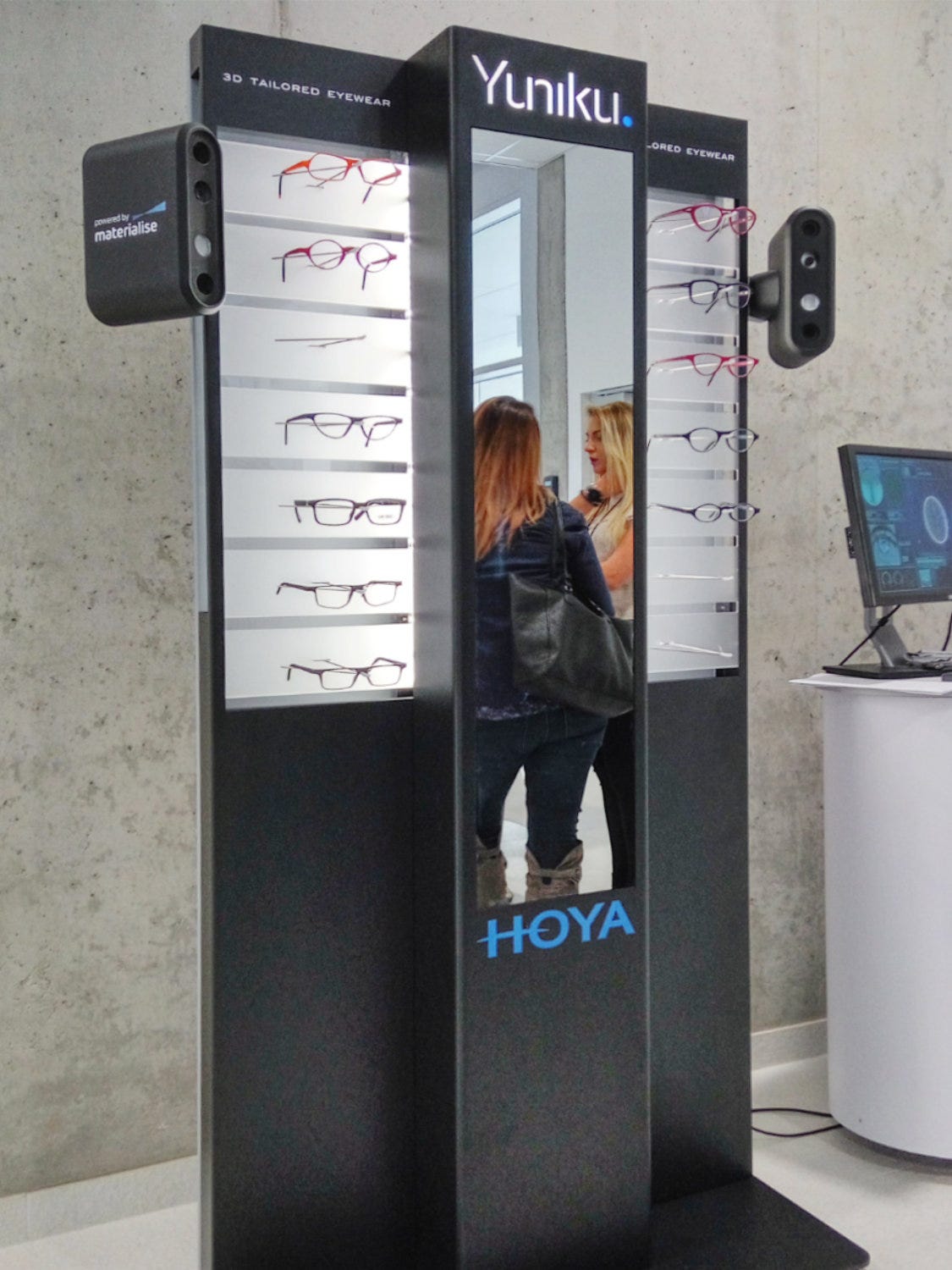
These were attempts to build something more than just contract manufacturing. Something closer to a true eyewear brand or platform.
And this is exactly the moment when the first market law begins to operate.
The eyewear market does not perceive Materialise as an eyewear player. It perceives it as a 3D printing company that happens to print frames. That is a fundamental difference.
For an eyewear brand looking for a contract manufacturer, Materialise is an excellent partner. But for a consumer buying glasses, Materialise does not exist as a brand - it exists merely as technology operating in the background. There is no independent consumer identity here, no direct relationship with the end user.
There is no loyalty to “Materialise glasses,” because from the perspective of the eyewear market, such glasses effectively do not exist.
This law is ruthless precisely because it operates independently of quality. Interestingly, the law is not a death sentence for the business itself - it is a sentence imposed on the brand.
An eyewear business spun out as a separate company, managed by people who have worked in it for years, without the burden of the “3D printing company from Leuven” label, suddenly has very different opportunities. It can build its own identity. It can develop relationships with customers and commercial partners without constantly having to explain that it is not simply another contract manufacturing division.
Materialise understands this - and that is why it is retaining a minority stake in the new company, believing in the business’s potential, but not necessarily in its ability to thrive within the existing corporate structure.
The first market law is ultimately a realistic observation about how additive manufacturing is perceived by other industries - and by the broader world itself.
Materialise will continue developing competencies where it has historically been genuinely strong - software and medical applications, where being a “3D printing company” is an advantage rather than a limitation.
Eyewear, meanwhile, is beginning a new journey. How will it end? We will see. But it will certainly be a fascinating story to watch.