

Polymaker launches a powerful material tool, but the core problem remains
RECODE.AM #40

In mid-November 2025, I wrote an article titled “How to build a modern material database for 3D printing,” in which I described the problem of the gap between a material’s digital model and its real physical properties.
I pointed out that variability between production batches, storage conditions, and hardware specificity make static material libraries insufficient, and that the future lies in dynamic, contextual material profiles managed by machine-learning systems.

And here we are… Polymaker - one of the largest filament manufacturers on the market - has just launched its own web application at app.polymaker.com.
This tool combines a material comparison engine, color matching based on the mathematical Delta E model, printer-capability filtering, and an AI chatbot trained on the manufacturer’s internal knowledge base.
It sounds like a step in the right direction. But is it an answer to the problems I described?
Let’s start with what the application actually does very well.
The comparison engine is solid. The ability to visualize data using XY charts, radar plots, or tables is something that has been missing in the consumer segment. If a designer wants to quickly compare the impact resistance of several materials, they can do it in a few clicks and export the results into documentation.
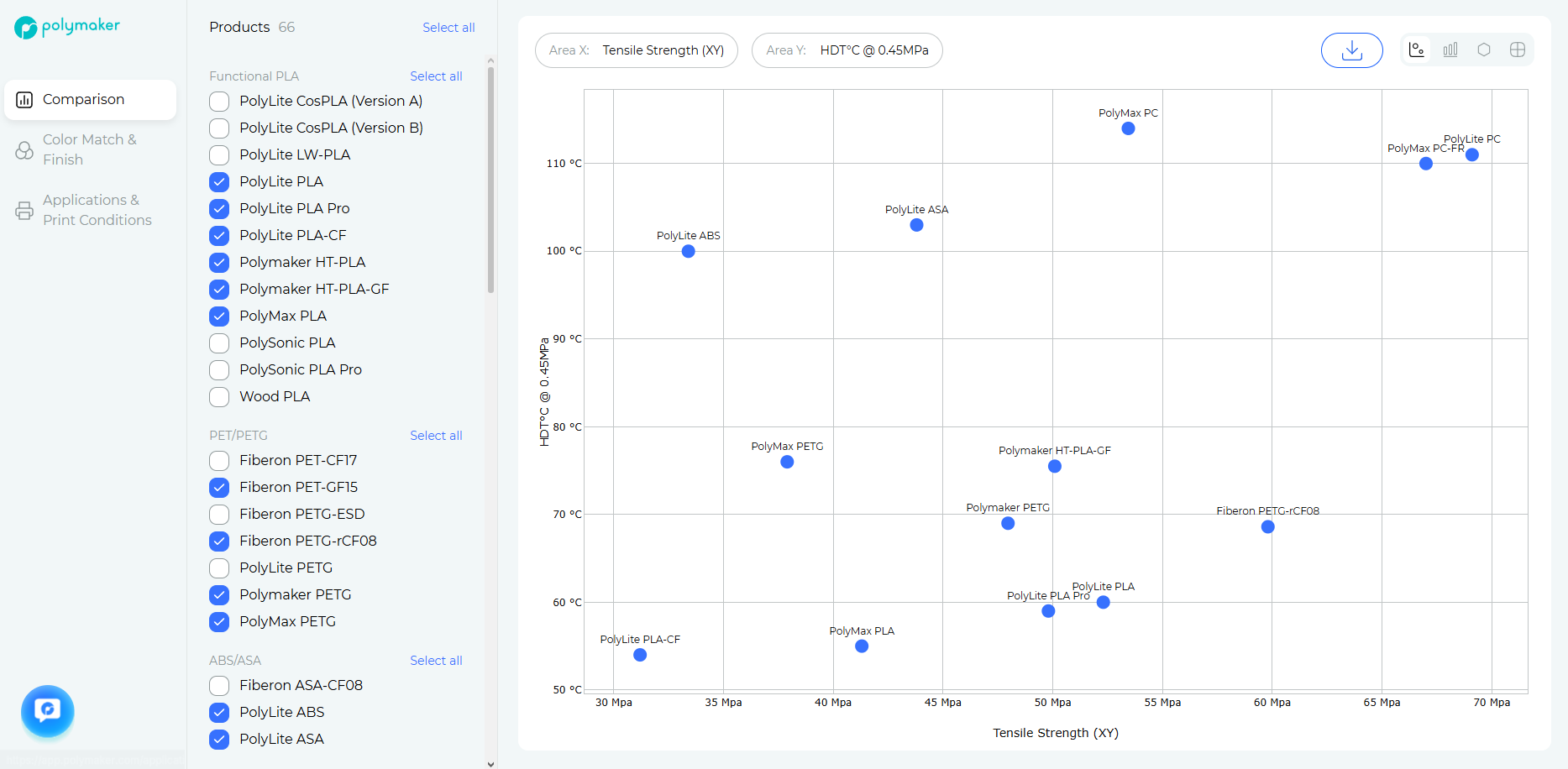
That’s real value, especially for engineers who must justify material choices in the design process.
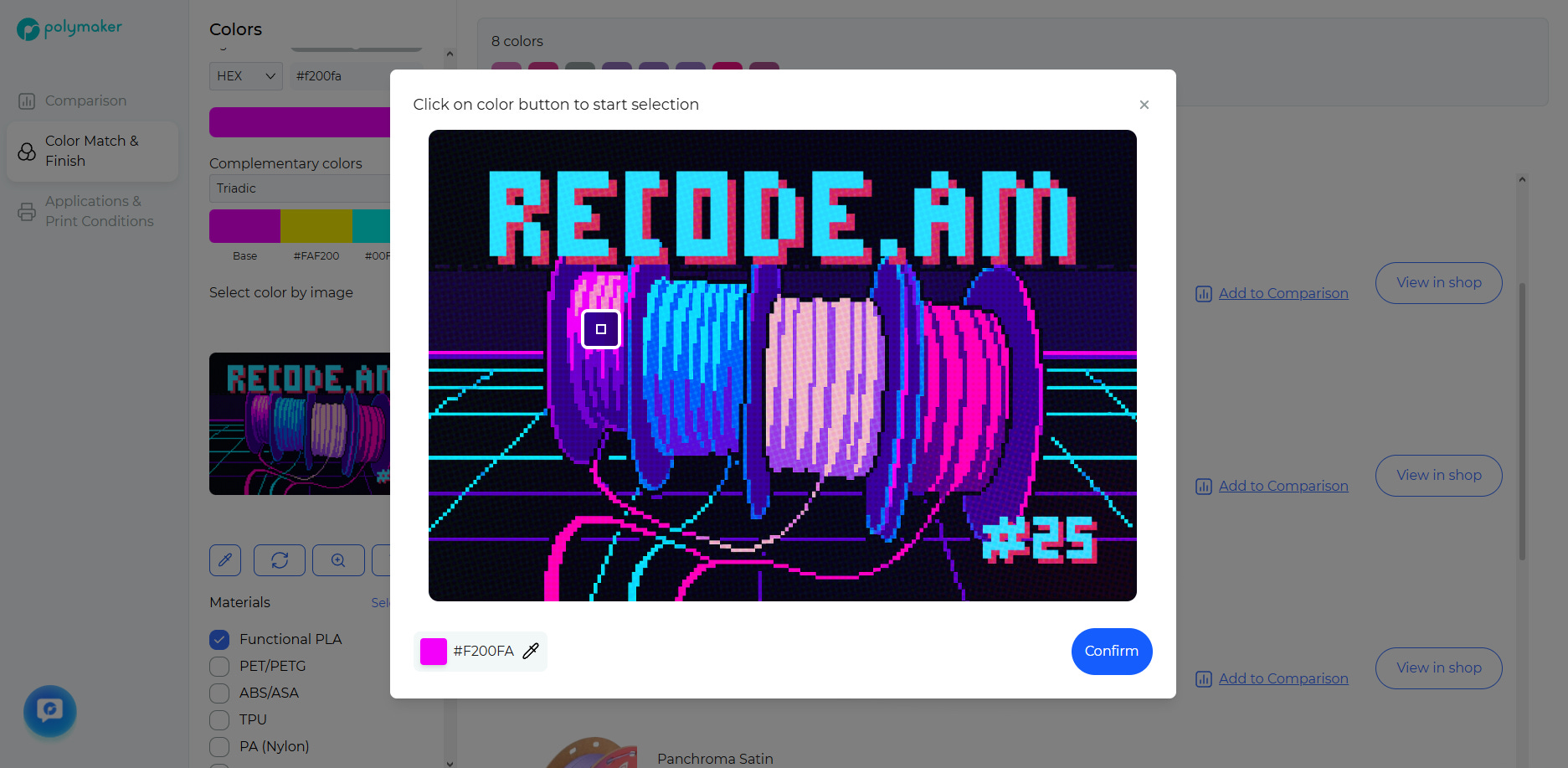
The Delta E-based color-matching function is something that previously required separate tools or manual comparison of samples.
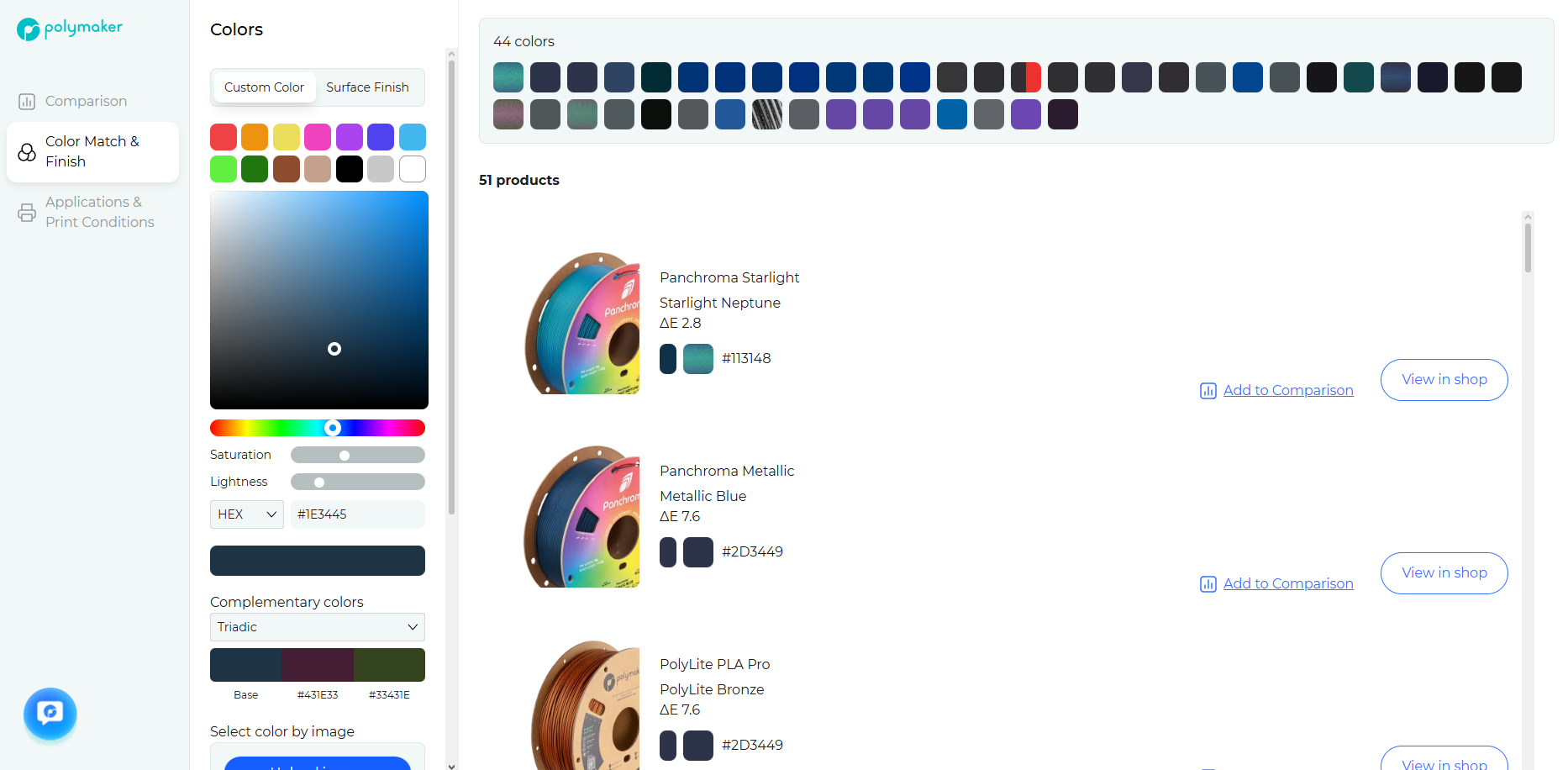
The ability to upload a reference image and automatically match filament from the catalog is both practical and elegant. In projects requiring visual accuracy - consumer product prototypes, exhibition models - such precision has a real impact on the final result’s quality.
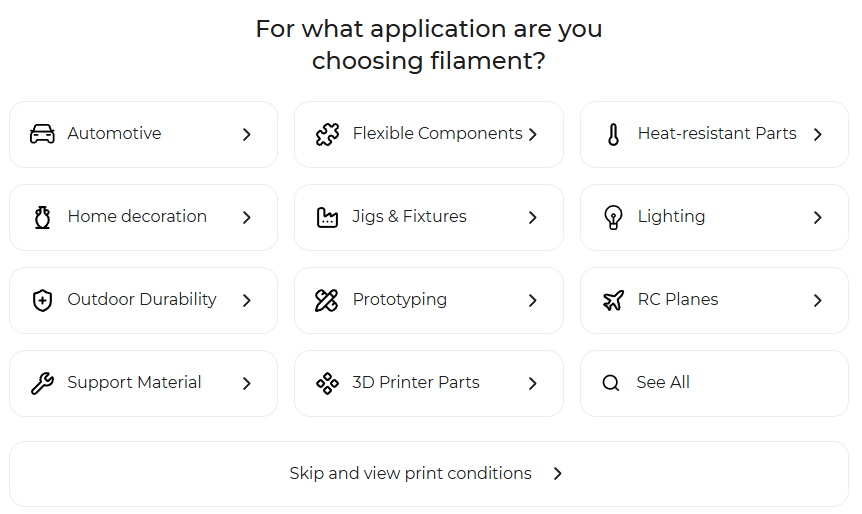
Filtering materials by printer parameters, such as maximum nozzle and bed temperature, is a simple but useful feature. Instead of manually checking whether a filament fits within the capabilities of one’s equipment, the application does it automatically.
This removes some frustration, particularly for beginners who may not realize that a purchased material could be beyond their device’s capabilities.
Finally, the AI chatbot trained on the Polymaker Wiki knowledge base functions as a technical advisor. It can answer detailed questions about chemical resistance, material availability, or troubleshooting print issues. That’s convenient.
But - and this is where the core of the issue begins - the chatbot only knows what Polymaker knows about its own materials. It’s a knowledge base closed within the ecosystem of a single manufacturer.
And this is precisely where the application collides with the theses I presented in my article.
I wrote that the fundamental problem is the gap between the digital description of a material and its actual behavior in a specific context - on a specific printer, with a specific filament batch, under specific environmental conditions.
Polymaker’s application offers data. Good data, well presented. But it is still static, averaged data describing the material in a theoretical way.
There is no room here for variability between production batches. There is no mechanism that accounts for the fact that the same PolyLite PLA from two different spools may require different printing temperatures. We simply assume every batch is perfectly identical.
My main thesis was that the future lies in dynamic material profiles - ones that learn from real printing-process data.
Polymaker’s application moves toward better presentation of catalog data, not toward updating it based on user experience. That is an important distinction.
This is not a criticism. It is an observation.
Polymaker has created a tool that genuinely improves the material-selection stage. It simplifies decision-making, reduces errors resulting from lack of knowledge, and organizes what has until now been a chaotic market of filament information. It is a fair and valuable proposition.
However, the problem I described - material variability, thermal degradation, humidity impact, differences between machines - remains unsolved.
The application does not ask in what humidity you store your filament. It does not know that your nozzle is worn by 15 percent. It does not analyze whether your previous spool of the same material had different rheological properties.
Polymaker has taken a step forward in an area that was previously neglected.
But the gap I wrote about is not a gap in access to catalog data. It is a gap between the catalog and reality. And no static knowledge base - even a very well-designed one - will bridge that divide.