

Print it yourself
Six months ago, I wrote about a crowdfunding campaign for a 3D-printed boombox. Now the project is available to everyone for free.

Back in January, on the Bambu Lab blog, I shared the story of Eric Brunner, a designer from Philadelphia who has spent his entire life building things: motorcycles, screen-printing equipment for producing T-shirts for underground punk bands, CNC-machined aluminum parts.
Then he was diagnosed with ALS (Amyotrophic Lateral Sclerosis).
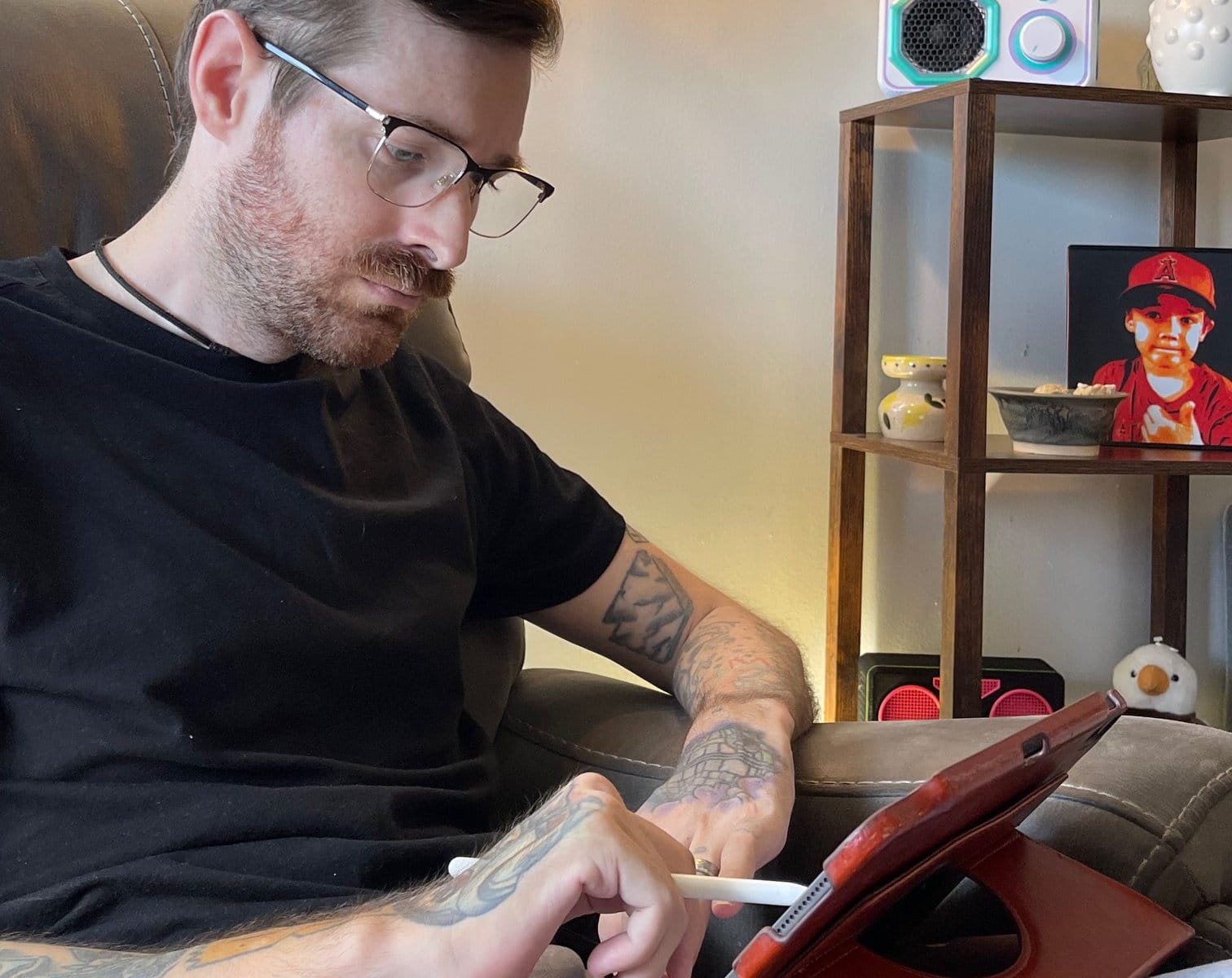
But instead of giving up and stopping, he moved all of his work into CAD. Today, he designs from his chair, using an iPad.

To print yourself anew
Eric Brunner and his road from illness to new heights of artistic creativity
Back in January, his 3D-printed boombox SignalForm, was just preparing for its MakerWorld crowdfunding campaign. I promised myself that if it launched successfully, I would print one for myself. I was even the first campaign backer.
So now I have an ending to this story.
Not the happy ending you are probably expecting.
The campaign failed. Only 23 people backed it. Not enough to make it financially viable.
Eric could have closed the file folder and forget about the whole thing.
Instead, he did something else: he released everything online. For free. Under a CC BY 4.0 license.
Complete printable files, a bill of materials with part numbers, step-by-step assembly instructions, and the original CAD sources.
What Eric actually built
First, a few words about the project itself.
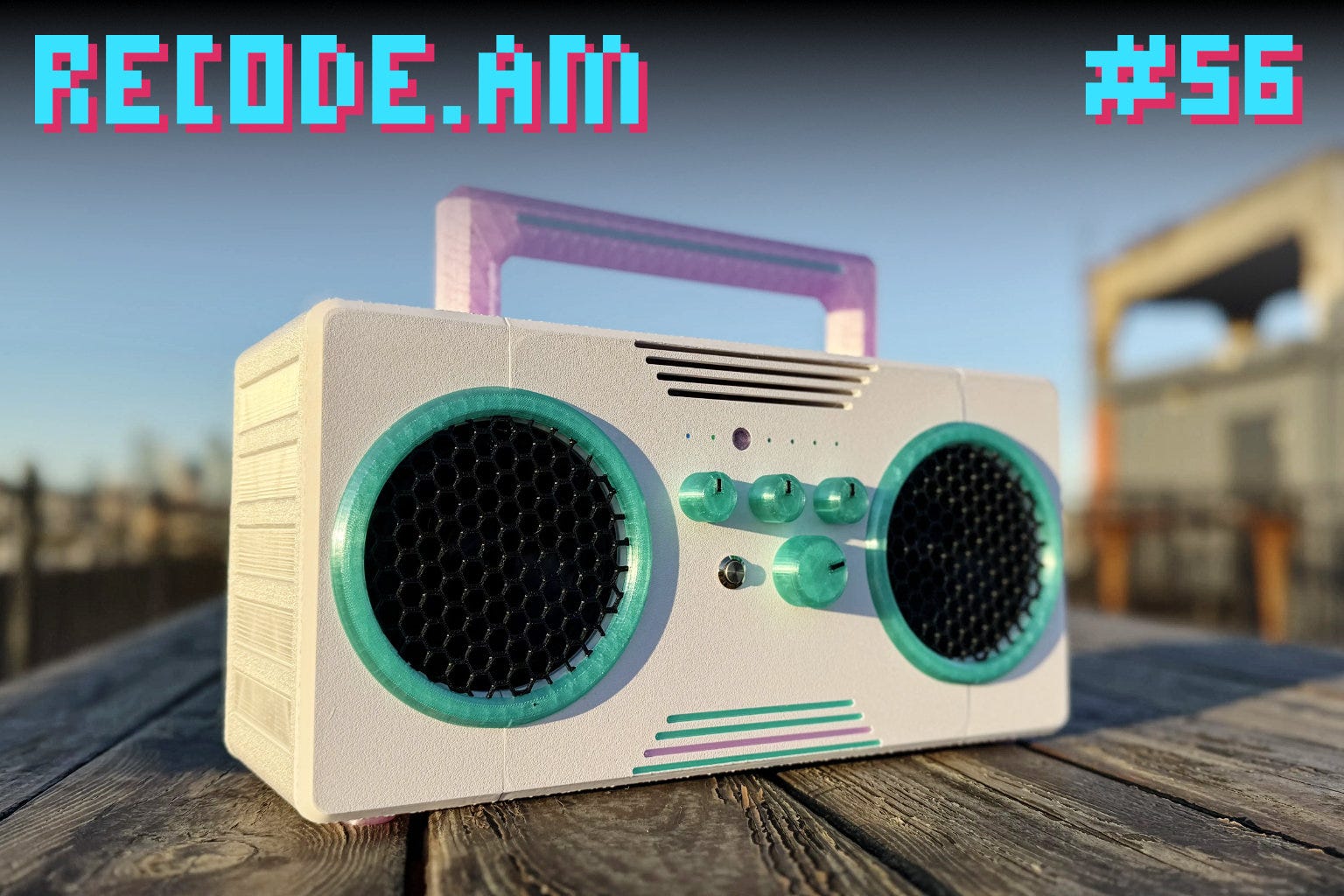
SignalForm is a portable stereo speaker whose components can be printed on a standard desktop FFF 3D printer.


The enclosure is printed in PETG.
It uses two 4-inch Dayton Audio aluminum-cone speakers, two passive radiators for additional bass response, a Bluetooth amplifier board, and five 18650 cells for power.
The left and right channels are fully isolated from one another, making it a true stereo system.
The total cost of the components is around $160.
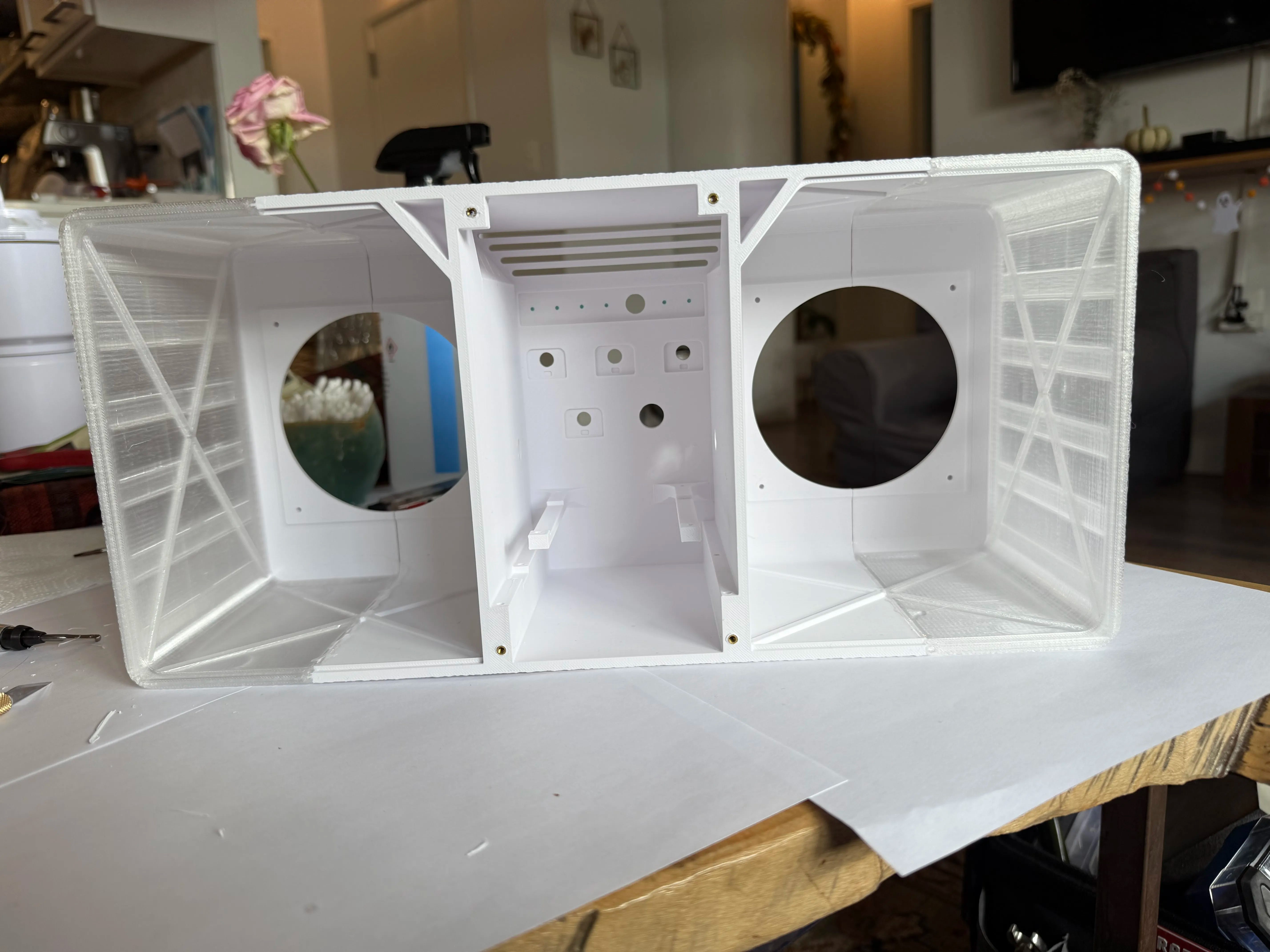
Eric began by taking apart a broken JBL speaker and designing a new enclosure optimized around vibration physics.
The prototype sounded noticeably better than the original. The rest followed from there.
He assembled it together with a friend who knew nothing about electronics.
The entire process was documented in a PDF so that anyone with a 3D printer and a bit of patience could reproduce it.
But there’s more…
Eric has programmed machine tools, TIG welded, and raced flat-track motorcycles.
When his hands began to fail him, he simply changed tools.
When he started using a cane, he designed a motorcycle-mounted cane holder because, as he says, nobody else was going to build one for him.
He also designs adaptive devices for other ALS patients: grips, wheelchair accessories, and other practical tools.
The same things that the healthcare system often charges hundreds of dollars for, he makes for a few cents and mails to people.
When someone in an ALS support group hears that these parts can be printed at home, they react as if they’re hearing science fiction.
For Eric, it’s everyday life.
Design has become a prosthetic for personal agency.
His body is gradually dropping out of the game, piece by piece, but the path from idea to finished object still works.
SignalForm is perhaps the clearest example of that.
It started with music played in a garage and ended as a complete, repeatable design that anyone can now build.
The best thing you can do now
The campaign didn’t raise the money. But the object exists. It’s finished. And it’s sitting for free on the hard drive of anyone willing to download it.
Now the measure of success is the number of units people actually build and how far the project spreads.
Eric put it more simply in an email he sent me:
You mentioned wanting to print one once it funded. It never funded, but the files are all there now. If you ever want to build it, everything you need is in the repo.
As well as in the project description itself on MakerWorld and GitHub, :
SignalForm was supposed to be a crowdfunded hi-fi Bluetooth boombox. It got featured by Bambu Lab. Then it didn’t fund.
23 people backed it anyway. That meant something.
And this is the request he left for anyone who builds one:
If you build one, post it. If you improve it, share it. That’s the whole point.
So if you own a 3D printer, you now have a very tangible weekend project. About $160 in parts, a few rolls of PETG, and step-by-step instructions.
The files are available on MakerWorld and GitHub:
https://makerworld.com/en/models/2915878-signalform-open-source-hi-fi-bluetooth-boombox#profileId-3261795
https://github.com/PrintedPulse/signalform
Build one.
Post a photo.
If you improve the design, publish the modification.
Eric isn’t defeating ALS. ALS isn’t something you defeat - and he’s very open about that.
He’s simply doing what remains within his reach: designing things and releasing them into the world while his hands still allow it.
SignalForm is one of those things. Now it’s yours, too.
An extra update…
In my January interview, I focused primarily on another of Eric’s projects: Flickering Souls: Illuminating ALS.
It is a large-scale light installation consisting of 256 portraits of people living with ALS, printed as lithophanes and illuminated by LEDs controlled by a microcontroller, arranged into a three-meter-square display.
Without light, the surface appears lifeless. When the LEDs turn on, the faces emerge.
Then the light begins to flicker and fade, representing fasciculations - the involuntary muscle twitches that are characteristic of ALS.
This year, the installation was exhibited at a major Philadelphia library near the art museum and later at a smaller gallery space. This was received with great appreciation.
Here is a video from the exhibition opening:
Great share Pawel. Have you printed it yet?