

Six years after
3DP War Journal #91

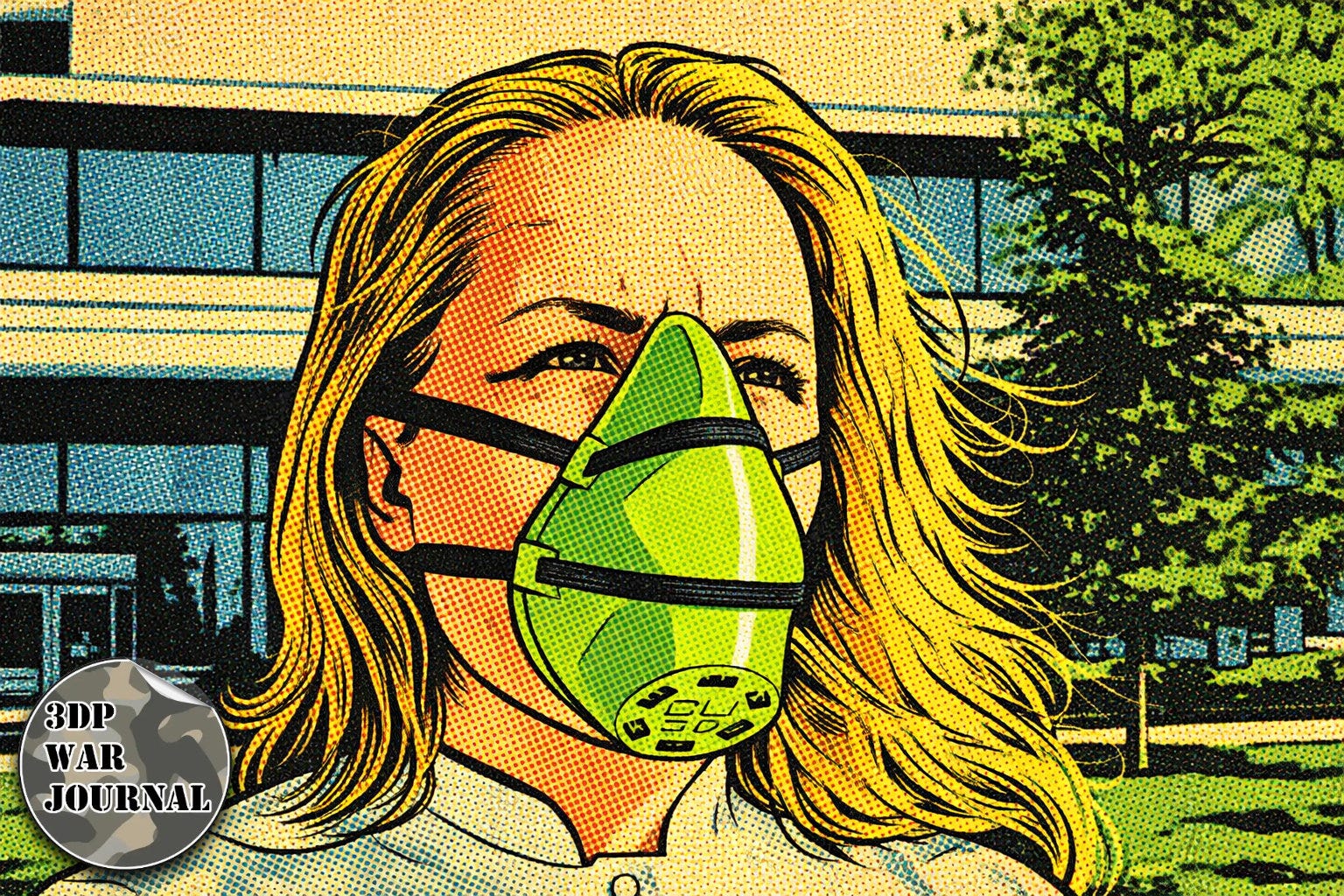
Six years ago, most of us were sitting at home, unsure what to think about everything that was happening.
The news from Italy kept getting worse. Hospitals in Lombardy were overwhelmed, doctors were forced to choose who would be connected to ventilators, and the word “Bergamo” took on a meaning no one had ever wanted it to have.
Apocalyptic notifications were coming in from all directions - another country, another number of infections. The air was heavy with something that is hard to describe as anything other than collective disbelief. The coronavirus pandemic was supposed to be the end of the world.
Of course, as we know today - it wasn’t. At least not in the way we feared.
It ended rather abruptly, giving way almost overnight to the war in Ukraine and yet another crisis - this time with a different face but a similarly crushing weight.
But before that happened, those several months of the pandemic brought a great change. Among other things, it changed the whole 3D printing industry.
Let’s start with Italy, because that’s where it all began.
In mid-March 2020, a hospital in Bergamo was on the brink of collapse. There was a shortage of everything - protective equipment, devices, ventilators. The company Isinnova, together with Massimo Temporelli, founder of a Milan-based FabLab, came up with an idea that in normal times would have seemed bizarre: to 3D print components necessary for safely connecting patients to respiratory equipment.
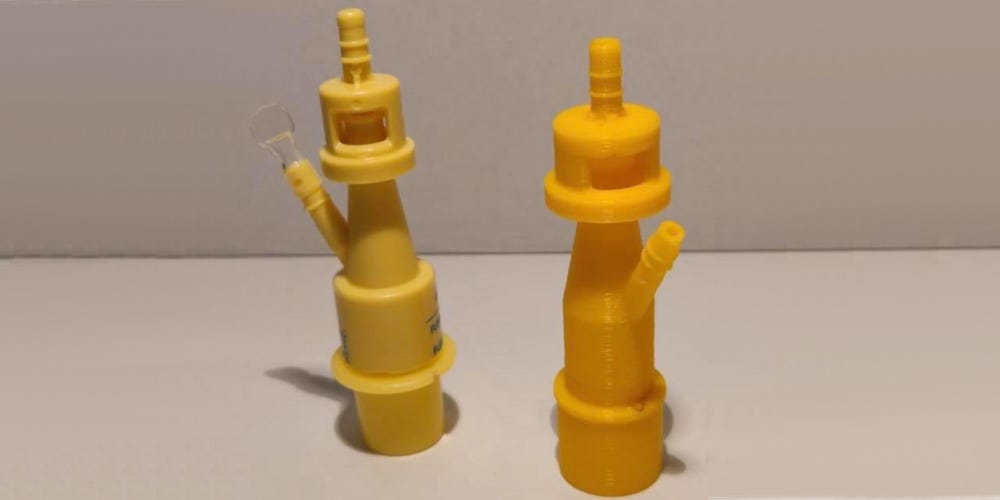
It worked. The story spread around the world at a speed we all learned not to underestimate that year.
That was the starting signal.
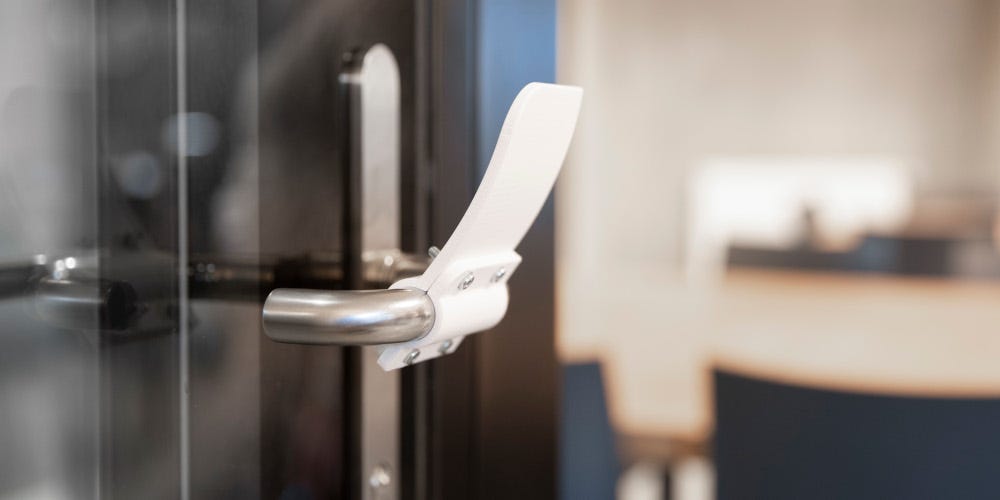
Within days, Materialise developed and released a free model of a “touchless” door handle attachment - print it, install it, open doors with your elbow. Simple, functional, effective.
Chile’s Copper3D published the design for the NanoHack mask - to be printed at home using antibacterial copper filament, as a substitute for unavailable N95 masks.
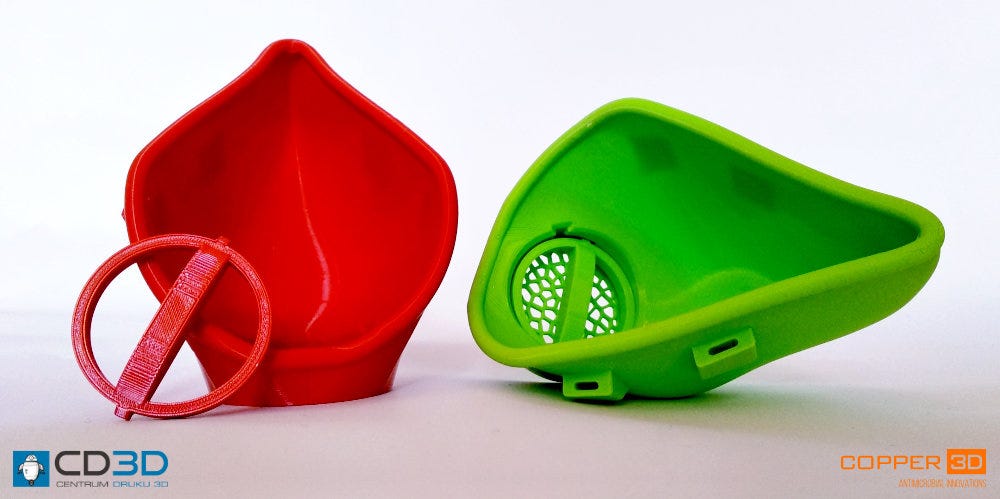
Polish designers Przemysław Stachura and Filip Kober created adapters for masks and diving equipment, allowing the use of commercially available filters.
And Prusa Research released a protective face shield design that became one of the fastest-replicated projects in the history of 3D printing.
What happened next was truly remarkable.
Owners of 3D printers around the world - hobbyists, small businesses, schools, universities, individuals sitting in their own apartments - began to organize. Spontaneously, without top-down directives, without central management.
Face shields were being printed in tens of thousands per day. At the peak, people spoke of hundreds of thousands of units daily.
Local coordinators collected finished parts and delivered them to hospitals free of charge. Those who didn’t yet have a printer - bought one. Those who did - bought more filament and printed non-stop.
The industry experienced something no business model had predicted: lockdown drove consumer 3D printer sales at a pace never seen before.
People confined to their homes, suddenly with excess time and a need to do something useful, discovered 3D printing not as a technological curiosity - but as a genuinely practical tool.
But the pandemic did something else as well. Something the industry had been talking about for years, but which had never surfaced with such force.
Global supply chains collapsed in front of everyone’s eyes. Factories in China stopped. Containers sat idle in ports. Lead times stretched from weeks to months.
Manufacturing companies that had spent decades building their models around a single supplier located thousands of kilometers away suddenly realized how fragile the foundations of their businesses really were.
And then someone remembered the 3D printer sitting in the corner of the production hall.
The concept of virtual warehouses and on-demand production - long treated as a curiosity or a conference buzzword - suddenly became very real and very necessary.
Instead of storing physical spare parts, you just keep a file. Instead of waiting weeks for a shipment from Asia, you print locally. Mercedes-Benz Trucks had already been doing this for long-lifecycle vehicle parts - Whirlpool as well.
The pandemic made the rest of the world start taking it seriously.
Logistics costs typically account for around 5% of the total value of goods - and for years they were treated as a fixed constant. Lockdown showed that this cost could skyrocket, or that the entire supply chain could simply come to a halt. Distributed manufacturing - based on a network of local producers instead of a single central factory - stopped being theory. It became a contingency plan that suddenly everyone wanted to have.
In 2017, ING published a report titled “3D printing: a threat to global trade.” It forecast that by 2040 or 2060, as much as 50% of global production could be additive, and the value of global trade could fall by 20-25%.

Back in 2017, the report made an impression, but traditional industries - automotive, logistics, finance - received it with a mix of skepticism and quiet unease.
Today, looking from the perspective of 2026, we can see that the pandemic was the strongest real-world validation of that report’s thesis - while at the same time showing how far we still are from its full realization. 3D printing did not replace global supply chains. But for the first time, it became a real part of the conversation about what they should look like.
The desktop market grew. Companies like Bambu Lab, Creality, and Prusa Research changed the rules of the game in the consumer segment - cheaper machines, faster printing, simpler interfaces. The number of home 3D printer users today is incomparable to what it was in 2019. That growth did not come from nowhere.
It came from lockdown. From face shields printed in garages. From door handle attachments and masks made from copper filament.
From people who touched a 3D printer for the first time not because they wanted a gadget - but because they wanted to help.
Six years ago, we were preparing for the end of the world. The world didn’t end. But it changed - and 3D printing changed with it, finally stepping out of the niche it had been pushed into for years.
What today looks like the natural growth of a popular technology has a very specific starting point: March 2020. Open-license files and printers running all night.
It’s worth remembering that.