


Eight years ago, on July 2, 2018, German inventor Kai Parthy introduced the world to GROWLAY. A filament on which plants could grow. And fungi. And mold - the same kind that gives blue cheese its distinctive character.
The material was absolutely brilliant. Its microcapillary structure absorbed water and nutrients, allowing moss, grass, or even bacterial cultures for pharmaceutical applications to grow directly on the printed part. Nobody had ever created anything like it before.
And nobody ever used it for anything.
Today, GROWLAY survives only in the memories of a handful of people. It has existed in memory longer than it was ever actually used. It is the purest example of what 3D printing did best for most of its existence: creating things that amazed everyone and that nobody needed.

On July 1, a day before this „remarkable” anniversary, Rajeev Kulkarni, an AM industry veteran, published a LinkedIn article posing a controversial question: what if additive manufacturing needs less innovation?
I read it and even commented on it, praising the arguments he made. Because I am probably the last person entitled to disagree with him.
I perfected the art of creating fascinating things that nobody needed.
I did it professionally for nearly four years in my own startup, GREENFILL3D. A startup that no longer exists and has gone to the same place as GROWLAY. Along with hundreds of other 3D printing projects, products, and startups.
Into oblivion.
So when I say that 3D printing spent years producing things everyone talked about but nobody bought, I say it as a repeat offender - with a complete record of my own offenses.
What is a “made-up” product?
Let’s start with something I call “made-up” products. Here’s my own definition:
A made-up product is innovative, original, and attracts widespread attention. It inspires others to try similar ideas. It’s cool. Everyone talks about it. Everyone loves it.
And nobody buys it, because there’s simply no practical reason to.
It’s the perfect product to receive for free. You put it on a shelf to collect dust, and a year later you throw it away.
A made-up product doesn’t solve any problem. It is a solution looking for a problem that doesn’t really exist.
I have my own collection of such products.
Exactly five of them.
The first was Branfill3D - a genuinely biodegradable filament made from wheat bran, a waste product from the production of pasta. During printing, it smelled like freshly baked bread straight out of the oven. It decomposed in soil, but it also degraded naturally over time when exposed to sufficient moisture. A beautiful zero-waste concept wrapped onto a single spool.
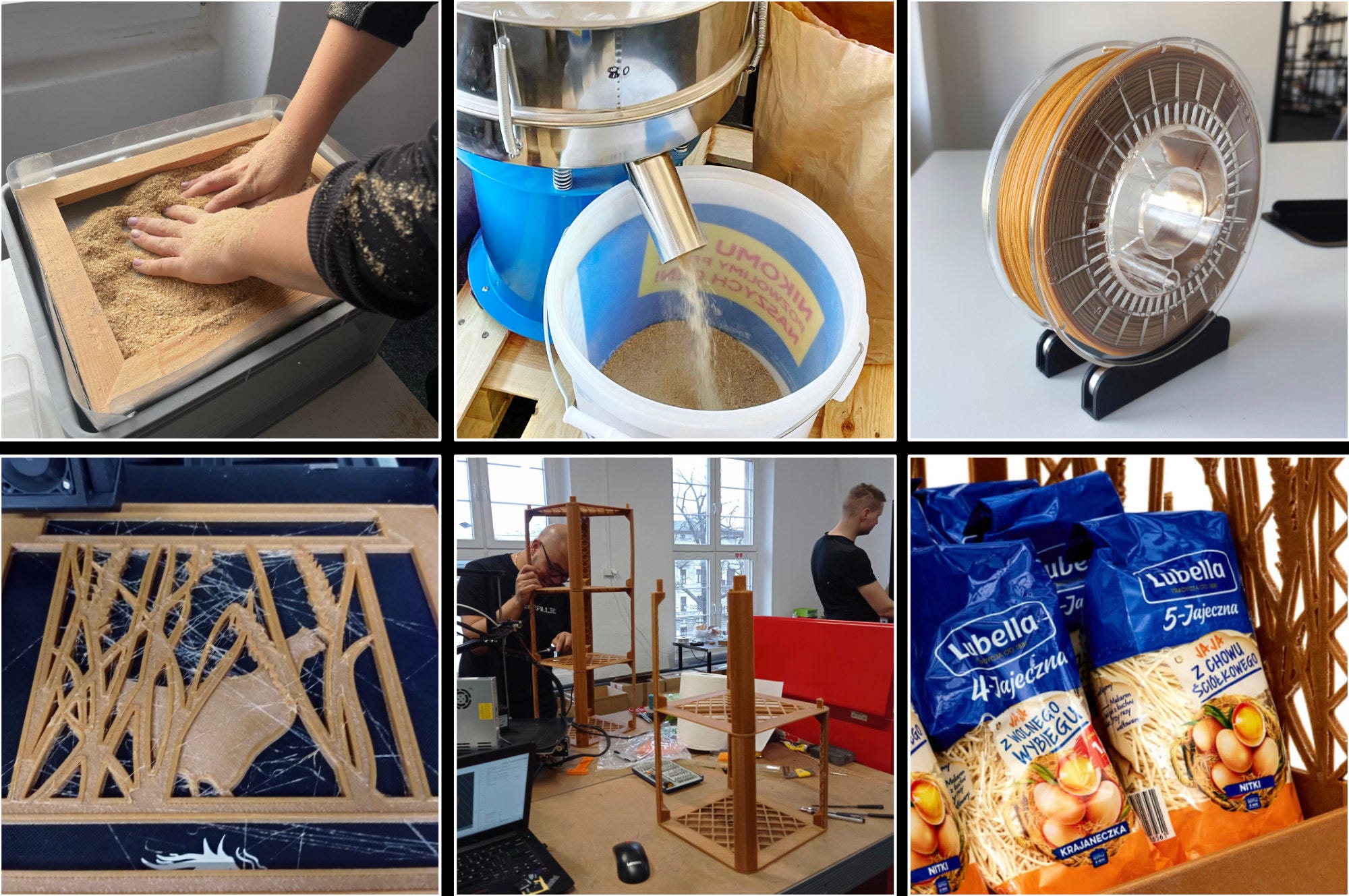
The problem was that it was a nightmare to print. It clogged 0.4 mm nozzles. It snapped easily. Retraction was the enemy. Stringing was terrible. Removing supports left surface scars just as ugly as TPU does. Honestly, the best thing you could print with it was a vase. Damn, you really needed a very good reason to use it.
The second product was a series of advertising displays made from the same filament. And here’s the best part: a display made from wheat bran was promoting pasta produced from that very same wheat bran in stores. The perfect circular economy story every sustainability presentation dreams of. The displays amazed the world, won awards, and GREENFILL3D became the only Polish company nominated for the 2022 3D Printing Industry Awards.
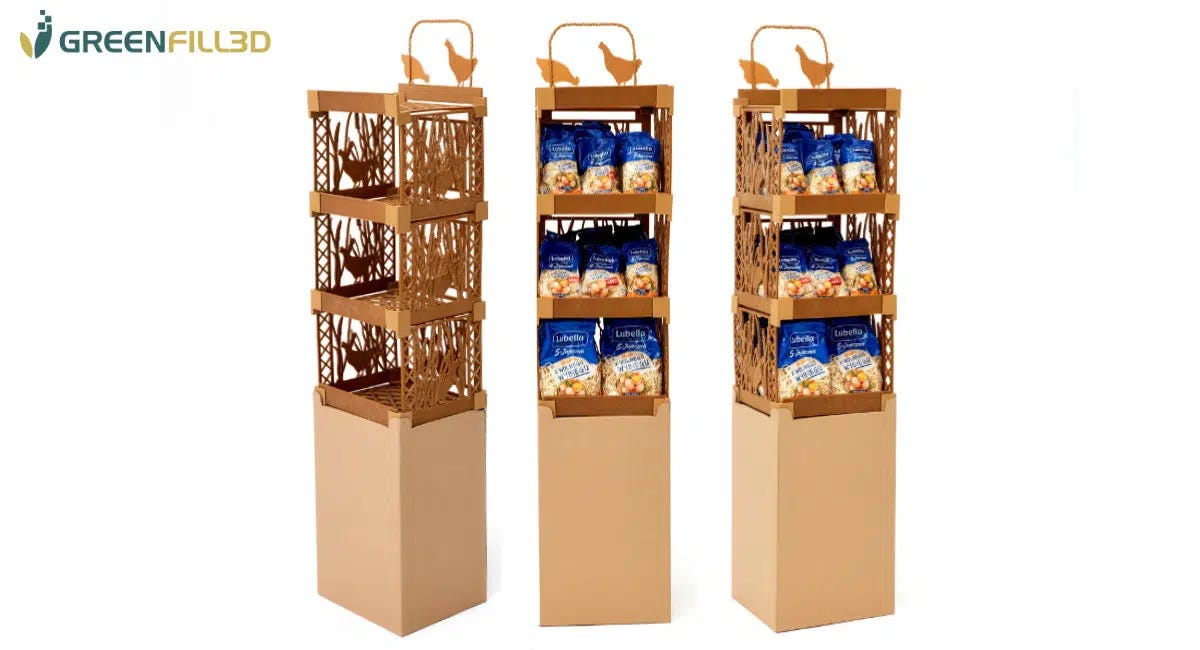
But manufacturing the displays was simply too expensive and too slow. Printing 200 units took longer than producing 2000 conventional cardboard displays. Not to mention the unit cost. And a large retail chain orders 2000 displays - not 200. Nor is it willing to pay the price of 2000 cardboard displays for just 200 printed ones. The math was brutal and unforgiving.
The third product was decorative protective covers for light switches and electrical outlets, printed in 3D and finished with UV printing. Colorful. Personalized. Available with QR codes or Braille descriptions. They looked great.
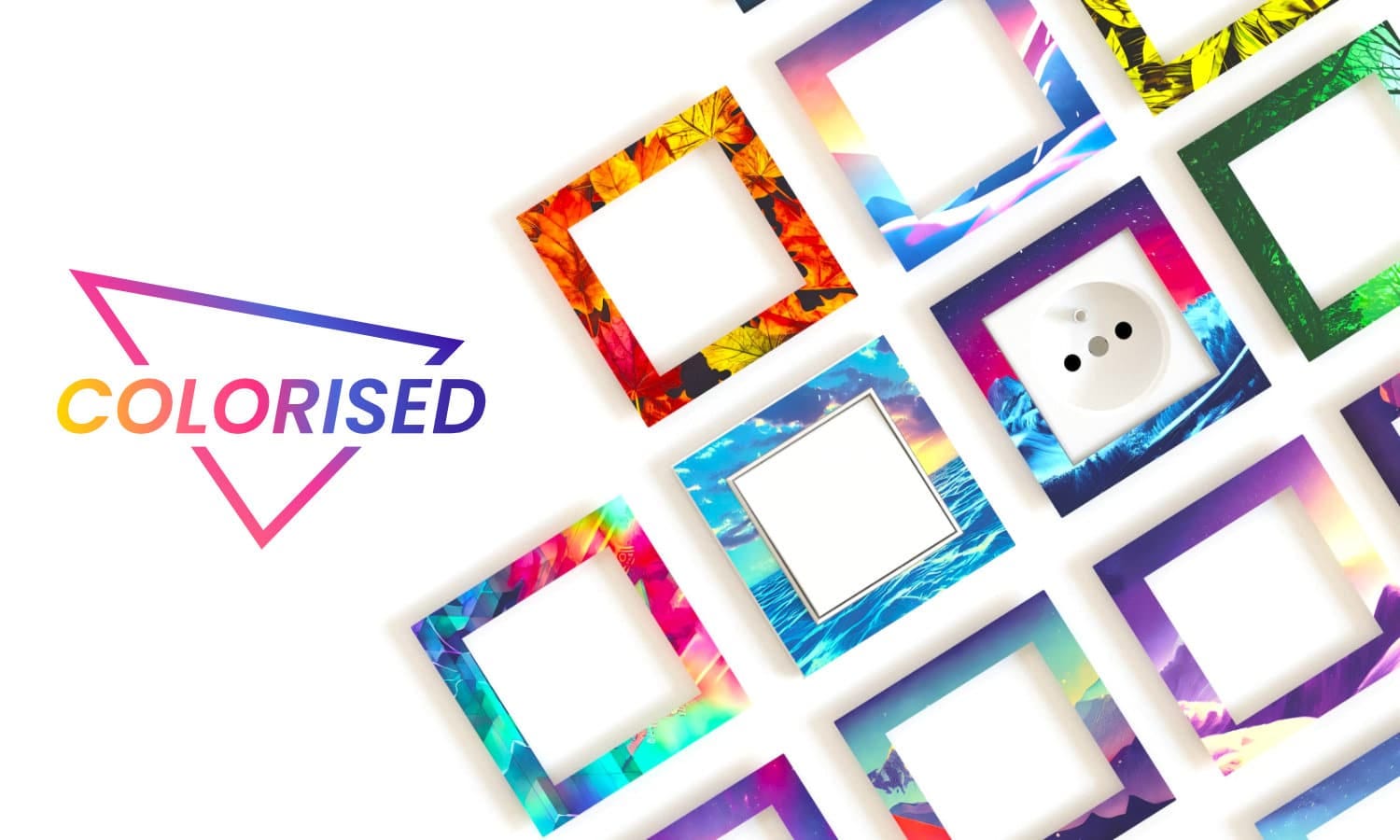
The only problem was that nobody actually needed them. Nobody bought them. On the other hand, everyone loved getting one for free at trade shows and conferences. Then they would even install it at home. But never returned to get another one...
The fourth product was a collection of lampshades made from fully compostable materials: Branfill3D or Tarfuse Envi-1 from Grupa Azoty, based on potato starch. Shapes you couldn’t find anywhere else. Named in Esperanto, because why not? Brano Vortico or Ora Arĝento.
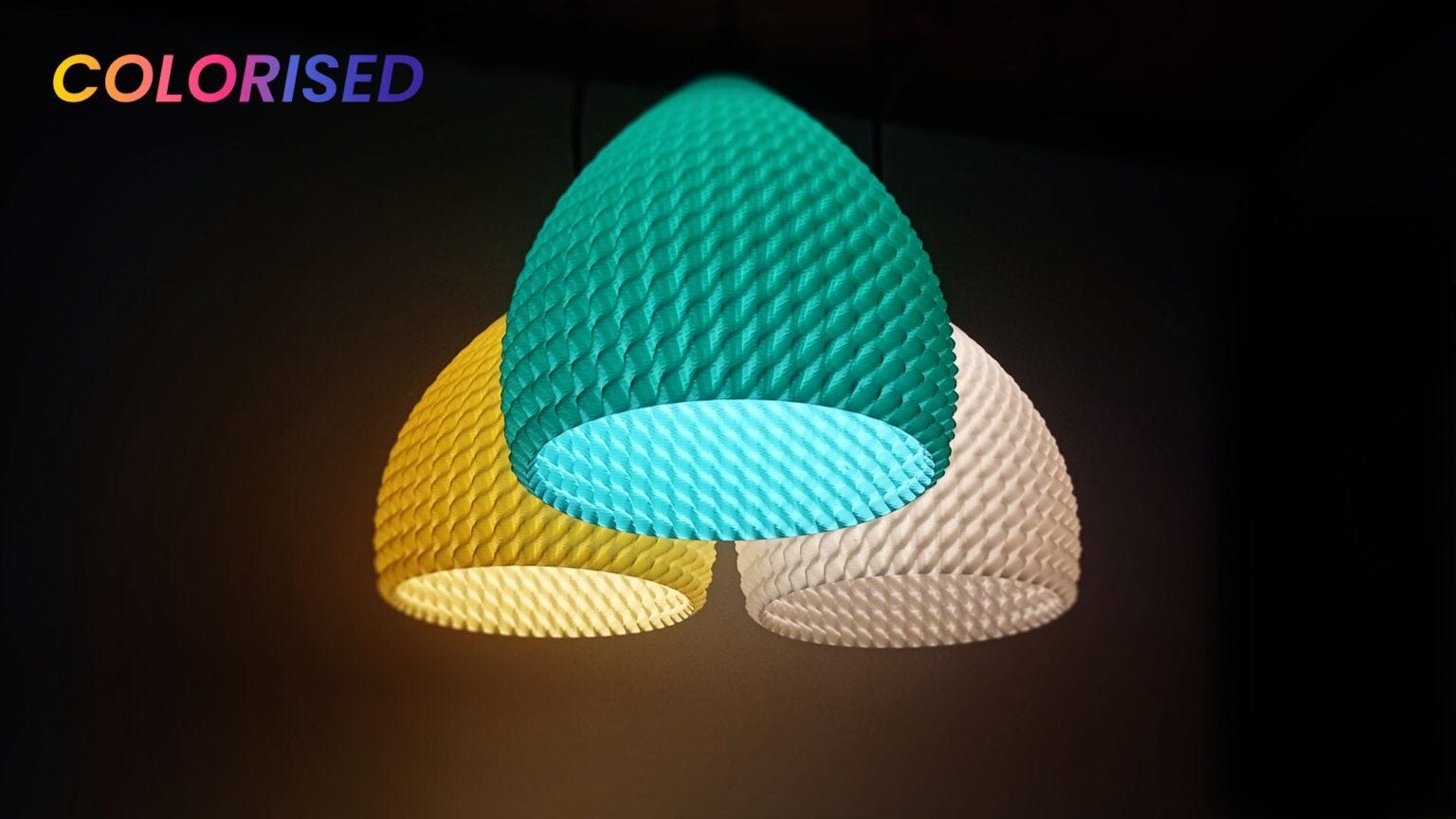
It turned out, that nobody wanted plastic lampshades that couldn’t even be washed in water because they would begin biodegrading. Also, eco-friendly decorative lampshades ranked surprisingly low on most people’s home shopping lists.
Finally, there were accessories for the stretch ceiling industry: protective rings, profile connectors, and installation tools. These actually made practical sense.
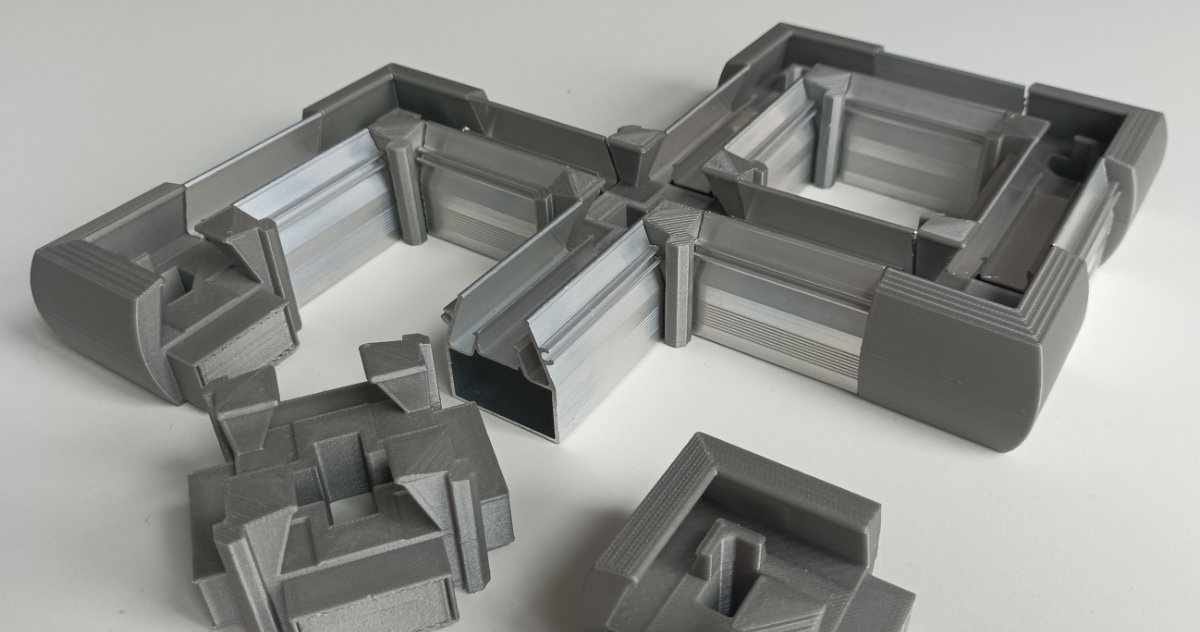
The problem was that they were too precise for the quality of the metal profiles and tools they were supposed to work with. Precision was simply too good for a world that didn’t need it.
Why the printer was perfect until you tried to make money
For all of this, 3D printing was the perfect tool. Fast, inexpensive, and ideal for producing a single part. You come up with an idea in the morning, and by the evening you’re holding a prototype in your hand. No other technology can do that.
The problem begins when you scale up.
Print time and unit cost, which looked perfectly reasonable at ten units, became devastating at a thousand. Additive manufacturing has a built-in ceiling. It’s a method for producing fast, inexpensive, and unique products - but only in small quantities (unless you do it in China - though the economics are different there).
The real mistake, however, came much earlier.
For years, I kept asking myself the wrong question:
“What cool thing can I make with a 3D printer?”
While the right question was:
“What is a genuinely good product (that just happens to be suitable for 3D printing)?”
I was looking for products made with a printer instead of simply looking for good products.
That is a subtle difference with enormous consequences for the bottom line.
This is exactly what Kulkarni argues:
Applications that truly reached industrial scale: clear aligners, hearing aids, aerospace ducting, orthopedic insoles, didn’t grow because someone invented a new process every year.
They grew because someone found one thing that worked and repeated it thousands of times.
Process qualification. Standards. Operator training. Customer trust. The kind of boring work that gradually accumulates into expertise.
Kulkarni draws a comparison with nuclear power. France and China standardized reactor designs and kept building the same ones over and over again. Costs came down, and every project made the next one better.
Meanwhile, the West redesigned every reactor from scratch and ended up coining the term negative learning - a situation where, despite accumulating experience, every new project becomes more expensive than the last.
Customers don’t care about innovation for its own sake. They care about outcomes. Shorter lead times. Lower costs.
A new photopolymer chemistry means absolutely nothing to them unless it gets their parts delivered faster.
The next decade belongs to those who execute - not those who endlessly invent.
And that brings us back to GROWLAY. The eight-year-old filament that could grow plants is Exhibit A.
Eight years in people’s memories. Zero years in serial production. A brilliant invention that never found a place because there wasn’t one to find. A made-up product in its purest form.
Just with moss.
3D printing needs to become boring
The conclusion is an uncomfortable one for everyone who loves this technology because it’s fascinating.
3D printing needs to become boring.
It should produce ordinary, unremarkable, everyday products. It should manufacture objects that nobody ever looks at and asks “How was this made?” Because that’s when it starts generating real profits.
The product should be exceptional. The manufacturing process shouldn’t matter. In fact, it’s better if it remains the manufacturer’s little secret.
The less “3D printing” appears in the marketing message, the better the product will sell.
The First Law of the 3D Printing Market states this very clearly: a company that uses 3D printing to manufacture its own products is perceived as a company from that industry - not as a 3D printing company.
Reverse that equation, and the business model falls apart. The market expects a 3D printing company to sell printers, materials, or printing services - not finished products.
My advertising displays failed, among other reasons, because I was selling them as made in 3D. The market, meanwhile, wanted my filament and printing services from me - which was the exact opposite of my original idea.
The product itself, that entire circular economy miracle, was irrelevant to customers. Exactly as the theory predicts.
The only difference is that I didn’t know the theory yet. I was still testing it against my own balance sheet.
So let me leave you with one warning:
If a product is advertised with the slogan “3D printed” there’s a very good chance you’re looking at a made-up product.
A genuinely good product doesn’t need that kind of marketing. It sells itself through its price, its function, and the simple fact that people genuinely want to buy it.
3D printing is still moving forward. But its entire future can be summed up in one rather unglamorous sentence:
it has to become so good that people stop noticing it.
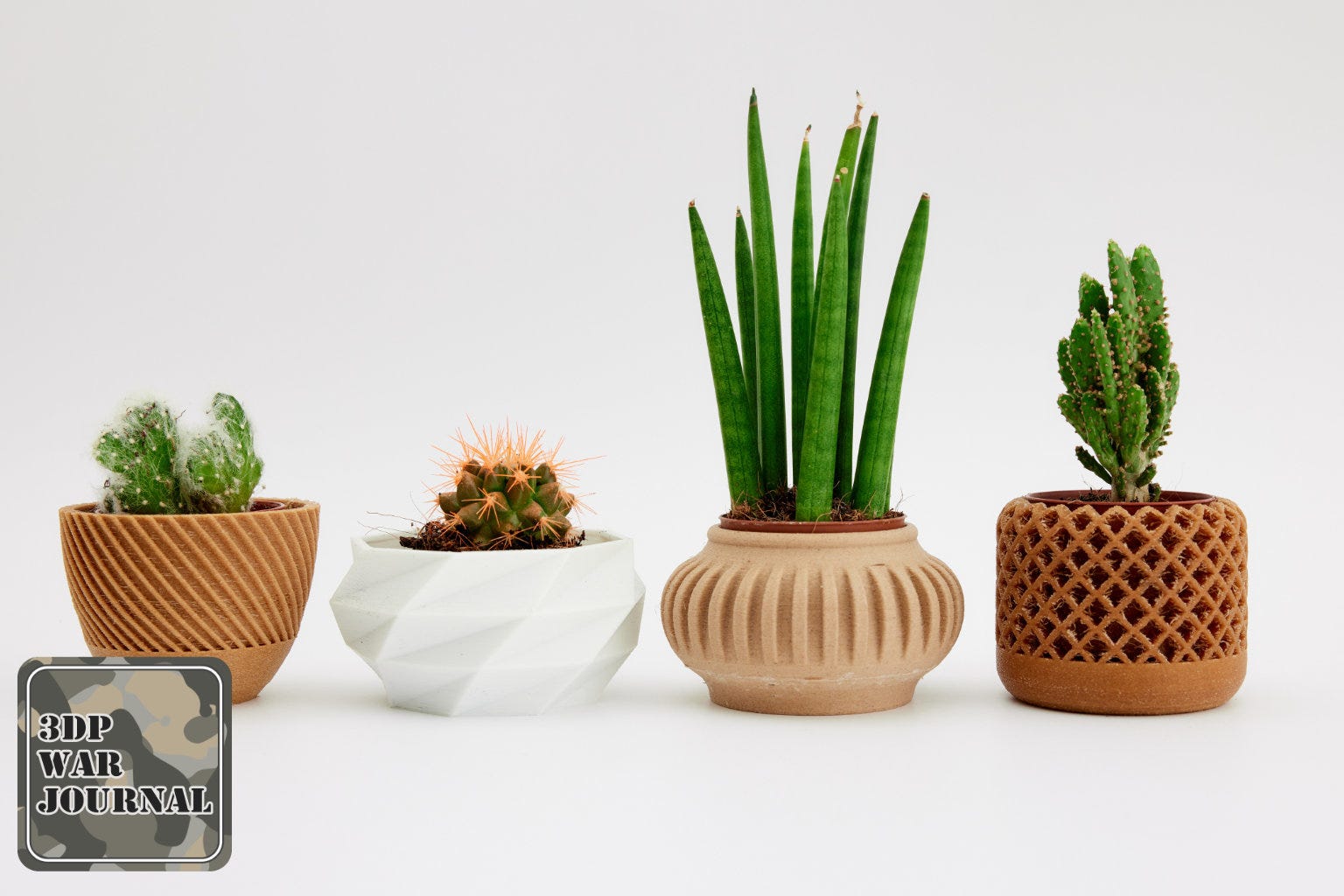
P.S. The flower pots in the cover image were made from a biodegradable material. Which meant that the more often you watered the plant inside, the faster the pot itself began to break down.
Clever, wasn’t it? 🤣