

AMIS 3.5.1 connects directly to HP MJF and finally shows what really happens to your file
A direct path to the printer and a file-repair engine that finally reveals what happens to geometry

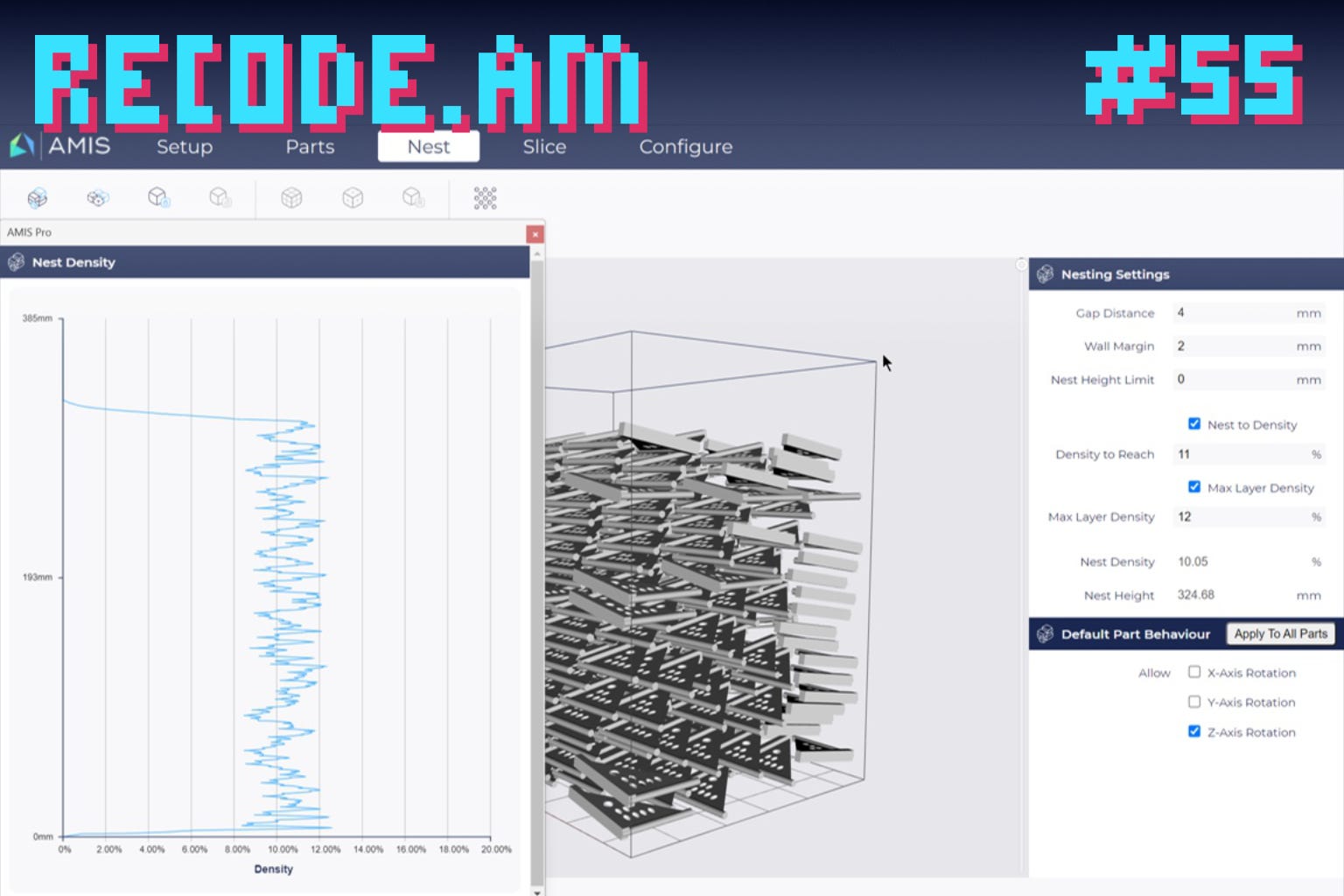
Belgian software developer AMIS has just released version 3.5.1 of AMIS Pro + Runtime.
For those unfamiliar with it, AMIS Pro is a print preparation and 3D-RIP software platform for powder-bed and jetting technologies, including SLS, MJF, Binder Jetting, and Material Jetting. It runs off-cloud on both Windows and Mac and is built around an API-driven architecture.
In simple terms, users upload their models, the software arranges them in the build chamber (nesting), slices them into layers, and outputs machine-ready files. Runtime adds an automation and scripting layer, making these steps repeatable and consistent instead of requiring manual execution every time.
That’s just it. A little boring, perhaps.
But this “boring” part of file preparation is exactly where much of the real progress in industrial additive manufacturing is happening today. Version 3.5.1 illustrates that quite well.
What does 3.5.1 actually bring?
The first major addition is a direct production connection to HP Multi Jet Fusion systems.
This is no longer a matter of exporting a file and moving it elsewhere. Instead, there is now a direct path from AMIS to the printer. The software includes automated compliance checks against HP requirements, identifying geometry issues before they ever reach the machine.
In practical terms, this reduces failed builds and enables a direct-to-printer workflow - a step toward production environments that prepare themselves.
Second, the file-repair engine has been completely rewritten from the ground up.
AMIS has effectively opened up the “black box” of file healing. Traditionally, repair tools silently modified geometry and simply asked users to trust that everything had been fixed correctly.
Now users receive visual feedback directly within the interface across three categories: fully valid parts, acceptable but suboptimal parts, and parts that cannot be repaired.
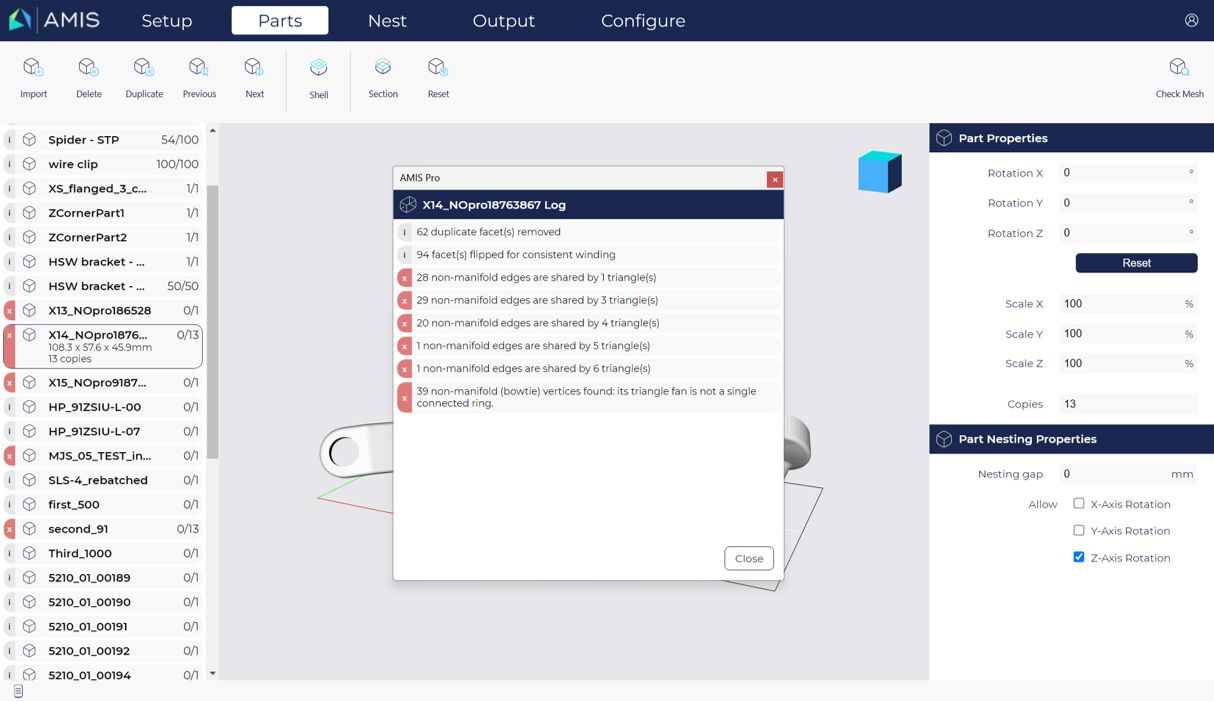
The system also generates a detailed report covering every repair operation. Operators can see exactly what the software has done to the model and make their own decision about whether a part is ready for production.
The remainder of the release focuses on refinements: improvements to nesting, slicing, and part handling that further strengthen overall system stability.
Back in February, I wrote about AMIS Runtime as an automation engine designed to eliminate manual work from build preparation: continuous re-nesting, parts managed as a virtual inventory, and builds assembled automatically by the system without human intervention.

At the time, that vision was still largely a promise.
Version 3.5.1 is one of the bricks used to build that promise into reality.
The HP MJF integration and the rewritten repair engine represent exactly the kind of painstaking foundational work that automation depends on.
Before you can trust a system to arrange and prepare builds autonomously, you need confidence that every file reaching the machine is clean and production-ready. Version 3.5.1 provides that confidence and, more importantly, makes it visible.
But is it a good solution?
Well, yes.
The direction is the right one because mature print-preparation software has become a genuine competitive advantage in industrial additive manufacturing, and AMIS continues to build precisely that layer of the workflow.
I do have one reservation - the same one I raised in February. Automation always depends on trust in algorithms and on well-defined rules. Organizations must invest time upfront to configure processes and integrate them with the rest of their systems.
That said, what 3.5.1 does in terms of transparency - three quality categories and a detailed repair report, is perhaps the shortest path toward building that trust.