


Atomic Layer of the Week:
Three weeks ago, I wrote about how the stock market carousel in the 3D printing industry keeps spinning regardless of what happens to revenues and profits.
Farsoon valued at roughly fourteen times more than 3D Systems. Velo3D with $45 million in revenue and a valuation above $400 million.
The market is pricing narratives, not fundamentals - and so far, nothing suggests it is ready to break that habit.
The carousel doesn’t stop spinning: how the stock market flirts with 3D printing but still forgets to ask about revenue

According to the logic of the capital markets, Farsoon today is roughly fourteen times larger than 3D Systems and more than six times larger than Stratasys. It’s just a pity that this isn’t reflected in revenue.
This week, another major player officially entered the stage. And not just any player - Creality.
The company officially launched its IPO on the Hong Kong Stock Exchange. That meant disclosing all of its financial documents. So let’s start with the numbers, because they tell the whole story...
Creality generated revenue of:
RMB 1.3 billion ($187 million) in 2022
RMB 1.9 billion ($262 million) in 2023
RMB 2.3 billion ($318 million) in 2024.
In 2025, revenue climbed further to $453 million, representing annual growth of around 20–30%.
At the same time, Creality reported net profit of:
RMB 104 million ($14.5 million) in 2022
RMB 129 million ($18 million) in 2023
RMB 88.66 million ($12.3 million) in 2024.
Despite rapidly growing revenue, profits kept shrinking. Then came 2025.
In 2025, the company posted a net loss of RMB 182.4 million. Operating cash flow also turned negative.
More specifically: revenue in 2025 increased to RMB 3.13 billion ($460 million), while the company simultaneously recorded a net loss of RMB 182 million ($26.8 million).
Now, to understand why Creality is losing money, you need to understand what Bambu Lab did to the market.
In May 2022, Bambu Lab launched the X1, bringing high-speed and multicolor printing to the consumer market. The result? In 2025, Bambu Lab overtook longtime leader Creality to become the global leader in entry-level 3D printer shipments.
Creality - the company that defined affordable 3D printing for years - became number two. In 2024, Bambu Lab shipped 1.2 million printers, while Creality shipped around 700,000 units.
For comparison: market sources indicate that Bambu Lab’s revenue exceeded RMB 5.5 billion in 2024, while net profit surpassed RMB 2 billion. Its capital market valuation has long exceeded RMB 30 billion.
Bambu Lab: RMB 5.5 billion in revenue, RMB 2 billion in profit.
Creality: RMB 3.1 billion in revenue, RMB 182 million in losses.
Creality’s revenue growth in the 3D printer segment over recent years came mainly from higher selling prices, not volume. Between 2022 and 2025, the average price of a Creality printer increased from RMB 1,306 to RMB 2,404, while unit sales declined from 842,000 to 742,000 units. In other words: the company is selling fewer printers at higher prices, because the cheaper alternative disappeared from the market, displaced by a better one.
Against this financial backdrop, Creality is going public in Hong Kong. And this is where things get really interesting.
The company is selling only 15.73% of its shares, with 84.27% remaining in private hands.
Based on the IPO price and total share count, the company’s valuation comes to approximately $7.13 billion 😲
That valuation would be comparable to the combined market value of two other Chinese metal AM companies: Farsoon and BLT.
What are investors buying for that money? Hope.

If those projections prove accurate, Creality - as one of the largest players in the segment - could eventually be worth much more. This is the classic mechanism I described earlier in relation to Farsoon and Velo3D: the market is buying the future, not the present.
And finally - is the IPO an attractive financing option or a necessity?
Looking at the numbers, the answer seems fairly obvious: yes, the IPO was necessary.
In 2025, operating cash flow turned negative, with an outflow of RMB 64 million ($9.3 million). That means the company was no longer generating enough operational cash to fully cover its ongoing needs.
A company with negative operating cash flow, rising inventories (inventories reached RMB 634 million ($93.3 million) at the end of 2025) and a net loss exceeding RMB 180 million.
Additionally, the agreement with Series A investors required the company to complete an IPO by December 31, 2025. Failure to meet that deadline would have allowed investors to demand a buyback from the controlling shareholders. A third agreement, signed in July 2025, extended the deadline by six months - to June 30, 2026.
So yeah, for Creality, this is the last call…
Atomic Layer from the Past:
Once again, today we have two:
14 years ago, at the RAPID Conference in Atlanta, Objet Geometries unveiled the Objet30 Pro, based on proprietary PolyJet technology. It offered seven materials, including transparent and high-temperature-resistant options.
Founded by Gothait, Bonen, and Miller, at that time the Israeli company had already shipped over 3,378 industrial systems. Priced at $19,900, the Objet30 Pro targeted small businesses. The launch came just before Objet’s formal merger with Stratasys, finalized in December 2012. Thus, the Objet30 Pro became one of the last products under the independent Objet brand.
Read all:

Polish startup Zortrax unveiled the M200, a desktop FDM printer that would revolutionize the industry. Unlike open, cable-filled machines made of wood or cheap metal, the M200 featured a professional industrial design and solid components. Its revolutionary Z-SUITE software was closed, blocking parameter changes like temperature and forcing use of Zortrax’s own filaments. This seemingly suicidal strategy succeeded, guaranteeing simplicity, high quality, and repeatability.
Priced at just 1899, the M200 became a desktop alternative to industrial systems like Stratasys. A highly professional Kickstarter campaign raised $179,471 from 144 backers, launching an 11-year market-leading run in Europe.
Read all:

News & Gossip:
#1
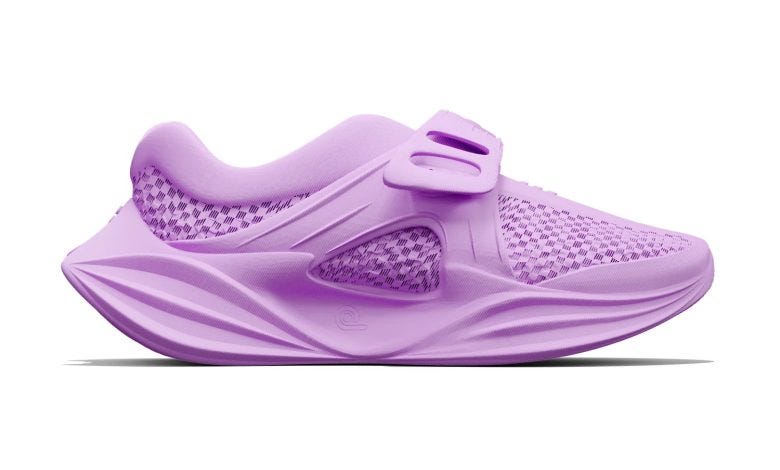
Zellerfeld has launched a new 3D printed sneaker, the OD Easy PZ, developed with OverDose - a brand founded by former NBA star player Baron Davis. The post-workout recovery shoe features a monolithic, laceless design and is made from recyclable TPU.
Customers scan their feet via smartphone and order made-to-fit pairs for $199. Available in multiple colorways, the shoe embodies OverDose’s “analog to AI” ethos.
#2
GoEngineer has acquired SKA, Latin America’s leading SOLIDWORKS reseller. From now on, it will operate as a GoEngineer company. Founded in Brazil in 1989, SKA serves thousands of customers in manufacturing, aerospace, medical, and industrial sectors, with expertise in MES, machining automation, and additive manufacturing.
This acquisition follows GoEngineer’s 2025 expansion into Canada and marks its first presence in Latin America and the Southern Hemisphere.
#3
14 Trees and Tvasta have launched Cedar, a large-format gantry-style construction 3D printer for remote environments. Tvasta, an Indian automation firm, partnered with 14 Trees - a joint venture including Holcim and Amazon’s Climate Pledge Fund.
Cedar uses AI for material characterization and works with regular concrete, lowering adoption barriers. It offers a 240 m² build area, 10 m height, and pumps up to 5 m³/h at 60 bar.
The collaboration creates a new competition for COBOD in the growing construction 3D printing market.
#4
Lynxter has launched SIL-004, a liquid silicone for direct 3D printing in food-processing environments. It meets FDA CFR 21 177.2600 standards for repeated food contact and is free from BPA and PFAS - claimed as the world’s first certified 3D printable silicone.
Operating from -50°C to 250°C with 6.12 MPa tensile strength, SIL-004 targets custom seals, molds, and conveyor components. Compatible with Lynxter’s S300X and S600D printers, it produces parts in hours without tooling.
#5
Phrozen has previewed the Mighty Revo MAX, a large-format resin 3D printer featuring a 14-inch 16K LCD for high detail on bigger models. It includes a 2,000 ml resin tank for extended printing, dual temperature control for viscous resins or cool environments, and a tool-free quick-change foil. A leak-proof base prevents resin damage, while an integrated 1080p camera with AI monitoring detects print errors.
Phrozen has not yet announced build volume, pricing, or release date.
#6
And finally… Ultimaker!
UltiMaker has launched the Factor 4 Plus, a new variant of its industrial desktop 3D printer. Targeting manufacturing and defense users, it delivers up to twice the speed of the Factor 4. A reinforced gantry reduces vibrations, while the Cheetah motion planner smooths directional changes.
New AA+ and CC+ high-throughput print heads support materials like PLA, ABS, and PPS-CF. Key feature TRACE (Technical Reporting And Certification Engine) logs print parameters and generates quality reports for every part.