

Spectrum is about to end five years of constant "out of stock” saga...
Spectrum Filaments secures its first-ever investment to strengthen its position in Europe

Atomic Layer of the Week:
Blue Gravity Capital has invested tens of millions of złoty into Spectrum Group and acquired a majority stake. Founder and CEO Michał Żołądek remains at the helm. Within roughly 12 months the company plans to double its production capacity.
Spectrum is probably the biggest European filament manufacturer.
It is also a profitable, growing Polish company built entirely through organic growth. It has spent the last five years in a state best described as: “we have more orders than we can produce.”
A permanent backorder situation. And that is precisely why it is bringing in outside capital. Its own success had started to become a threat...
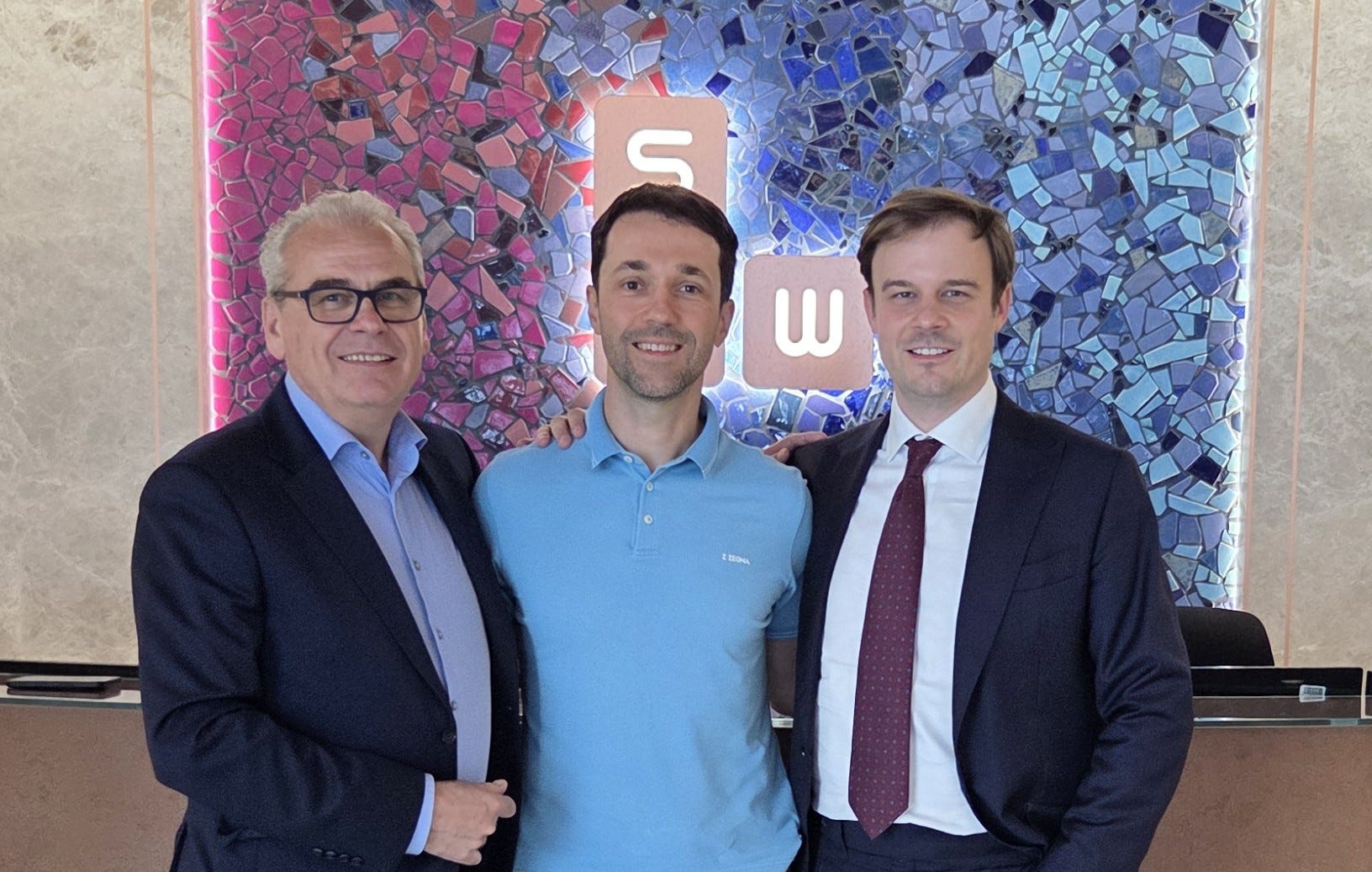
I’ve known Michał for more than 10 years. I was the one who published the article announcing Spectrum’s market debut on my former portal, Centrum Druku 3D.
It was June 25, 2015. I arrived in a small village - Pęcice near Warsaw, on a rainy evening, where two guys welcomed me with beer and a table full of snacks while convincing me that their PLA was the best filament in the world.
One of those guys, Michał Żołądek, is now my dear friend.
The filament market created by Chinese printers
Just a few years ago, a 3D printer required patience and humility. Then the Chinese added lidar, flow calibration, and error detection to inexpensive machines. All of a sudden, a hobbyist device costing €300 to €1,000 began outperforming industrial equipment costing €10,000 to €20,000 in many applications.
Sales sky-rocketed.
The figures cited by the parties involved in the transaction are impressive. Chinese exports of desktop 3D printers reached 3.7 million units in 2024, 5.2 million in 2025, and are projected to hit approximately 8 million in 2026.
And every new printer consumes filament.
Blue Gravity currently values the filament market at around $1 billion and assumes annual growth of roughly 20%, while noting that this may be a conservative estimate because it does not fully account for what is happening in the printer market. The fund adds that CAGR could rise to 30%, and periodically even 40%.
Virtually all demand growth is currently concentrated in low-cost desktop machines. In the second quarter of 2025, entry-level printer revenues grew by more than 20%, while professional, mid-range, and industrial segments declined.
In other words, the fastest-growing part of the market is also the one that consumes the most spools.
This brings us to the first uncomfortable fact: China dominates filament manufacturing as well. Its advantages are scale and price.
However, China has one weakness, and Spectrum knows how to capitalize on it.
Shipping from Asia is expensive, and freight rates can fluctuate dramatically from quarter to quarter. Manufacturing in Europe means a shorter supply chain, shorter lead times, and less exposure to freight market volatility.
What is not so important in 3D printers, becomes very important in filament.
How Spectrum went so far
Spectrum launched in 2015 with ordinary PLA and extraordinary colors.
Everything that followed was built internally: through operations, leasing, and bank financing. No investment rounds. No venture capital. Not once during the entire decade.
Between 2018 and 2025, the company increased production volume by an average of around 50% annually, growing faster than most of its European competitors.
Step by step, it progressed from being Poland’s largest filament manufacturer, to the largest in Central and Eastern Europe, and eventually to becoming one of the largest in Europe.
Today’s scale: 1,500 tonnes of filament annually, more than 100 materials, sales in over 40 countries, and approximately 80% of revenue generated from exports.
But let’s be honest: the gap between Spectrum and the Chinese filament manufacturers in terms of production volume is enormous.
That is why Spectrum competes on different factors: European manufacturing, shorter delivery times, consistent quality, and a portfolio that goes far beyond commodity PLA into technical, engineering-grade, specialty, and compostable materials.
According to Żołądek, the company can already match Asian competitors on price in standard materials.
It is also pursuing acquisitions. Hungary’s Filaticum (to be relaunched) and Poland’s Prografen, known for niche graphene-based filaments, are already part of the group, while another Polish brand is currently in the pipeline.
It is no coincidence that Żołądek openly states that he does not rule out further market consolidation in Europe in the near term.
The operational plan for the next year is remarkably straightforward: double production capacity. No new factory for now, just a reorganization of the existing facility and the addition of new production lines. The company openly admits that at this pace it will run out of space soon, but that is a problem for later.
Every large filament company stared at the same wall
Every member of China’s filament Big Four faced exactly the same obstacle at some point.
More orders than capacity. No more room on the factory floor. Customers who constantly hear: “please wait.”
You don’t break through that wall with engineering talent or founder determination alone.
You break through it with capital.
Money allows a company to scale ahead of demand instead of spending five years chasing it. It’s the only path I’ve ever seen, and I don’t know of any exceptions.
Spectrum is doing exactly that.
It is giving up a majority stake, taking in tens of millions, and buying itself a head start instead of another decade of apologizing for lead times.
Will Spectrum catch up with the Chinese Big Four in terms of production volume?
Probably not in this decade. Maybe never.
But that is not particularly important. Because there will always be room in the global market for at least one strong European filament manufacturer.
And if anyone on this side of the map has the credentials to become that manufacturer, it is the company that has spent the last five years struggling to keep up because it simply has too many customers.
The rest is a matter of capacity. And it has just bought itself more of it.
Atomic Layer from the Past:
Two layers today:
13 years ago, 3D Systems acquired 80% of Phenix Systems, a French leader in DMLS metal 3D printers. The deal closed in July 2013, with the remaining 20% bought later. Phenix’s technology served aerospace, automotive, and medical sectors. This acquisition complemented 3D Systems’ portfolio, strengthening its presence across all major additive manufacturing markets.
Read all:

11 years ago, GAIA Multitool (now 3DArtech) released the GAIA Multitool MAXX, a large-format ceramic 3D printer standing 187 cm tall. Featuring delta kinematics and a ⌀45 x 105 cm build area, it included ten interchangeable tools: ceramic extruders, FFF heads, engraver, cutter, CNC mill, and laser engraver.
Read all:

News & Gossip:
#1
Formlabs just dropped the Fuse X1, and this is one of the biggest stories not of the year but of the last few years!
So I’ll take it apart properly in Monday’s 3DP War Journal.
For now, just the basics (you probably know):
it’s Formlabs’ first SLS built for industrial series production
build volume 330 × 330 × 565 mm, 61.5 liters, a full unit done in roughly 24 hours, 120 W laser, build-unit swaps in 5 minutes, plus Adaptive Thermal Control and Print Intelligence vision monitoring
the company promises up to 3x throughput and half the per-part cost of classic industrial systems.
#2
I mentioned this one already in a LinkedIn post, but it is significant enough to highlight it here again.
BMF reshuffles its top team: Bryan Ferrand becomes President, Donna Kelly steps up to COO, and John Kawola slides into a strategic advisor seat.
For the record, the organisational changes at BMF maybe isn’t the headline, but Kawola is. The man is a genuine industry legend, and watching him step back from the wheel is significant story.
The official line calls it confidence in the new team. Yeah, well, probably true. Still a shame to see him go.
#3
TDK is buying San Diego’s Fabric8Labs for up to $400 million, part upfront, part multi-year earnout. The prize is ECAM, an electrochemical metal 3D printing process aimed at thermal management parts for data center cooling.
Not a coincidence: TDK Ventures backed the company at seed, so this is a quiet bet maturing into ownership. And read the room. A profitable electronics giant pays nine figures for a metal AM firm because of where it points, data center heat, not because metal printing itself prints money. The part that sells is the cooling problem. The printing is just how you solve it.
#4
Photocentric spun its space division into a separate company, CosmicMaker, after testing an LCD-based printer under shifting gravity.
The pitch: print spare parts and functional components off-world, no resupply rocket from Earth required.
In April three identical printers ran on parabolic flights from 2g to 0g, printing silicon carbide, aluminum oxide and two thermoset plastics, parts came out to spec, all backed by UK Space Agency and ESA money.
The clever bit: in microgravity the ceramic slurries actually segregated less, and the sealed liquid chamber kills the need for supports. Years from orbit, sure. But the physics is cooperating, which is more than most space-AM stories can say.
#5
HeyGears unveils the G1, a desktop printer that promises full-color models straight off the bed, no hand-painting, no six-figure industrial system. The G1X runs an Epson i3200 head with 3,200 nozzles, eight ink channels, 3.9-picoliter droplets and over ten million mixable colors, plus water-soluble supports and modules that print on 400-plus substrates from metal to textiles.
There's the obligatory AI bit too: text and image-to-3D, 500 templates, days-to-minutes.
Two catches worth holding onto. No price yet, just a discounted waiting list. And HeyGears admits the units shown may be prototypes or renders. Promising spec sheet.
Now show me the parts…
#6
MyMiniFactory wants to bring Thingiverse back from the dead.
The platform that basically invented the 3D-model directory has been passed around since its MakerBot days, and its current owner admits the previous ones barely touched it, so designers walked.
The fix: an ad-free version (ads were the number-one complaint), premium paid features to fund it, and a rebuilt monetization system so creators earn more than spare-change tips.