

Very small and very precise parts - Boston Micro Fabrication launches its first desktop 3D printers
The Atomic Layers: 00312

Atomic Layer of the Week:
John Kawola has a certain talent. Not for building vast empires, but for something much harder - choosing the right battle.
A month ago, I published an epic interview with John - a living legend of the AM industry - about the philosophy of running a company. About what he learned at Z Corporation, and what he later carried over and adapted at Ultimaker, and now at Boston Micro Fabrication.

Profitability has always been key, but so has maximum simplification and a focus on the essence of the offering. At Z Corp, it was speed, cost, and color; at BMF, it’s small, precise parts. That’s it - and that’s enough.
There’s no talk of compromise here. No attempt to be everything to everyone. And that’s exactly why the launch of the microArch S150 Series is no coincidence.
Because this week, BMF introduced two new 3D printers for microfabrication. And for the first time, they are… small.
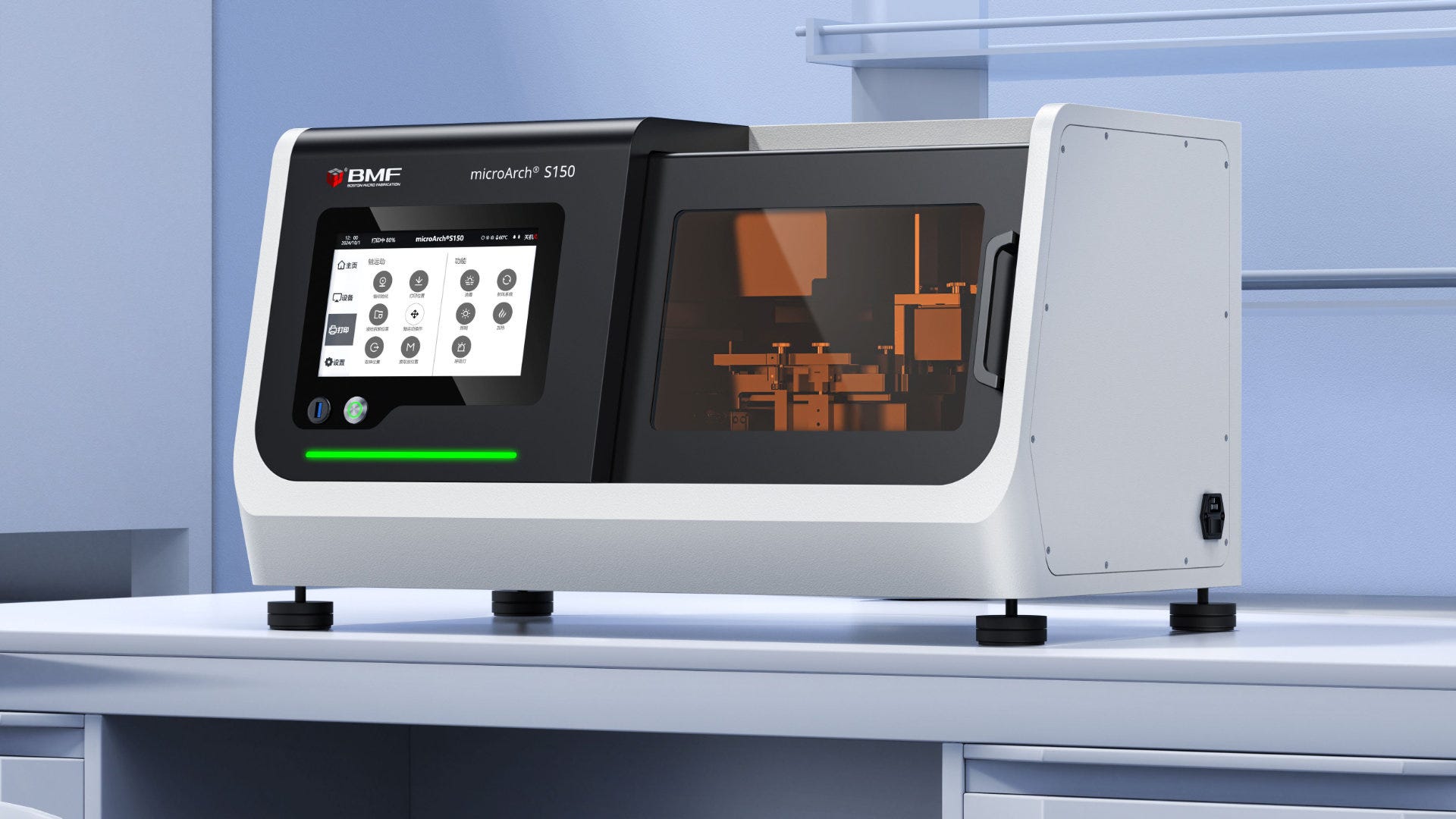
The microArch S150 and microArch S150 Ultra are desktop-class devices, ready to operate in a laboratory, office, or even an industrial environment.
BMF built its reputation on PµSL technology - Projection Micro Stereolithography. This is not just another variation of resin-based SLA - it’s a different level of precision. Optical resolution at 25 µm, positioning accuracy of ±3 µm. Layer thickness from 10 to 100 µm.
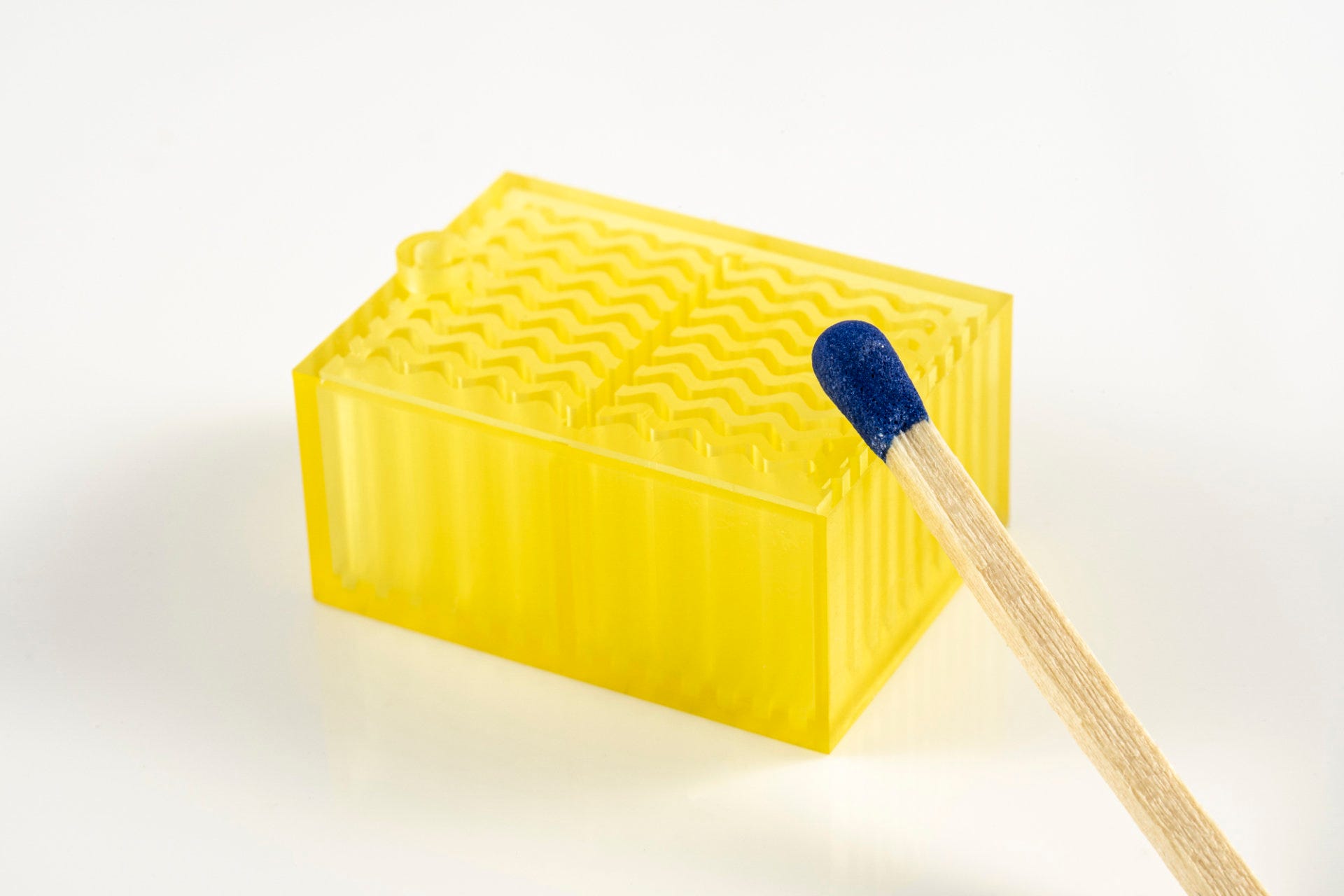
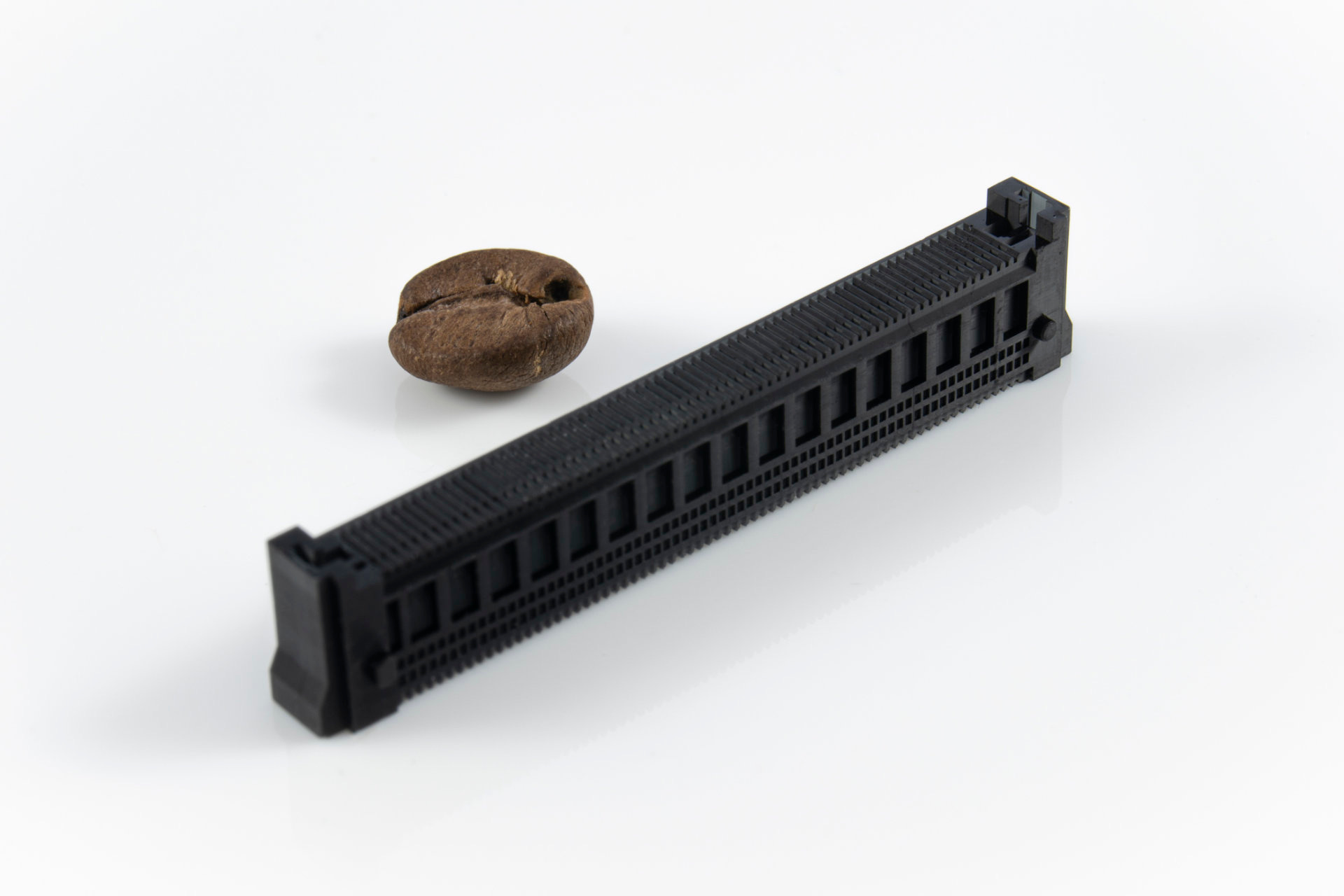
Production of parts that most other additive technologies simply cannot reproduce - microneedles, microchannels, nozzles, chips, microfluidic systems, fiber-optic components.
Until now, there was one problem. BMF machines were large, expensive, and demanding. They worked great - but only where someone had the resources to operate them.
The microArch S150 Series changes that.
The base version - microArch S150 - is designed for R&D labs, research environments, and prototyping. One-button printing - no manual calibration, no complex infrastructure. Integrated touchscreen, predefined print parameters, support for high-viscosity materials. Simple and repeatable.
The Ultra version is a different league. Nine times faster than the standard S150. Fast iterative prototyping, low-volume production, the ability to print a large number of precise components in a short time - this is exactly what has been missing in the micro-precision segment.
Both systems are equipped with HEPA13 filtration and UV-C sterilization (253.7 nm), enabling the use of these 3D printers in biomedicine, microelectronics, and contamination-sensitive environments - where chamber cleanliness is a requirement, not an option.
Kawola says it plainly in the launch announcement: the goal is to make micro-precision no longer reserved for a select few. To make it accessible to a broader group of users - without compromising quality.
The North American premiere will take place at RAPID+TCT in Boston, between April 13 and 16. The microArch S150 will be available for orders starting in the second quarter of 2026.
Atomic Layer from the Past:
8 years ago, a legal battle ignited between two 3D printing rivals. Desktop Metal sued Markforged for patent infringement over metal printing technology. The feud traced back to 2013, when Ric Fulop helped build Markforged before leaving in 2015 to found Desktop Metal.
After a trial in June 2018, Markforged was cleared of all charges. The rivalry intensified with accusations of stolen trade secrets, which were also dismissed. The saga took an unexpected twist in 2024 when Nano Dimension acquired both companies.
A year later, Desktop Metal ultimately declared bankruptcy (although it reemerged in a reduced form), while Markforged remains in the corporate shadow of Nano Dimension. The main actors of this saga have long since moved on - both in their careers and in their lives.
Read all:

News & Gossip:
#1
I wrote a really great article about it. The kind no one could possibly criticize. But I decided that, being in my position, I shouldn’t touch competitors… no matter how much they deserve it.
#2
MOVA AtomForm has launched the AutoForm Palette 300, a multi-material 3D printing system featuring an automatic 12-nozzle swapping system. Supporting up to 36 colors, it utilizes OmniElement technology for seamless, purge-free material changes. Additional features include smart nozzle identification, integrated filament management, and speeds of up to 800 mm/s.
Read more: www.tctmagazine.com
#3
meland - Chinese family entertainment brand, has partnered with Bambu Lab to open the country’s first 3D printing creativity center for children at a Shenzhen mall. Designed for ages 5 to 12, the venue features interactive zones where kids explore a 3D printed CyberBrick City and learn design basics using Bambu Lab A1 printers. The initiative combines play with hands-on creative education.
Read more: www.voxelmatters.com
#4
At TCT Asia, Farsoon launched two new large-format metal 3D printers. The FS1311M-U features a 1310 × 1310 × 1650 mm build volume with up to 16 lasers and optional beam shaping. The FS812M-U offers an 810 × 810 × 1700 mm build envelope with a 41% reduced footprint.
Read more: www.tctmagazine.com
#5
Another AM legend - Patrick Roeffen, the godfather of the European desktop 3D printing market and former Channel Sales Manager at Ultimaker, has joined Bambu Lab!
I have known Patrick for over 10 years, and I’m thrilled to be working with him again! So are dozens of Bambu Lab resellers across Europe, whom Patrick has helped grow over the years.
#6
And finally - the Pop Mart case has been settled. Everything you’ve read about it in 3D printing media was either half-truths or complete nonsense.
At the same time, note that no one has addressed the #1 issue so far.
Interesting, isn’t it?